
Division of Reproductive Sciences and Women's Health
Borahay Lab: Gynecologic and Fibroids Research
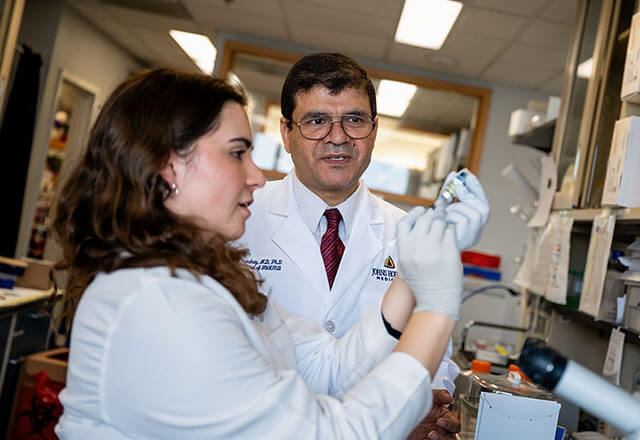
Principal Investigator: Mostafa Borahay, M.B.B.Ch., M.D., Ph.D., M.B.A., M.Sc.
Mostafa Borahay’s lab focuses on understanding pathobiology, developing novel treatments and carrying out high-quality clinical trials for common gynecologic problems, with a special focus on uterine fibroids. The lab also investigates causes and novel treatments for menstrual disorders such as heavy and irregular periods. In addition, Borahay’s team explores innovative approaches to minimally invasive gynecologic surgery, focusing on outpatient procedures with less pain and faster recovery times.
The Howard and Georgeanna Seegar Jones Reproductive Endocrinology Laboratory

Principal Investigator: James Hugh Segars Jr., M.D.; New Co-Investigators: Kamaria Cayton Vaught, M.D. (RSDP Scholar); Md Soriful Islam
Translational and clinical studies in the Howard and Georgeanna Seegar Jones Reproductive Endocrinology Laboratory focus on reproductive conditions including endometriosis, uterine fibroids, polycystic ovary syndrome (PCOS) and genetic causes of infertility. PCOS and uterine fibroids are among the most prevalent conditions leading to infertility and disease in women, but both remain poorly understood. NIH-funded research in the division seeks to improve and develop treatments or preventive therapies for these conditions. In addition, the division trains students and young investigators pursuing careers in women’s health research.
Richard W. TeLinde Endowed Gynecologic Pathology Laboratory
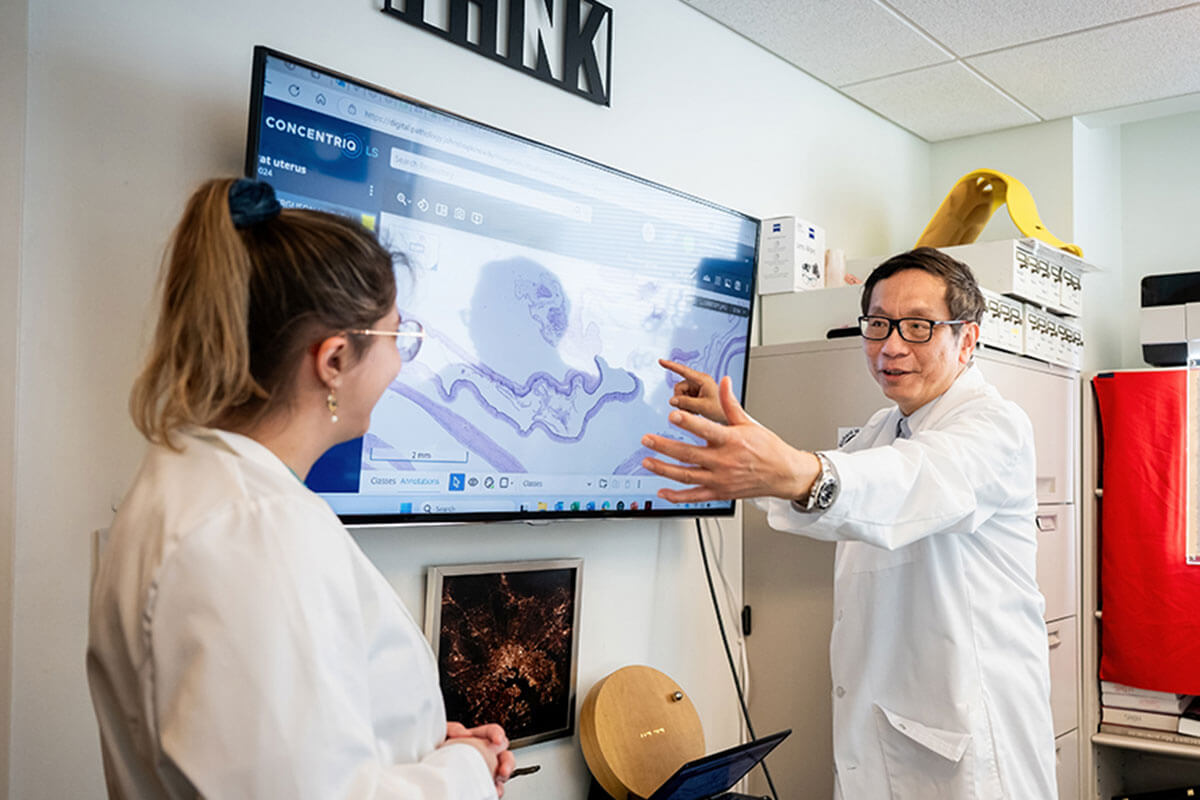
Principal Investigator: Ie-Ming Shih, M.D., Ph.D.
Scientists in the Richard W. TeLinde Endowed Gynecologic Pathology Laboratory pursue out-of-the-box approaches at the very edge of knowledge to:
- Elucidate the molecular/cellular/physiological landscapes of ovarian and uterine cancers.
- Understand the earliest events in their development and mechanisms of tumor evolution/dormancy and drug resistance.
- Deliver promises for better prevention, detection and treatment to women who have diseases or are at increased risk for these cancers.
Precision Medicine Analytics Platform

The Precision Medicine Analytics Platform (PMAP) is a centralized data repository that integrates electronic medical records with multiple additional data sources to create comprehensive clinical datasets. This powerful tool enables clinicians and researchers to apply sophisticated data analytics, biostatistical methods, and machine learning to advance discovery and improve patient care.
Current departmental studies are using PMAP to investigate hypertensive disorders of pregnancy, bacterial species contributing to recurrent urinary tract infections, and machine learning applications for maternal and fetal heart rate tracings. Soon, investigators will also have access to fetal ultrasound data linked to medical records, opening new opportunities for groundbreaking research.
This research-driven approach not only helps identify optimal treatment regimens but also supports the development of predictive models for patient outcomes, reducing trial-and-error in care. By analyzing vast, integrated datasets, researchers can identify biomarkers that predict treatment response and accelerate the discovery of new therapeutic targets—advancing precision-based drugs and interventions.
With PMAP, Johns Hopkins Gynecology and Obstetrics is not only generating new knowledge—it is shaping the future of women’s health through precision medicine.