
Division of Minimally Invasive Gynecologic Surgery
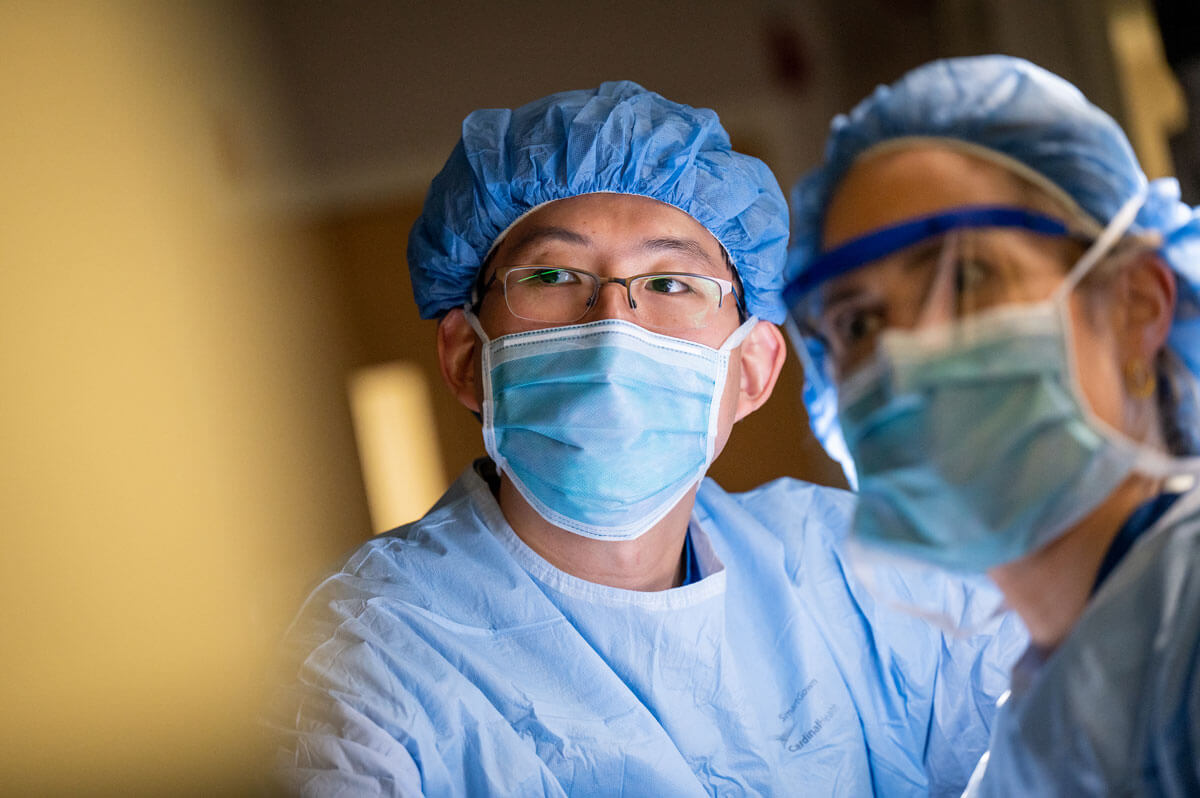
The Division of Minimally Invasive Gynecologic Surgery (MIGS) is committed to providing advanced treatment for complex benign gynecological conditions through the most advanced minimally invasive techniques. These methods offer numerous advantages over traditional open surgeries, including reduced blood loss, lower infection rates, decreased need for hospitalization and expedited recovery. Since its inception within the Johns Hopkins gynecological specialties group in 2016, the division has rapidly evolved. It became an independent division in 2020, and has expanded from three surgeons to five fellowship-trained attendings, two fellows and one certified nurse midwife.
The MIGS team excels at converting traditional open procedures into minimally invasive alternatives, significantly enhancing patient recovery times and outcomes, and prioritizing safety and efficiency. By leveraging the latest technology and techniques, the division is dedicated to advancing the standard of care for women facing benign gynecologic issues. This patient-centered approach ensures that individuals receive optimal treatment while minimizing the physical and emotional effects of surgery.
Clinical Initiatives
By expanding access to minimally invasive options and enhancing patient experiences, the division has consistently improved treatment results for a wide range of benign gynecological conditions. This progress is evidenced not only by increased surgical volumes but also by improved patient satisfaction and safety metrics.
Expanded Care Locations
The division, initially based solely at The Johns Hopkins Hospital, now serves patients across multiple facilities, including The Johns Hopkins Hospital, the Johns Hopkins Health Care & Surgery Center at Green Spring Station and Johns Hopkins Howard County Medical Center. This expansion has significantly improved access to care, allowing patients to receive treatment closer to their homes and families.
Growth in Surgical Volume
The division’s growth—both in clinical capacity and geographic reach—has significantly expanded access to minimally invasive gynecologic surgery (MIGS), with procedure volumes more than doubling from 524 in 2020 to 1,293 in 2025. This expansion has enabled a broader application of laparoscopic and robotic techniques for procedures that were traditionally performed via open surgery, improving recovery times, reducing complications, and enhancing the overall patient experience. For instance, prior to the division’s expansion into Johns Hopkins Howard County Medical Center, 94% of myomectomies performed there were via laparotomy, an open abdominal surgery that requires hospitalization and prolonged recovery. Three years later, in 2023, 85% of fibroid-removing surgeries at the medical center were completed laparoscopically or using robotic assistance.
In a five-year review across both campuses (The Johns Hopkins Hospital in Baltimore and Johns Hopkins Howard County Medical Center), 99.2% of hysterectomies and 93.7% of myomectomies were performed with laparoscopic or robotic techniques, compared to national minimally invasive hysterectomy and myomectomy rates of 60% and 50%–53%, respectively.
In a five-year review, 99.2% of hysterectomies and 93.7% of myomectomies were performed with laparoscopic or robotic techniques.
Karen C. Wang, M.D.
Educational Programs
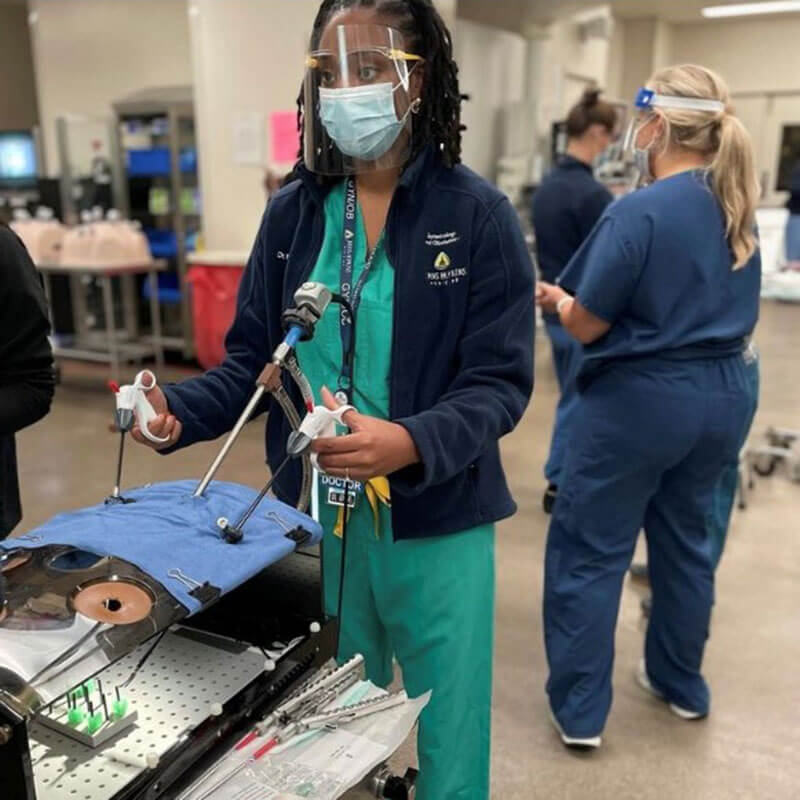
A key focus of the division is education and surgical training of residents, fellows and generalists. Since the inception of our AAGL (American Association of Gynecologic Laparoscopists)-accredited Fellowship in Minimally Invasive Gynecologic Surgery in 2018, we have graduated five fellows and are welcoming our seventh fellow this year. Members have traveled nationally and internationally to educate surgeons all over the world.
Additionally, our division hosts foreign physicians for training and is actively involved in the AAGL community, leading workshops, delivering lectures, guiding testing for the Essentials in Minimally Invasive Gynecologic Surgery education and assessment program, developing fellowship curricula, and participating in fellowship boot camps at national meetings. Members of the division also engage with patient advocacy groups to share knowledge on gynecological conditions. Members are recognized nationally and internationally, and have served on both the Fellowship in Minimally Invasive Gynecologic Surgery and AAGL boards.