
Division of Maternal-Fetal Medicine
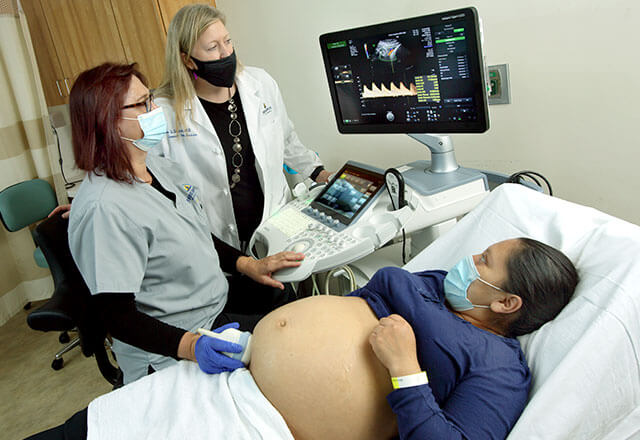
The Division of Maternal-Fetal Medicine (MFM) is committed to providing exceptional health care for pregnant women facing high-risk medical conditions, including obstetric complications and fetal abnormalities. With a rich history dating back nearly 130 years to its founding by J.W. Williams, the division has consistently been at the forefront of clinical and translational research, significantly advancing the field of maternal-fetal medicine.
Comprising more than 20 board-certified maternal-fetal medicine subspecialists, including experts in genetics, addiction medicine, mental health, infectious diseases and critical care, the faculty brings a wealth of experience to high-risk obstetrics. These leaders actively contribute to state and national boards and task forces, shaping health policy to improve care standards.
The division’s comprehensive approach includes multidisciplinary collaborative clinics that address a range of issues, such as fetal abnormalities, multiple gestations, infectious diseases and women’s mood disorders. This integrated care model ensures that each patient receives tailored support from a team of experts, maximizing both maternal and fetal health outcomes. Through innovation and collaboration, the Division of Maternal-Fetal Medicine is dedicated to enhancing the pregnancy journeys of high-risk patients.
Clinical Initiatives
At the core of Johns Hopkins’ leadership in maternal-fetal medicine is its commitment to advancing ultrasound technology and fetal imaging, setting global benchmarks for precision, innovation and accessibility.
Maternal-Fetal Medicine Fetal Assessment Center
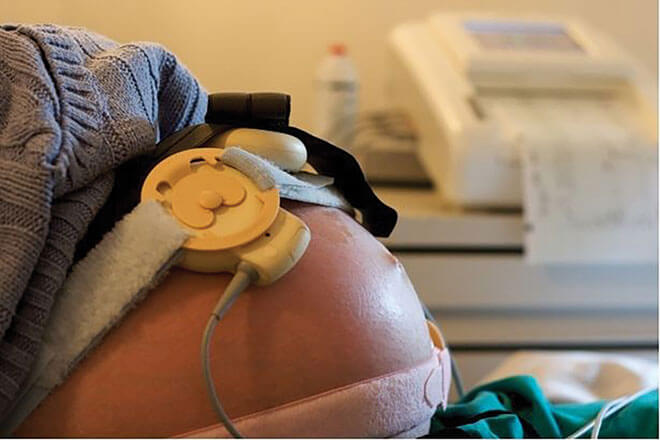
The Maternal-Fetal Medicine Fetal Assessment Center offers a comprehensive suite of advanced ultrasound services, including:
- First-trimester nuchal translucency screening for early aneuploidy detection
- Detailed fetal anatomy scans that provide unparalleled structural assessment
- First- and second-trimester fetal echocardiography for high-resolution imaging of congenital heart defects
- Fetal neurosonology, enabling early detection of central nervous system anomalies
- First-trimester preeclampsia screening, enhancing predictive maternal care
- Invasive fetal procedures, including amniocentesis and chorionic villus sampling (CVS)
The ultrasound suite at The Johns Hopkins Hospital, accredited by the American Institute of Ultrasound in Medicine, is one of the most advanced diagnostic imaging centers in the country. Staffed by over 20 highly trained sonographers, the facility is equipped with state-of-the-art imaging technology, supporting seven dedicated ultrasound rooms and multiple satellite offices. In 2024 alone, nearly 20,000 ultrasound exams were performed, reinforcing Johns Hopkins’ role as a leader in maternal-fetal diagnostics.
Recognizing the critical importance of accessibility, the division also offers a robust telemedicine consultation service, ensuring that patients across Maryland, Washington, D.C., and Virginia can receive expert ultrasound interpretation and consultation without geographic barriers. Additionally, fetal testing is conducted in several dedicated units, staffed by specialized registered nurses and MFM physicians, providing continuous monitoring and personalized care for high-risk pregnancies.
Comprehensive Maternal-Fetal Care and Transport Services
As one of only two Level IV maternity hospitals in Maryland, The Johns Hopkins Hospital is equipped to handle the most complex maternal and fetal conditions. The active maternal-transport service plays a critical role in regional perinatal care, facilitating the safe transfer of high-risk patients from across Maryland and neighboring states. Over the past five years, the hospital has successfully received nearly 1,500 direct labor and delivery transports, ensuring that the sickest mothers and most vulnerable fetuses receive the highest level of care.
MFM faculty provide full antepartum care at The Johns Hopkins Hospital and Johns Hopkins Bayview Medical Center, while also supporting obstetric services at Johns Hopkins Howard County Medical Center and Sibley Memorial Hospital. This networked approach ensures that specialized maternal-fetal expertise is available across the region, improving outcomes for both mother and baby.
In the past five years, the hospital has received almost 1,500 direct labor and delivery transports from Maryland and surrounding states.
Dr. Jeanne Sheffield
Advanced Obstetric Surgery Center
The Johns Hopkins Maternal-Fetal Medicine Advanced Obstetric Surgery Center provides specialized care for patients at risk for complications like placenta accreta spectrum, placenta previa, prior hemorrhage and other complex conditions. Our multidisciplinary team of maternal-fetal medicine specialists, critical care physicians, OB anesthesiologists, transfusion medicine specialists, labor and delivery nurses, MRI specialists and interventional radiologists provides comprehensive and individualized care for patients with complex surgical needs.
Excellence in Perinatal Genetics and Prenatal Diagnosis
The Johns Hopkins Prenatal Diagnosis and Treatment Center is a national leader in genetic counseling and advanced fetal diagnostics. With expertise in high-resolution imaging, fetal therapy and pediatric subspecialty collaboration, the center serves over 1,000 patients annually from around the globe.
A team of American Board of Genetic Counseling-certified counselors works alongside board-certified maternal-fetal medicine specialists, geneticists and experts in fetal therapy, pediatric cardiology, pediatric surgery and pediatric neurology to provide:
- Comprehensive genetic screening and counseling for families at risk of inherited conditions
- Innovative fetal interventions informed by real-time genetic insights
- Multidisciplinary support for complex diagnostic pathways, ensuring families receive the most precise and personalized care available
With the rapid evolution of perinatal genetics, Johns Hopkins continues to set the standard for integrating genetic advancements into clinical practice, reinforcing its leadership in precision medicine and individualized patient care.
Integrated Perinatal Psychiatry Services
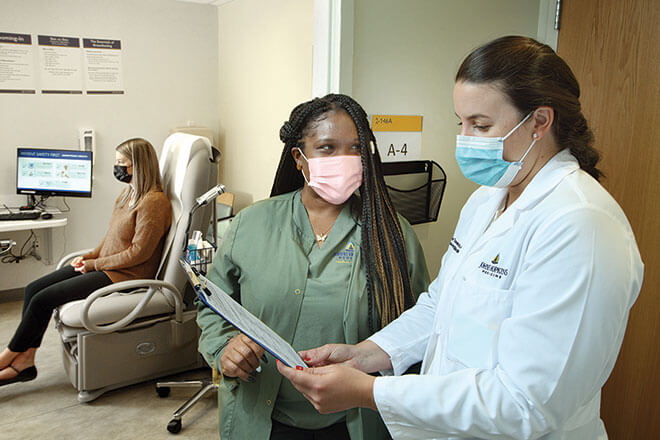
Maternal mental health has become a national crisis affecting a significant percentage of our pregnant and postpartum patients. Our comprehensive integrated perinatal psychiatry service provides care for our patients throughout their pregnancy and up to one year postpartum. Care coordination with psychiatry and psychology specialists at the Johns Hopkins Hospital Women’s Reproductive Mental Health Center has led to improved patient access to these services, resulting in improved pregnancy outcomes.
Research Initiatives
The faculty has obtained internal and external funding from multiple venues. Ahizechukwu Eke is a principal investigator on several National Institutes of Health and other federal grants, including an NIH Director’s Pioneer Award and a K23 grant from the National Institute of Child Health and Human Development (NICHD). He investigates safety and pharmacometrics of novel antivirals in pregnant women living with HIV. Marika Toscano, M.D., recently received a Women’s Reproductive Health Research Award for her work in women’s mood disorders in pregnancy. Angie Jelin, M.D., is an NICHD K23 awardee who is using whole-genome sequencing to study the role of previously unstudied genetic mutations in fetal anomalies.
Cardio-Obstetrics Research
Principal Investigator: Jason A. Vaught, M.D.
Cardio-obstetric research in the Division of Maternal-Fetal Medicine seeks to advance the field of gynecology through medical care and innovation. With a focus on the effect of heart conditions on pregnancy and the ways in which pregnancy can put stress on the heart and circulatory system, our goal in this multidisciplinary research is to develop new treatments or preventive therapies for patients and their babies to better manage a heart condition during pregnancy.
Maternal-Fetal Medicine Research
Principal Investigator: Ahizechukwu C Eke, M.B.Ch.B., Ph.D., M.P.H.
The Division of Maternal-Fetal Medicine is engaged in clinical, basic bench and epidemiological research. Our strengths lie in the expertise and diverse interests of our faculty, as well as in our collaborations with other disciplines and departments throughout the schools of medicine, public health and engineering, and with other academic centers. Mentorship of outstanding emerging clinician-scientists is a hallmark of this division.
Labor and Delivery
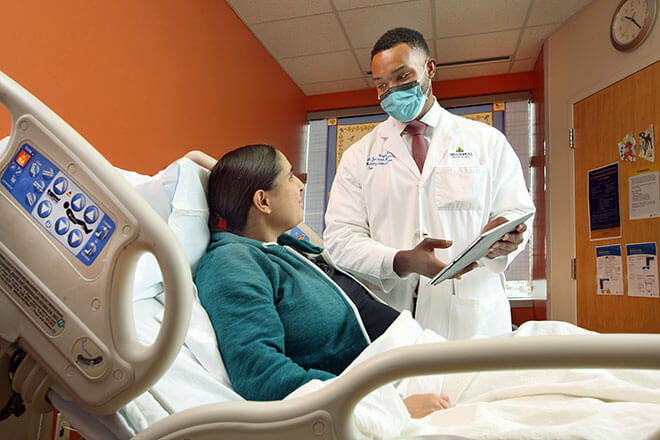
The labor and delivery team provides high-quality, evidence-based care that helps ensure optimal maternal and neonatal outcomes. Under the leadership of Jason Vaught, a specialist in obstetric critical care, and with direct oversight from maternal-fetal medicine specialists, our program is led by experts in maternal-fetal medicine and obstetric critical care who bring a depth of expertise rarely found in general obstetrics.
This structure enhances our ability to manage both routine and high-risk pregnancies. Our team works in close collaboration with neonatologists, anesthesiologists and other subspecialists, leveraging advanced diagnostic tools such as electronic fetal monitoring and biophysical profiles to ensure early detection and proactive management of complications including preeclampsia, gestational diabetes and fetal growth restrictions.
The seamless integration of our specialties allows for timely, coordinated interventions that improve clinical outcomes while maintaining patient-centered care. Our commitment to collaboration and continuous quality improvement enhances patient safety and reinforces our role as a leader in obstetric excellence.