
Cited: Fall 2025
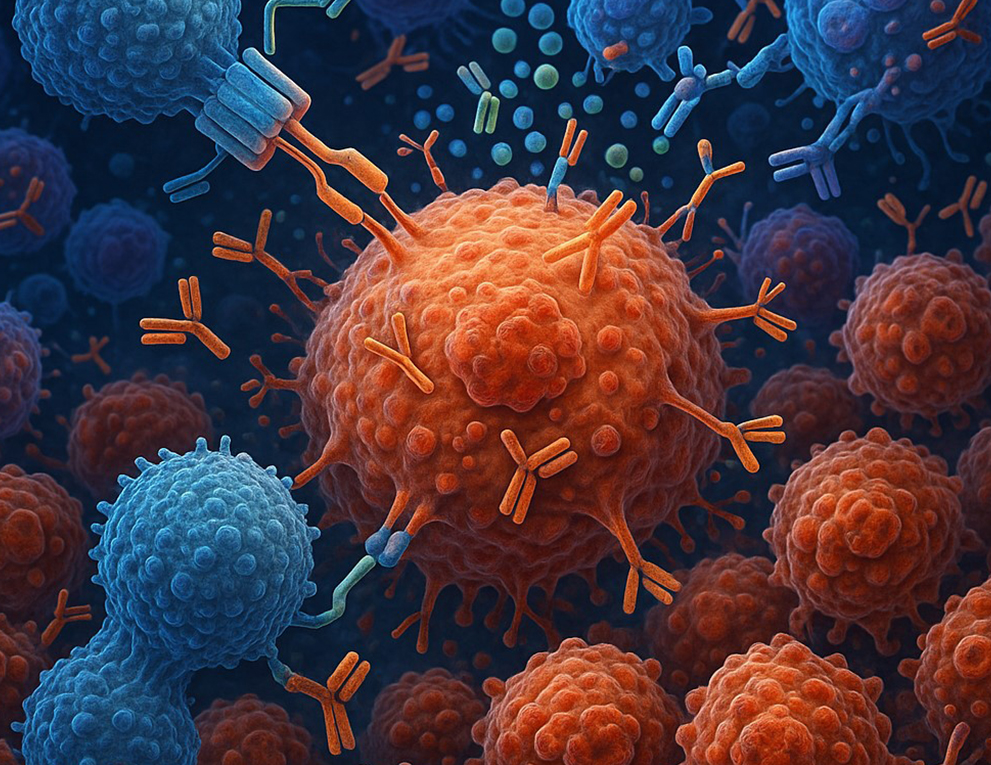
“For a fraction of lung cancers where we aren’t expecting therapy responses, radiation may be particularly effective to help circumvent primary resistance to immunotherapy; this could potentially be applicable to acquired resistance, too.”
Oncologist Valsamo “Elsa” Anagnostou, senior author on research that found that radiation plus immunotherapy induced a systemic anti-tumor immune response in lung cancers that do not typically respond to immunotherapy. The combination therapy also yielded improved clinical response in patients whose tumors harbor features of immunotherapy resistance. Her team’s study appeared in Nature Cancer.
“These findings uncover a new connection between bone loss and dementia risk and may open the door to new research on how protecting bone health could also help protect brain function.”
Mei Wan, professor of orthopaedic surgery, describing results of a study in mice believed to provide the first evidence that particles of amyloid beta protein — a small, sticky protein fragment found in people with Alzheimer’s disease — build up in the bone marrow of the animals, although not in the exact same form as the large, dense plaques found in the brains of people with Alzheimer’s disease. The findings appeared in Nature Aging.
“Bilirubin was once considered to be a waste product. This study affirms that it could be one critical protective measure against infectious disease, and potentially neurodegenerative diseases.”
Bindu Paul, whose Johns Hopkins lab collaborated on new research indicating that a pigment that causes jaundice may help protect people from the most severe consequences of malaria. The study, which appeared in Science, suggests bilirubin may be a potential target of drugs that boost its production to prevent malaria’s most deadly or debilitating effects, according to Paul, an associate professor of pharmacology and molecular sciences.
“This is an entirely new conceptual framework for understanding how rRNA synthesis influences cancer cell behavior. Targeting this pathway could not only suppress tumor growth but also modulate tumor antigenicity and enhance responsiveness to immunotherapies.”
Radiation oncologist Marikki Laiho, leader of a study that found targeting a key step in the process of how cells make proteins can inhibit cancer cells and helps explain what makes them so sensitive. The findings, appearing in Cell Chemical Biology, open the door to potential new treatments for cancers with common genetic mutations.
“Most brain organoids that you see in papers are one brain region, like the cortex or the hindbrain or midbrain. We’ve grown a rudimentary whole-brain organoid.”
Biomedical engineer Annie Kathuria, lead author on research published in Advanced Science, describing her team’s success in growing a novel whole-brain organoid, complete with neural tissues and rudimentary blood vessels. The researchers say the advance could usher in a new era of research into neuropsychiatric disorders such as autism.