
Johns Hopkins Center for Rare Gynecologic Cancers Is One of Few
The center provides personalized, state-of-the-art care for conditions that most clinicians rarely see.
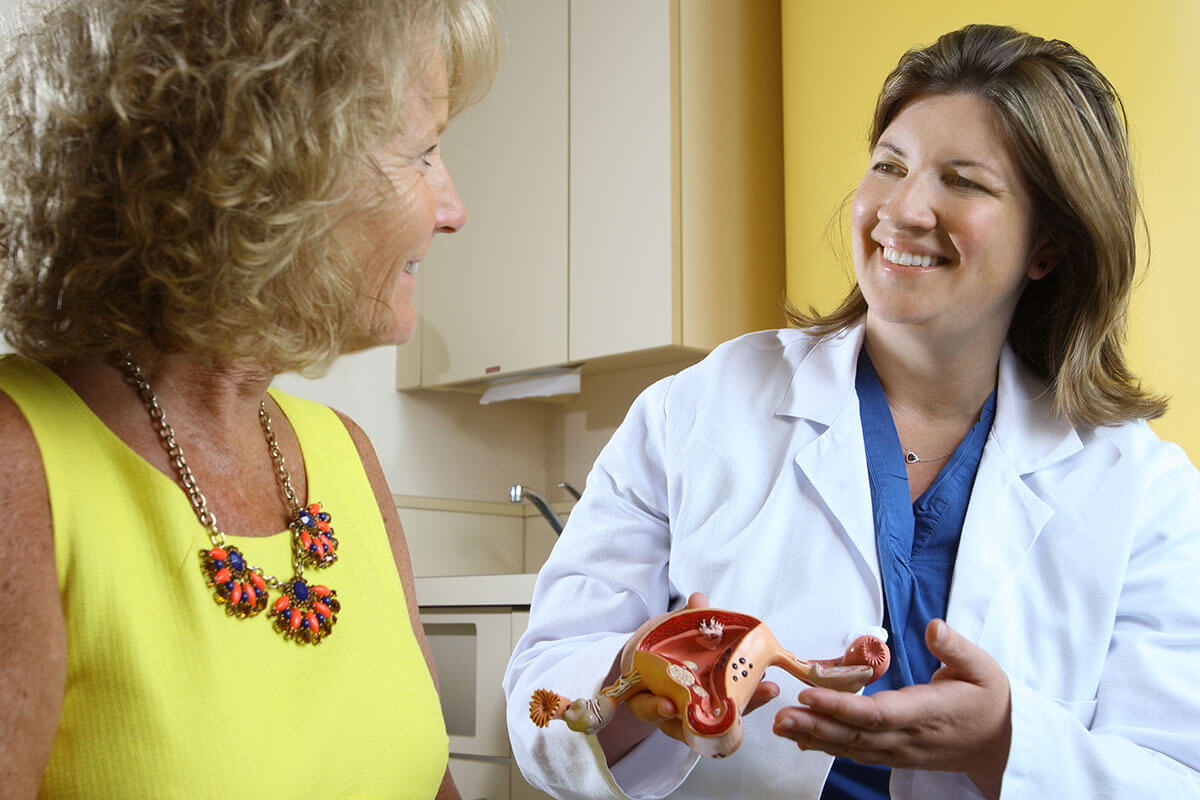
Any cancer diagnosis is frightening, but women learning they have a rare gynecologic cancer often face additional challenges.
Because these malignancies are so unusual, research is relatively scant, and an accurate diagnosis can be elusive. And even when the cancer is correctly categorized, few standardized treatment options are available, says Amanda Fader, director of the Center for Rare Gynecologic Cancers and a professor in the Department of Gynecology and Obstetrics and the Sidney Kimmel Cancer Center.
That means patients often don’t know where to turn for the specialized care their condition requires.
To address this, Johns Hopkins is one of the few institutions nationwide that provide multidisciplinary, highly personalized, evidence-based care for rare gynecologic cancers.
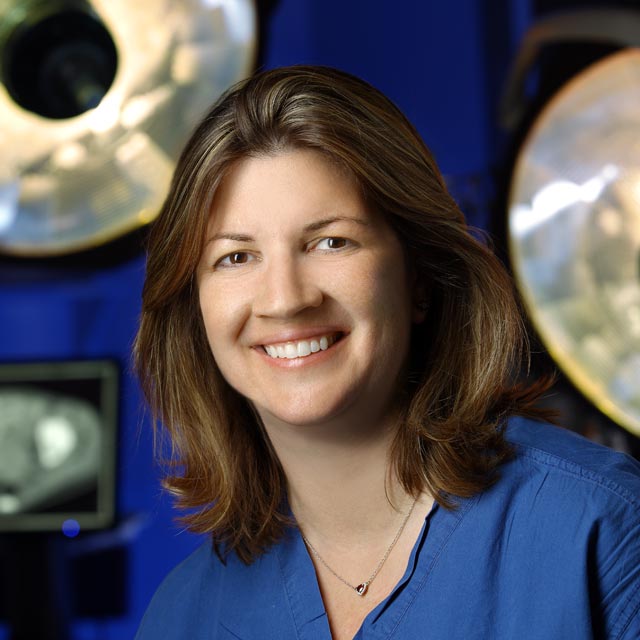 Dr. Amanda Fader
“This dedicated program provides patients with comprehensive and timely access to expert clinical evaluation, specialized pathology review, state-of-the-art tumor profiling and participation in biomarker-specific clinical trials — all delivered with a commitment to compassionate, individualized care, says Fader, who launched the center nearly a decade ago.
While many gynecologic cancers are considered uncommon, rare cancers are “ultra-uncommon,” affecting only 6 to 10 individuals per 100,000 each year, Fader explains. Cancers treated at her center include uterine sarcomas, low-grade serous ovarian carcinoma, uterine serous carcinoma, clear cell and mucinous tumors of the ovary, germ cell and sex cord stromal tumors of the ovary, vulvar melanoma, neuroendocrine carcinoma of the cervix and gestational trophoblastic tumors.
“Although these malignancies account for just 20% of the cancers we treat, they are responsible for 40% of the mortality. This disproportionate impact underscores the critical need to prioritize research and funding dedicated to these diseases,” she says.
Fader and her colleagues, including Colleen McCormick, assistant professor of gynecology and obstetrics, are deeply committed to not only delivering the best treatments to patients diagnosed with rare cancers, but to discovering them.
McCormick emphasizes that precision-based oncology care is key to rare tumor treatment. “Much of our research, along with that of other leaders in the field, shows that a personalized, biomarker-driven approach leads to better outcomes and improved survival in this setting,” she says.
 Dr. Colleen McCormick
For example, certain patients with rare hormone-positive tumors respond better to oral endocrine therapies, allowing them to be treated at home, while others are best managed with intravenous targeted or immune therapies when their tumors express specific proteins or receptors. “It truly depends on the individual patient and her unique tumor and personal health profile,” McCormick notes.
The center, which treats several hundred patients a year who come from across the country and around the world, serves as a beacon for those seeking specialized expertise. Many patients find their way to Johns Hopkins after extensive research or referrals from oncologists familiar with the center’s reputation and the research of Fader and her colleagues.
The patient population, Fader says, includes women in all stages of life, including during pregnancy. While most surgeries and clinical trials take place at Johns Hopkins, Fader and other clinicians in the center work with a patient’s local oncologist when possible. “If we can help facilitate coordination of cancer care closer to home for select patients, we do,” she says.
Last year, the center launched a gestational trophoblastic neoplasia (GTN) program, led by McCormick, to provide focused expertise for a cancer that appears in placenta cells of patients who are or have been pregnant. “We really felt that we had a need to make sure those patients receive consolidated care,” says McCormick. “These are tumors that even busy clinicians see very rarely.”
GTN is diagnosed when pregnancy tests find abnormally high levels of beta-human chorionic gonadotropin (beta-hCG), a hormone produced during pregnancy. At particular risk are patients who have had a molar pregnancy.
“These are exceptionally rare tumors, and can be difficult to treat,” she says. “But the great news is that they have very high cure rates. We know that with aggressive appropriate therapy, patients can be cured. If we do middling treatment, they are much more likely to develop resistance and do poorly.” McCormick is also working with partners to develop clinical trials that would use immunotherapy.
As national leaders in rare gynecologic cancer care and research, Fader, McCormick and others at the Johns Hopkins Kelly Gynecologic Oncology Service are committed to sharing knowledge and working with other colleagues to improve patient care.
“We offer unique treatment opportunities at Johns Hopkins,” says Fader. “But it’s important to note that the best outcomes for patients with rare cancers may come from interdisciplinary collaboration — working with clinicians and scientists from different departments at Hopkins or with colleagues from other cancer centers and sharing knowledge with one another and teaming up in research and treatment planning.”
As a result of these collaborations and advances in precision medicine, novel therapeutics and artificial intelligence, patient outcomes are improving. “In gynecologic oncology, we specialize in hope. And we can offer patients with rare cancers so many more therapies and greater hope than we could before. We have much work to do, but progress is being made,” Fader says.