
Collaboration Focuses on Better Emergency Department Care for Older Patients
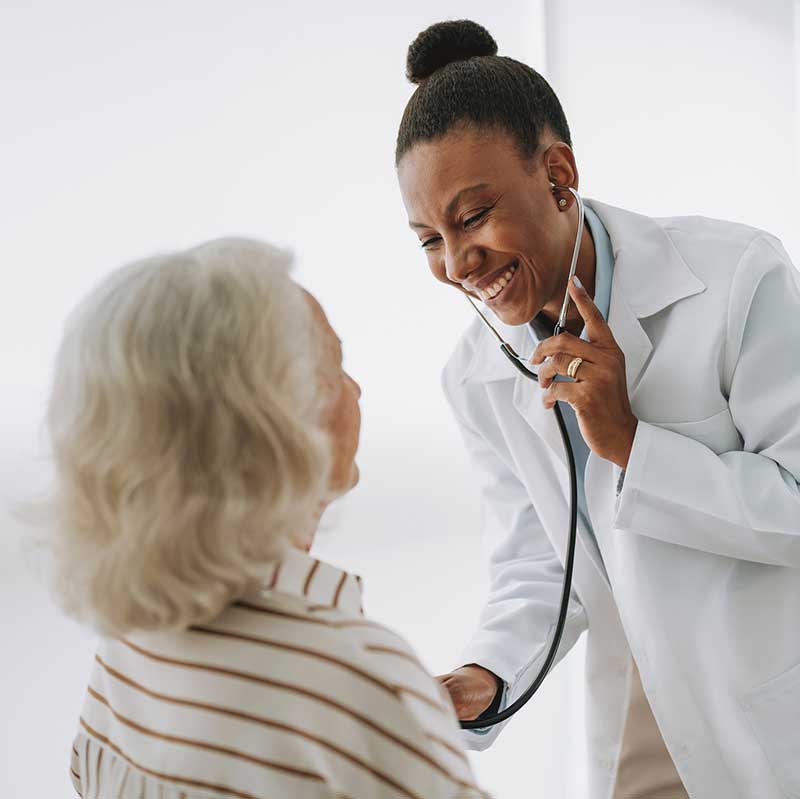
Phillip Magidson, assistant professor in the Department of Emergency Medicine and the Division of Geriatric Medicine and Gerontology, wants to change the way older adults are assessed and treated in emergency departments. New best practices, he says, could go a long way toward improving patients’ ED stays and even improve their health outcomes after they leave.
Magidson has forged a collaboration between the Division of Geriatric Medicine and Gerontology and the Department of Emergency Medicine, and he’s finding that it’s a powerful tool for improving the care of older adults.
The ED is a challenging setting for clinicians, who must make quick decisions, often without knowing a patient’s full medical history. This setting is also hard on patients, especially those with visual, hearing, or cognitive impairments that can be part of aging.
Yet many doctors don’t receive much, if any, training specific to the geriatric population, says Magidson.
Older adults are not exact biological, physiological, or psychosocial copies of their younger selves. Their lab values, vital signs and presentation of symptoms may be different than those of younger adults. Just as crucially, older adults may have different treatment goals than younger patients.
“Often in medicine we’re very focused on making a rapid diagnosis and providing a very clear treatment plan,” Magidson says. “And sometimes that diagnosis and treatment is not consistent with what’s important to the patient. Often, less is more in older adult patients: fewer interventions, less testing. Sometimes doing more doesn’t add a lot of value and is associated with serious risks.”
Despite the large and increasing number of geriatric ED patients, current ED training and best practices are not always the most effective for treating that population, says Magidson.
As an example, he has collaborated with researchers looking at better ways to identify and manage cognitive impairment in the ED. It’s difficult to do formal screenings for cognitive issues in the fast-paced setting, he says, because they typically involve lengthy questionnaires and assessments. But other approaches may work.
“There’s some thinking that prior to a formal diagnosis of dementia, you sometimes see an uptick in ED visits: more falls, a couple more traffic accidents, a medication misadventure. And in isolation, okay, but if this patient’s been here for two traffic accidents and one medication issue and in the preceding 30 years they’ve never been in the ED, why now? If there’s some cognitive impairment, can we identify that? Then it could be an issue that’s settled with a referral to memory clinic or a person’s primary care physician.”
Magidson’s work is also focused on improving ED care of patients who are known to have cognitive impairments, so they don’t stay for as long or develop as many complications. This research includes looking at health systems that have the resources to help older adult patients recover better and leave the ED sooner.
He also notes that EDs can do more to support family members and other care partners, who are “really a large part of not only gathering information but of formulating a treatment plan for older adults.” This can be as simple as having chairs present so people can sit, and specifically inviting them to be a part of the conversation from the beginning, he says.
The collaboration between geriatrics and emergency medicine has been key to Magidson’s research. “With that vision and understanding that these patients are unique, these two departments are really thinking about care processes and research projects, and looking at these patients in the ED space,” he says. “We’ve really had support recognizing that it’s an important patient population. This has been a good laboratory to do that thinking and that work.”
For Clinicians Clinical Connection
Clinicians, discover the latest in research and clinical innovation from Johns Hopkins experts. Access educational videos, articles, CME courses and other resources from our world-renowned institution.