
Researchers Find ‘Gatekeeper’ for Post-Stroke Inflammation, Showing Path for Improved Outcomes
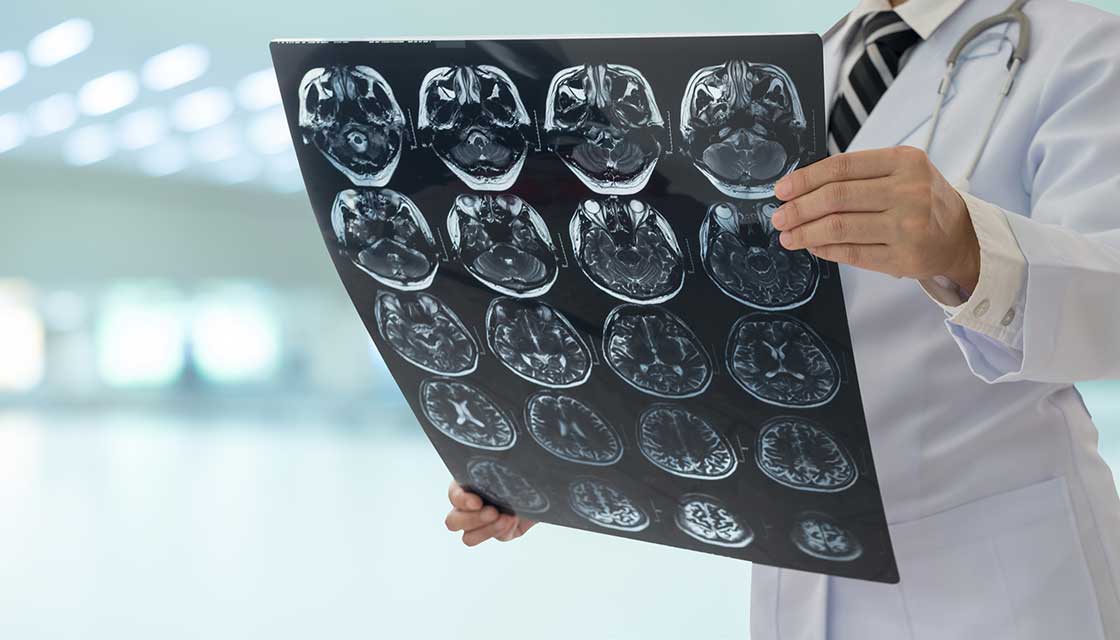
A recent study led by Johns Hopkins researchers across multiple departments, working with colleagues at UTHealth Houston, uncovers a mechanism that fuels post-stroke inflammation, revealing a new path to potentially improve patient outcomes.
The findings, published July 24 in Cell, indicate that mast cells in the dura mater, the outermost protective layer of the meninges surrounding the brain, respond to neuropeptides released from injured neurons after stroke.
“Our study shows for the first time that a very important reservoir of immune cells that go into the brain immediately after a stroke comes from the skull bone marrow, and that process is regulated by a very specific population of mast cells in the dura,” says study corresponding author Risheng Xu, M.D., Ph.D., assistant professor of neurological surgery at the Johns Hopkins University School of Medicine. “Blocking that receptor decreases brain inflammation and improves neurological outcomes.”
According to the Centers for Disease Control and Prevention, someone has a stroke every 40 seconds in the United States, most often an ischemic stroke caused by a clot blocking blood flow in the brain. The current treatment is tissue plasminogen activator (tPA, alteplase), a clot-busting drug that restores circulation and must be administered within three to four-and-a-half hours of stroke onset for eligible patients.
When blood flow is restored, damage from stroke injury triggers a cascade of inflammation, with immune cells infiltrating the brain and worsening neurological outcomes. In humans, the cells carry a receptor called MRGPRX2, which triggers mast cell degranulation, releasing inflammatory mediators that call in immune cells.
This acute neuroinflammation that occurs within the first 24–48 hours has been linked to motor deficits, cognitive decline and post-stroke depression. At present, there are no FDA-approved therapies for the inflammation that follows stroke.
The team’s work reveals that mast cells act as “gatekeepers” for immune cell migration. Normally, the brain tightly regulates immune entry, maintaining what is often described as an immune-privileged environment.
However, after a stroke, activation of MRGPRB2 disrupts this balance, as degranulating mast cells in the dura release signals that recruit neutrophils from skull bone marrow into the meninges and then into the brain itself. Mechanistically, mast-cell proteases cleave semaphorin-3A (Sema3A), weakening its chemorepellent function and opening the door for neutrophil trafficking from skull marrow to the dura, then the brain.
This chain reaction reframes understanding of immune dynamics in stroke, as researchers demonstrated that blocking MRGPRX2 with a natural antagonist, osthole, given at six hours and 24 hours after experimental stroke in mice, reduced inflammation, improved behavioral outcomes and increased survival. Unlike many prior attempts to target neuroinflammation, the researchers’ approach has a practical advantage because the mast cells live outside the blood–brain barrier.
“The blood supply to the dura, where these mast cells reside, comes from the external carotid circulation, not the blocked vessels of stroke,” says Xu. “That means drugs can reach these cells, which is one reason why prior anti-inflammatory strategies failed.”
Additionally, the findings open a wider treatment window. While tPA dissolves clots and must be given within hours, MRGPRB2 antagonists address downstream inflammation and showed benefit even when dosed later in mice. Rather than replacing reperfusion therapies, this represents a complementary strategy: First restore blood flow, then address the inflammation that follows.
“This discovery truly bridges the strengths of multiple departments,” says Xu. “It shows how collaboration, both in science and medicine, is critical to move the field forward.”
Researchers are considering whether the mast cell–MRGPRX2 pathway plays a role in other neuroinflammatory or neurodegenerative diseases, from migraine pain to multiple sclerosis to Alzheimer’s disease.
“Our findings didn’t just change how we look at stroke,” says Xu. “This pathway is broadly applicable to intracranial disorders where inflammation is key, from neurodegenerative diseases to tumors. The sky is the limit.”
Other researchers involved in this work include Xinzhong Dong of the departments of neuroscience, neurosurgery, and dermatology at Johns Hopkins and the Howard Hughes Medical Institute; Ruchita Kothari, Hyun Jong Oh, Daniel Capuzzi, Collin Kilgore and Nathachit Limjunyawong of the Johns Hopkins neuroscience department; Mostafa Abdulrahim, Sumil Nair, Yaowu Zhang, Justin Caplan, Fernando Gonzalez, Christopher Jackson, Chetan Bettegowda, Judy Huang and Rafael Tamargo of Johns Hopkins neurosurgery; Sarbjit Saini of the Johns Hopkins Asthma and Allergy Center; Raymond Koehler of Johns Hopkins anesthesiology and critical care medicine; Jennifer Kim of Ohio State University neurosurgery; and Bhanu Ganesh, Chunfeng Tan and Louise McCullough of UTHealth Houston neurology.
Xinzhong Dong is the scientific founder and consultant for Escient Pharmaceuticals, a company developing drugs targeting Mrgprs, and collaborates with GlaxoSmithKline (GSK) on Mrgpr projects unrelated to this manuscript. Christopher Jackson is a co-founder with equity interests in Egret Therapeutics, holds a patent for using immune checkpoint agonists for neuroinflammation, and receives research support from Biohaven, InCephalo and Grifols.
No other authors declare conflicts of interest.
This study was funded by the Howard Hughes Medical Institute; the National Institutes of Health (NIH) R37NS054791 and 1K08NS131599; and the American Heart Association 23PRE1020354, as well as NIH training grant 5T32GM136577.
For Clinicians Clinical Connection
Clinicians, discover the latest in research and clinical innovation from Johns Hopkins experts. Access educational videos, articles, CME courses and other resources from our world-renowned institution.