
A Rise in Climbing Injuries and Multidisciplinary Treatment Options
Orthopaedic surgeon Dawn LaPorte discusses common injuries in rock climbing and bouldering, and clinical considerations for these patients.
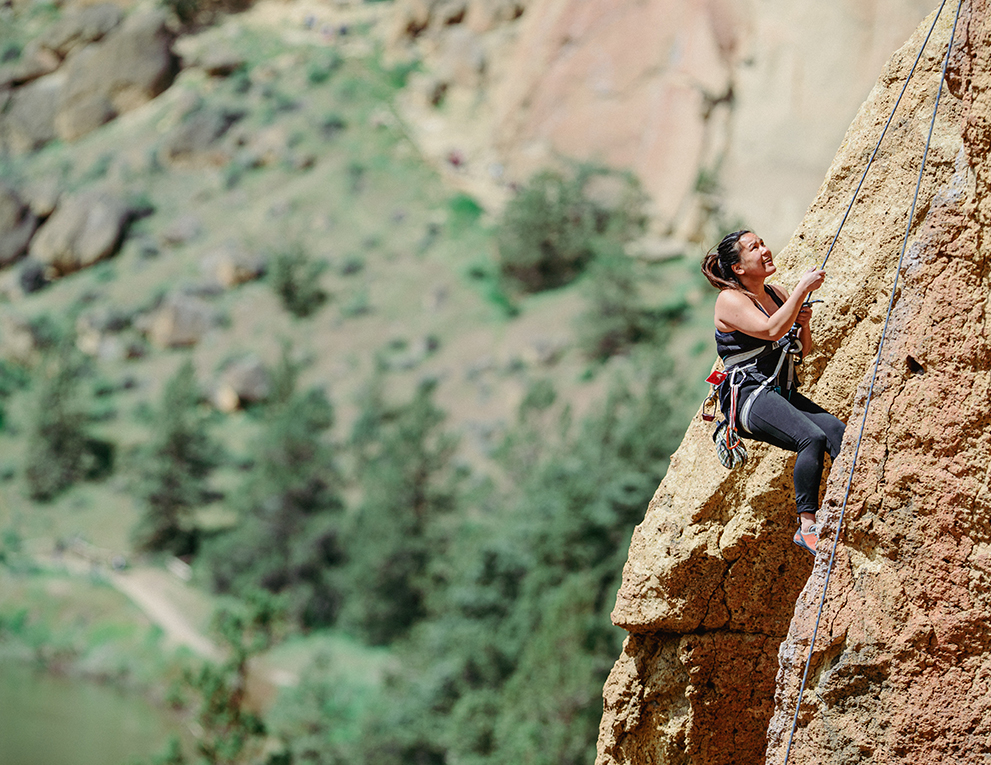
As rock climbing grows in popularity, Johns Hopkins orthopaedic surgeons are seeing an increasing number of patients with related injuries, mostly from overuse.
Dawn LaPorte, the Thomas M. Brushart, M.D., Professor in Hand Surgery within Johns Hopkins Orthopaedic Surgery, sees upward of 10–20 patients a month with climbing-related injuries, mostly injuries of the upper extremities, including tendonitis in the shoulders and elbow, wrist sprains, ligament injuries and, most commonly, pulley injuries.
“Because there is so much load on the fingers, there’s a risk of partial or complete pulley rupture,” she says.
While less common, lower extremity injuries are often more acute and include ankle sprains, ankle and foot fractures, and knee injuries.
LaPorte and medical student Grace Chen recently published a survey study, “Risk Factors and Injury Prevention Among Female Rock Climbers,” in the Journal of Women’s Sports Medicine. The study found that female climbers with a history of eating disorders were at a higher risk for injury, and that bouldering had a higher risk of injury compared with sport climbing. It is one of few research papers that focuses on female climbers and injury risk.
Their paper also found that cross-training and climbing-specific warmups may be protective against injury for female climbers, and that bouldering may have a higher risk of injury compared with other types of climbing.
“Cross-training helps with overall strength and fitness,” LaPorte says. “Interestingly, warming up with climbing-related activities was more protective than warming up with a cross-training approach.”
“People love climbing, and it’s an amazing exercise. Going into it, people should be thoughtful, warm up properly and make sure they’re looking after their overall fitness.”
Dawn LaPorte
Healing from Injuries
Often, upper extremity injuries can be treated with rest and therapy, and sometimes splinting. LaPorte and her colleagues work closely with physicians and physical and occupational therapists from the Department of Physical Medicine and Rehabilitation (PM&R). Among the treatments the PM&R team offers, platelet-rich plasma injections can help stimulate tissue regeneration and cell production in slow-to-heal injuries.
The less-common lower extremity injuries, such as fractures, are more likely to require surgery, although ligament injuries and sprains can often be treated with immobilization and rest.
LaPorte says if a female patient comes in with a climbing injury, doctors might ask if she has had regular menstrual cycles — an irregular cycle could be indicative of bone health issues or eating disorders. LaPorte and her colleagues may order a DEXA scan, and depending on the results, refer the patient to a bone health expert, nutritionist and endocrinologist, as well as psychiatrist or psychologist if needed.
Getting Back to Climbing
For patients returning to climbing after injury, LaPorte recommends they take it slowly, starting with climbs below their skill level prior to injury, and making sure to warm up. For those recovering from pulley injuries, wearing a pulley ring — which provides extra finger support — and taping fingers can help.
“People love climbing, and it’s an amazing exercise,” LaPorte says. “Going into it, people should be thoughtful, warm up properly and make sure they’re looking after their overall fitness.”
To refer a patient to orthopaedic surgery, call 443-997-2663.