
Get to Know Natario Couser
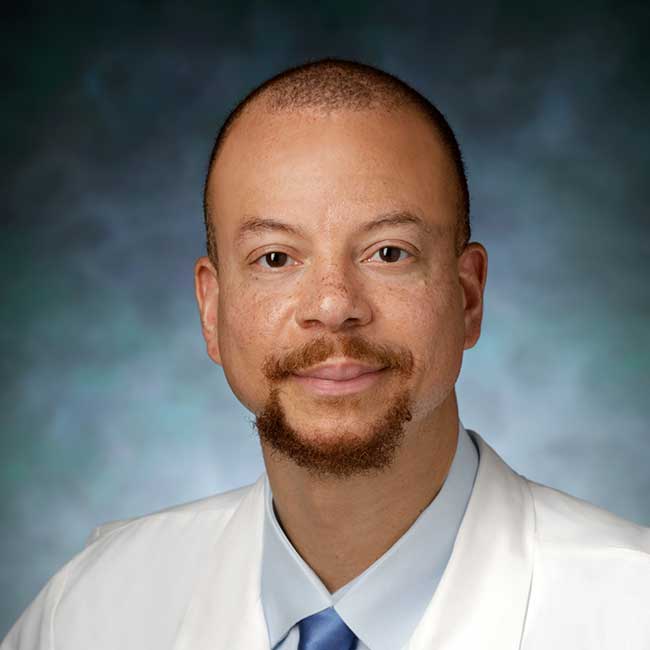
Natario Couser, M.D., M.S. joined the Wilmer Eye Institute, Johns Hopkins Medicine faculty as an Associate Professor of Ophthalmology in March. Couser, who is also the Director of the Genetic Bone and Connective Tissue Disorders Program at the Kennedy Krieger Institute, sees pediatric patients at Wilmer’s East Baltimore and Columbia clinics.
What attracted you to the field of ophthalmology?
The field of ophthalmology attracted me as a medical student as it offers a blend of medical care and microsurgery, high emphasis on direct patient interaction and consistent opportunities to make a significant impact on the quality of life of the patients we care for.
How did you become interested in your specialty?
My interest to pursue a career in ophthalmic genetics arose during my pediatric ophthalmology fellowship at the Emory Eye Center, spending time with the ophthalmic genetic service during training. Since then, I have pursued a highly focused track to both obtain a strong knowledge base and to demonstrate an expertise within the field.
As the function of the eye is intertwined with the muscular system, visual cortex and peripheral nervous system, the care of these patients necessitates a multifaceted approach. Understanding the genetic mechanisms may assist in directing clinical management decisions for the provider and afford the affected patient a sense of relief and empowerment over uncertainty, as well as unlock access to resources, support networks, clinical trial eligibility and personalized treatment.
What drew you to Wilmer?
I obtained my Master of Science in Biotechnology from Johns Hopkins University. This was a rewarding experience, and I grew fond of the area. After this program I obtained additional training in clinical genetics and practiced several years in academic medicine as a pediatric ophthalmologist, clinical geneticist and ophthalmic geneticist. Wilmer has a strong track record in high-quality patient care, research opportunities, innovative treatments and cutting-edge technology. My family and I were delighted to return to the area.
What are you working on right now and how will it contribute to the advancement of ophthalmology?
I am working to further define the clinical features, natural history and molecular basis of novel and rare genetic bone and connective tissue disorders in patients who have undergone genetic testing as part of their routine clinical care. These disorders include primary bone disorders, osteoporosis of disuse, and hereditary connective tissue disorders, of which ophthalmic manifestations are commonly associated.
Where do you see opportunities for advancement or innovation in your specialty?
The role of genetics and genomics in medicine is rapidly expanding. The field of ophthalmic genetics is positioned to be at the forefront of this rapid expansion. Next-generation sequencing and chromosomal microarray technology are recently added tools in the armamentarium in genetics, and the first gene therapy for an inherited eye disease has been approved by the U.S. Food and Drug Administration, European Commission and UK’s National Institute for Health and Care Excellence. Numerous gene and stem cell therapy clinical trials for additional retinal disorders are underway, while clinical applications from nanotechnology and gene editing using CRISPR technology are on the horizon. These entities will all play a huge role in the direction of the field, and it is paramount to have additional ophthalmologists within this field to help educate the clinical and research community on ophthalmic genetic diseases.