
Get to Know Gregory Wolfe
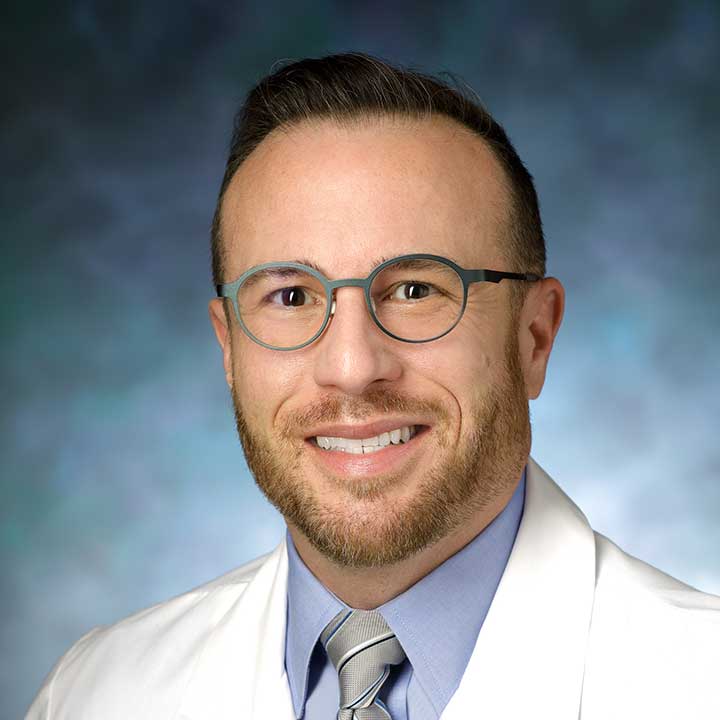
Gregory Wolfe, O.D., M.P.H. joined the Wilmer Eye Institute, Johns Hopkins Medicine faculty in January as an Assistant Professor of Ophthalmology. An optometrist whose interests center around the aging eye and the prevention, identification, treatment and rehabilitation of associated vision loss, Wolfe sees patients at Wilmer’s Water’s Edge clinic in Belcamp.
What attracted you to the field of optometry?
What attracted me to optometry is the awe-inspiring complexity of vision itself. A single photon can travel across the vacuum of space, reflect off an object at a specific wavelength and strike the retina, initiating an electrochemical cascade that ultimately allows the brain’s visual cortex to construct the image we perceive as reality. To be part of a field dedicated to enhancing, restoring and preserving this remarkable process is both intellectually fulfilling and deeply meaningful.
How did you become interested in your specialty?
My interest in this specialty grew during my residency training in ocular disease and low vision rehabilitation. Gaining advanced skills in both areas proved to be a natural and valuable combination. A deep understanding of the underlying disease processes allowed me to better anticipate and address the current and future visual needs of my patients. The opportunity to improve someone's quality of life and help restore a sense of independence is incredibly rewarding and continues to inspire my work in this field.
What drew you to Wilmer?
What drew me to Wilmer was the unparalleled combination of opportunity, resources and support that it offers. I was inspired by the chance to contribute to world-class clinical care while also pursuing my academic interests at the intersection of public health and vision care. Wilmer provides a unique environment where clinical excellence and academic exploration are not only encouraged but actively supported, allowing me to grow as both a clinician and a scholar.
Do you have any research interests? If so, what are they and why are you interested in them?
My research interests lie at the intersection of vision care and health policy, shaped by the emphasis of my MPH in health policy. I am particularly focused on how vision care policy influences outcomes of care, access to services and overall quality of life. I am drawn to health services research that evaluates the effectiveness, equity and efficiency of vision care delivery systems. Understanding these dynamics is essential for shaping policies that not only improve clinical outcomes but also enhance the overall well-being and functional independence of patients.
Where do you see opportunities for advancement or innovation in your specialty?
I see tremendous opportunities for advancement in optometry across multiple fronts. The increasing visual demands of a digitally driven society call for new approaches to managing screen-related eye strain and visual fatigue. Innovations in the treatment of dry eye disease continue to evolve, offering hope for more effective and personalized therapies. As people live longer, addressing the visual needs of an aging population will become even more critical. Most notably, I see the gap between ocular health and systemic health continuing to narrow. Eye care providers are uniquely positioned to detect early signs of systemic disease and I believe the future of optometry will place just as much emphasis on preventative care as it does on restorative care. This shift opens the door for optometrists to play a more integrated role in holistic patient health.