
David Zee Retires from Johns Hopkins After 60-Year Career
Former director for the Division of Neuro-Visual and Vestibular Disorders revolutionized the clinical approach to dizziness, vertigo and disorders of eye movements.
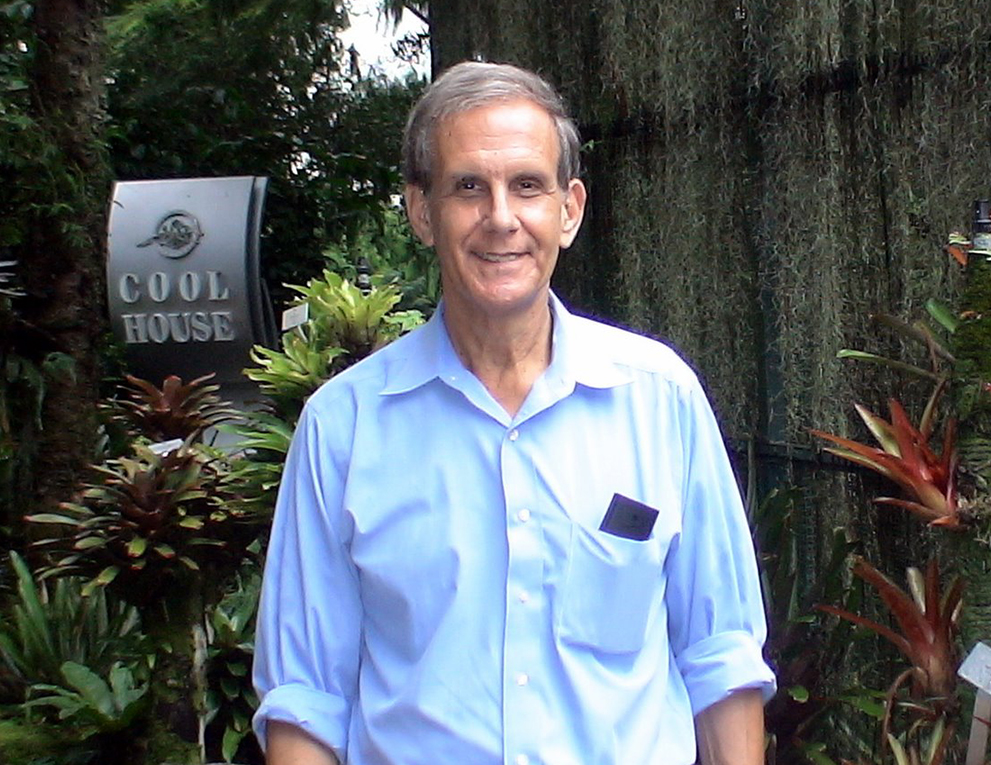
David Zee
David Zee will never forget the day he arrived in Baltimore in 1965 to start medical school at Johns Hopkins. After dropping off his belongings at Reed Hall — a former dormitory at The Johns Hopkins Hospital — Zee raced to the hospital’s emergency department. “I just wanted to see medicine,” he remembers.
Now, 60 years later, after a career spent almost entirely at the institution, Zee will retire from Johns Hopkins in July. He leaves a legacy of innumerable contributions in neuroscience and patient care, as well as a major impact on the next generation of physicians through the many fellows from all over the world he has trained.
“I didn’t do anything that would win me the Nobel,” Zee says, “but I certainly was involved in developing new techniques of examining patients, diagnosing diseases more easily, and spreading these discoveries throughout the world by teaching in all continents except Antarctica.”
Zee says that he was drawn to the brain early in his training. During his residency at Johns Hopkins, and then afterward as a commissioned officer in the U.S. Public Health Service at the National Institutes of Health, Zee honed his focus on the vestibular system and the cerebellum, the brain region that controls eye movements. In his first faculty position at Johns Hopkins in 1975 — as an assistant professor in the departments of neurology and ophthalmology — he set to work seeing patients with unusual eye movement disorders connected to cerebellar dysfunction and studying these disorders in the lab.
Through animal models, mathematical modeling using analog computers and other approaches, he and his colleagues — including the late David Robinson, a biomedical engineer and neuroscientist, and John Leigh, a neurologist — made significant advances in explaining and treating a variety of cerebellar problems that affect eye movements. These included a discovery they published in 1980 of the first medication to successfully treat a persistent pathological nystagmus, a type of involuntary and rhythmic eye movement. Zee continued to collaborate with both researchers over much of his career, writing with Leigh five editions of The Neurology of Eye Movements, a textbook that has become a mainstay in the fields of neuro-ophthalmology and neuro-otology.
Later studies in patients, including those with acute strokes, demonstrated the role that subregions of the cerebellum play in fine-grained control of eye movements. Zee’s colleagues, including neuro-otologist David Newman-Toker, have since capitalized on these findings to develop algorithms for diagnosing dizzy patients with strokes in the brainstem or cerebellum based on subtle eye movement abnormalities spotted on a bedside exam.
In 2018, Zee won the Barany Gold Medal, a prize given by the Barany Society: the International Society for Neuro-Otology, Vestibular Medicine, and Vestibular Research, for discoveries on how magnetic fields stimulate the inner ear’s labyrinth and produce nystagmus. His findings not only explained why some people experience dizziness when undergoing MRI, but also changed interpretations of functional MRI, which had previously failed to account for this stimulus.
Zee’s profound successes in research, patient care and teaching are strongly tied to his curiosity, says Newman-Toker, who took over as director for the Division of Neuro-Visual and Vestibular Disorders after Zee stepped down in 2015.
“If I had to summarize David Zee’s fundamental philosophy of science, it’s the idea that careful observation and study of clinical findings in even a single patient can teach important and broad lessons about how the nervous system works,” Newman-Toker says.
In retirement, Zee says that he and his wife plan to organize medical education in their senior community, spend time with their two dogs, support the arts and live part-time in Siena — an Italian city in the Tuscany region, where Zee has collaborated with researchers for years.
For Clinicians Clinical Connection
Clinicians, discover the latest in research and clinical innovation from Johns Hopkins experts. Access educational videos, articles, CME courses and other resources from our world-renowned institution.