
Patient Story: Mike Kennedy Is Golfing Again After Pancreatic Tumor Surgery
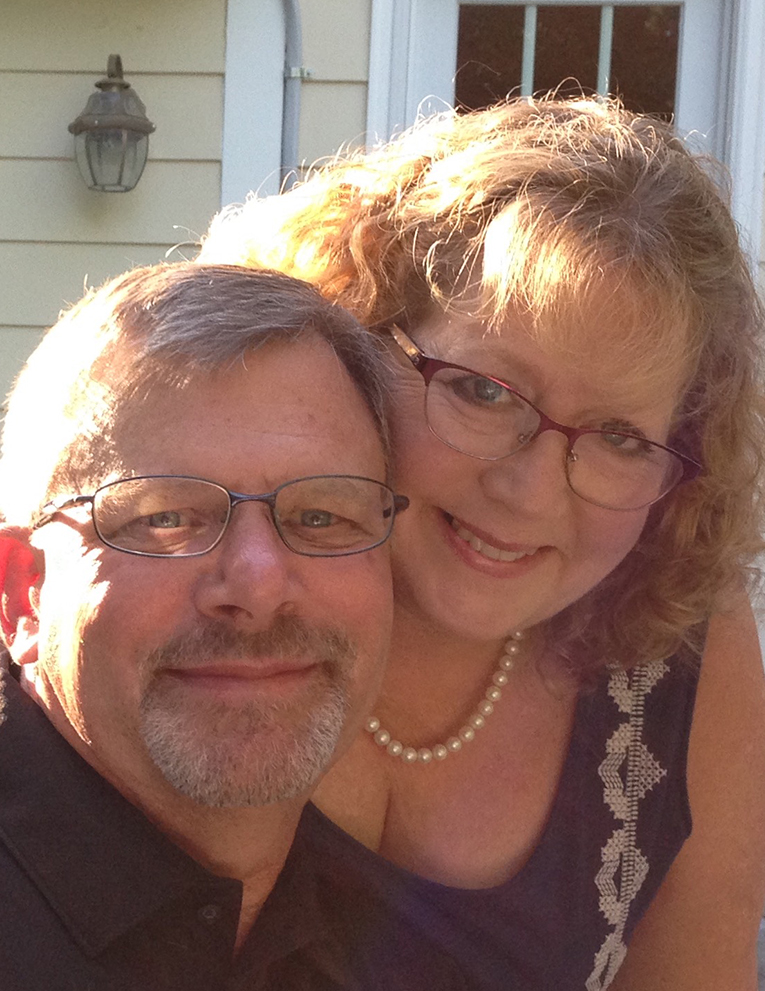
Mike and Lynn Kennedy
A Tumor on His Pancreas
The date — March 29, 2023 — is seared in Mike Kennedy’s memory.
He was enjoying a day on the golf course, “doing quite well on the front nine,” when he started to feel sick. By the 12th hole, he could barely stand. His friend drove him back to the clubhouse, but on the way, Kennedy leaned over the side of the golf cart to vomit.
At first, Kennedy thought it was food poisoning. However, when his symptoms worsened, his wife, Lynn, a one-time “nurse of the year” at Sibley Memorial Hospital, called an ambulance. The days that followed were a whirlwind of hospital stays, scans and biopsies, leading to a life-altering diagnosis: A large tumor was on his pancreas.
Kennedy met with gastrointestinal oncologist Michael Pishvaian, director of gastrointestinal, developmental therapeutics and clinical research programs for the Johns Hopkins Kimmel Cancer Center in the Greater Washington area.
Pishvaian explained to Kennedy that his neuroendocrine tumor was a relatively rare form of pancreatic tumor, and more treatable than the aggressive exocrine tumors more frequently found. Kennedy would not require chemotherapy or radiation, but he would need complex surgery, for the tumor had already invaded several of his organs.
As Pishvaian recommended, Kennedy then turned to surgical oncologist Gabriel Ivey, also with the Kimmel Cancer Center in the Greater Washington area.
“I remember meeting with Dr. Ivey about two weeks before the surgery,” says Kennedy. “He did an exceptional job of preparing me mentally for what was to come.”
Ivey told Kennedy that there was a good chance he would emerge from the operation cancer-free, but also diabetic. “To say that I was dismayed would be an understatement,” says Kennedy, “but it was very important for me to hear that.”
A Growing Surgical Oncology Team
Ivey joined the Kimmel Cancer Center in October 2022, bringing Johns Hopkins surgical oncology to the Greater Washington area.
Now, the Johns Hopkins surgical oncology team has expanded to three surgical oncologists in the region. Michele Gage joined in August 2024, and Michail Mavros followed a few months later as the program director of surgical oncology in the National Capital Region. The team also added two nurse practitioners, a nurse navigator and a medical office coordinator.
All three doctors are fellowship trained in complex surgical oncology and hepato-pancreato-biliary (HPB) surgery, ensuring they bring deep expertise to complex cancer cases. Ivey and Mavros have additional fellowships and training in HPB surgery, focusing on conditions involving the liver, pancreas and bile ducts. Gage completed advanced specialty training in complex general surgical oncology and HPB surgery. Together, the team performs surgeries for cancers of the gallbladder, pancreas, stomach, skin (melanoma) and soft tissues (sarcoma). Their advanced training allows them to treat rare or complex cases.
“When people end up with something that doesn’t fit in any of these categories, they gravitate toward us,” says Mavros. “We see rare things or things that are otherwise not very easy to deal with.”
The surgeons are all trained and experienced in laparoscopic and robotic surgeries that are minimally invasive and thus entail less risk and shorter healing times compared with conventional, open surgeries.
Johns Hopkins Care, Close to Home
Patients in the Greater Washington area have convenient access to Johns Hopkins surgical oncologists at Johns Hopkins Health Care & Surgery Center in Bethesda, Maryland, Johns Hopkins Community Physicians in Arlington, Virginia, and Sibley Memorial Hospital in Washington, D.C. Most surgeries are performed at Sibley or Suburban Hospital, both of which offer state-of-the-art facilities and comprehensive care.
Johns Hopkins patients benefit from one of the nation’s leading academic medical centers, gaining access to world-renowned experts, cutting-edge technology like the Johns Hopkins Proton Therapy Center, and groundbreaking clinical trials — all close to home. As part of the broader Johns Hopkins Medicine system, they receive care from a multidisciplinary team of specialized pathologists, radiation oncologists and surgical oncologists, with access to advanced treatments and innovative therapies.
Back on the Golf Course
In June 2023, Ivey performed Kennedy’s successful surgery at Sibley Memorial Hospital. The six-hour procedure involved removing most of Kennedy’s pancreas, his spleen and part of his stomach.
“I was fully informed of everything [Ivey] planned to do,” says Kennedy. “There were no surprises, and I appreciated that.”
Kennedy woke in the intensive care unit with an 8-inch abdominal incision and attentive clinicians who quickly determined, to his surprise, that his pancreas was still producing insulin, and he was not diabetic after all. When Kennedy was discharged from the hospital four days later, he was also very grateful to learn that Ivey’s top-notch team had already contacted his pharmacy, and his wife had picked up his medications.
Now 71, Kennedy’s scans and bloodwork remain clear. “I healed up extremely well, returned to eating, regained my weight — and then some — and started playing golf again,” says Kennedy. Just three months later, he was back on the course.
His only lingering issue? “My abdomen is a little off-center now, so it makes it tough for me to line up my putts,” he jokes.
Take Charge of Your Cancer Care with Johns Hopkins
At Johns Hopkins Medicine, patients like Mike Kennedy receive advanced, compassionate care close to home. Learn more about our surgical oncology services or schedule a consultation at hopkinscancerdc.org.