
Catching Up with Mona Kaleem, M.D.
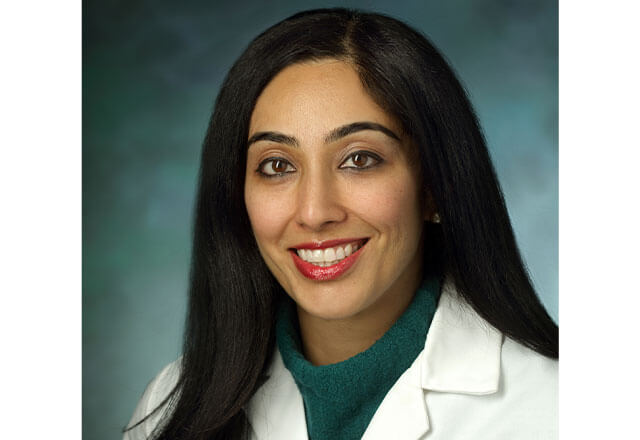
Mona Kaleem, M.D.
2023 was a busy year for Mona Kaleem, M.D. an associate professor of ophthalmology in the glaucoma division of Wilmer Eye Institute, Johns Hopkins Medicine, and 2024 is shaping up to continue on that momentum.
Kaleem, along with cornea specialist and White Marsh clinic director Irene C. Kuo, M.D., were selected to participate in the current American Academy of Ophthalmology Leadership Development Program, which started in late 2023. As the new year gets underway, Kaleem also begins a two-year term as president of the Maryland Society of Eye Physicians and Surgeons.
In addition to providing patient care at Wilmer’s Bethesda and Columbia clinics, Kaleem is the host of the Diagnosis Glaucoma podcast with fellow Wilmer glaucoma specialist Harry Quigley, M.D., the A. Edward Maumenee Professor of Ophthalmology, and is working with Pradeep Ramulu, M.D., Ph.D., the Sheila K. West Professor of Ophthalmology and director of Wilmer’s glaucoma division, on a study to help assess quality of life for glaucoma patients.
We spoke with Kaleem, who started at Wilmer in 2020, about her current and future endeavors.
What has the AAO Leadership Development Program been like, and why did you want to be part of it?
it's an opportunity to learn about the leadership within AAO and how we can become involved and lead our local institutions as well as at the national level. It has been an invigorating experience so far, and I’ve enjoyed meeting like-minded people.
The program appealed to me because I want to see how I can make changes on a higher level. I am eager to collaborate with individuals who are already catalysts for change and have a wealth of experience in advocacy, policy-making and influencing legislative decisions. I’d like to be not just someone who practices medicine, but someone who helps to guide and shape the way that medicine is practiced in our country.
Why was taking on the role of president of the Maryland Society of Eye Physicians and Surgeons meaningful to you?
I think a lot about health policy and how is it shaping how we practice ophthalmology and how we provide care to our patients. The way that health policy is made in our state shapes the way that we provide care to Marylanders. If we as ophthalmologists don't take an interest, then legislators who have no medical background may be the ones making the decisions for our patients and for the way that we practice. It's really time for doctors to care about the business of medicine and health policy and the way that laws are created, because if we're not part of the decision, there can be very negative consequences.
As Diagnosis Glaucoma has entered its fourth season and recorded more than 40 episodes, how has the experience of hosting the podcast been?
I think it's a great way to connect glaucoma patients from all over the country. For the last two seasons, we’ve featured distinguished guests from eye centers all over the country. It's been wonderful to get insight from experts nationwide and listen to what other people have to say.
I think the podcast also helps people take control of their own disease, because patients are getting answers to questions they don’t get time to ask their doctors. They're understanding the importance of glaucoma and the vision loss that can occur, and they're learning ways to empower themselves.
GlauCAT, your project in tandem with Pradeep Ramulu, M.D., Ph.D. that is being trialed at Wilmer, involves evaluating a tablet-based program that assesses quality of life for glaucoma patients. How is that study coming along?
It’s going well. We’ve done the first phase of data collection, which helped tell us the best way to administer the test, such as whether it’s in person at the doctor’s office, or via a link that we email to people ahead of time. In the current phase, we are learning about how our glaucoma patients are living and what kinds of quality-of-life issues they are having. We’re hoping to complete that work in the beginning of 2024.
What else are you up to in 2024?
I am the glaucoma chair for the EnVision Summit, a multispecialty ophthalmology meeting taking place over Presidents’ Day weekend. It features a diverse group of speakers, many of whom are women or people who don’t traditionally speak at big meetings. There’s also time each day for family events, so it’s not just an ophthalmology meeting, but it also incorporates a bit of fun and family time, which makes this unique.
In February, I’ll also be speaking at a meeting of the Prevention of Blindness Society about diet and lifestyle for people with glaucoma. I get a lot of questions from glaucoma patients about what they can do in addition to taking medication, such as what foods they can eat or what exercises they can do. They want to be more informed about their condition and learn how they can prevent progression.
In addition, I’m working on a project called SiteWise, which will assess environmental features of medical centers. The goal is to make our medical center easier for patients to navigate safely and independently, and to reduce the incidence of fall or injury that can occur at the hospital. It’s a quality improvement project and also will help make clinics safer and more accessible to someone who is visually impaired or elderly.