
Inflammatory Bowel Disease Advanced Fellowship Program
The Johns Hopkins IBD Advanced Fellowship Program is designed to provide specialized training in the clinical care of patients with IBD as well as clinical, translational or basic science research training to promote the field of IBD.
Program Director
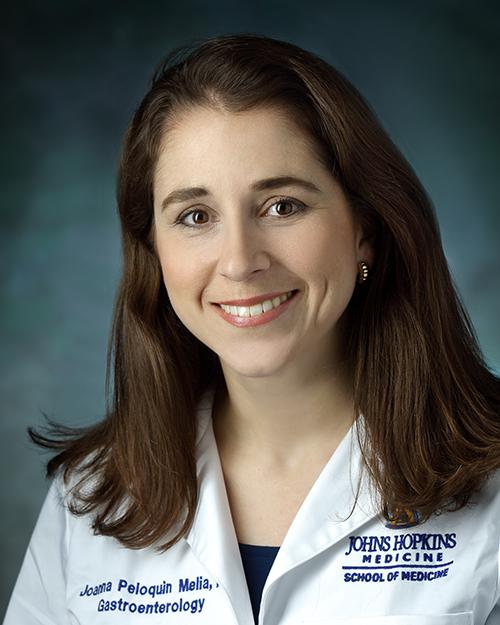
Additional IBD Faculty
-
Florin Selaru, MD
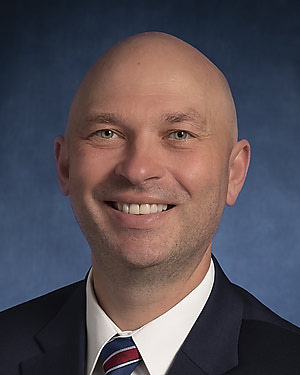
- Director, Meyerhoff Inflammatory Bowel Disease Center
- Professor of Medicine
Expertise: Gastroenterology
Emeritus in Memoriam
Theodore M. Bayless, M.D.
Professor of Medicine
Program Prerequisites
Applicants should have completed training in an internal medicine residency and a gastroenterology fellowship at an ACGME-accredited institution (or equivalent if non-U.S. trained). A medical license to practice in the state of Maryland is required.
Curriculum
Clinical Time (60-80%)
- Three to four half-days of outpatient IBD clinic
- One to two half-days of IBD endoscopy
- Inpatient IBD service
- Multidisciplinary education
- Surgical education: Attend IBD-related surgeries (total colectomy, J-pouch formation, ileocecal resection, seton placement)
- Radiology education with GI-trained radiologists to learn to expertly read CT scans and MRI scans
- Pathology education with expert GI pathologists to better understand the histopathology of IBD and the resulting dysplasia that accompanies it
- Dermatology clinic to better understand the skin manifestations of IBD
- Rheumatology clinic to better understand the rheumatologic manifestations of IBD
Research Time With Matched Mentor(s) (20%–40%)
- Clinical, translational or basic science based on fellow’s preference; will be matched to primary mentor before starting.
- Main project will be determined before the start of the fellowship to make the most of the one-year fellowship.
Program Description
The IBD advanced fellowship at Johns Hopkins is a one-year post-gastroenterology fellowship training to further hone the skills and knowledge to care for patients with complex IBD and prepare for an independent academic career in clinical investigation. The Johns Hopkins Hospital provides an excellent setting for IBD training with world-renowned pathologists, radiologists, surgeons and gastroenterologists. Collaborations with rheumatology, dermatology, nutrition and psychiatry allow us to provide multidisciplinary care, improve understanding of the disease and offer the opportunity for wider research investigations. The breadth of clinical investigation is unparalleled, with multiple basic scientists, translational researchers and clinical researchers available to serve as mentors. With only one fellow accepted per year, the training can be personalized to the fellow’s interests.
The management of patients with IBD will be taught through outpatient clinic, outpatient endoscopy and inpatient IBD rounds. The fellow will receive didactics during the weekly IBD meeting, including the landmark trials and guidelines within the field of IBD. Radiology scans for patients with complex IBD will be reviewed with GI-trained radiologists to improve the fellow’s skills in reading X-rays, CT scans and MRIs. Pathology slides will be reviewed with expert GI pathologists to confirm and review the histology of IBD, dysplasia and CMV. Since Johns Hopkins is a quaternary referral center, the fellow will be exposed to complex and refractory IBD cases and learn to manage IBD during pregnancy, IBD in post-transplant recipients and IBD in the HIV population.
The fellow is expected to attend the weekly IBD clinical meeting, Grand Rounds and journal club. The fellow is expected to present interesting clinical cases seen in clinic or endoscopy, present relevant journal club articles and give a research presentation.
Educational Goals and Objectives
- Learn how to appropriately diagnose Crohn’s disease and ulcerative colitis and differentiate it from other diseases.
- Learn appropriate treatment of inpatient and outpatient Crohn’s disease and ulcerative colitis.
- Learn preventive care in patients with IBD.
- Learn endoscopic technologies for IBD dysplasia surveillance including high definition endoscopy, chromoendoscopy and confocal endomicroscopy.
- Learn basic endoscopic treatment of IBD, including stricture dilation, enteroscopy and difficult polyp/dysplasia resection.
- Learn the basics of clinical investigation within the IBD field.
Program Length
One year
Salary and Benefits
The position is funded for one year as a postdoctoral fellow or an instructor of medicine. Benefits can be found on the Human Resources benefits page.
How to Apply
Please email this application to Joanna Melia at [email protected] and Linda Welch at [email protected].
In addition to the completed application above, please provide:
- Curriculum vitae
- Personal statement outlining your career plans and how an IBD fellowship can help attain these goals
- Three letters of recommendation
Selected applicants will be offered interviews sometime between November and February.
Current IBD Fellow
Courtney Hanlon, M.D.
GI Fellowship: University of Southern California
Residency: University of Southern California
Medical School: Dartmouth
Undergrad: Amherst College
Hometown: Fullerton, CA
Why Johns Hopkins: The education! I believe that one's training years should be both clinically and academically rigorous. Hopkins provides the perfect learning environment to excel clinically and academically, with incredible IBD faculty to help guide me through fellowship and beyond.
Hobbies: road trips, good lighting, ice hockey, trying all the delicious vegan foods in Baltimore
Interests in IBD: fibrostenosis, perianal disease, cancer prevention, Queer/LGBTQIA+ IBD care
