About This Cancer
Neurofibromatosis, sometimes referred to as Von Recklinghausen’s disease or neurofibromatosis I, is an inherited disorder characterized by formation of neurofibromas (tumors involving nerve tissue) in the skin, subcutaneous tissue, cranial nerves, and spinal root nerves. The disease affects about one out of every 4,000 children born. Neurofibromatosis causes unchecked growth of neurofibromatous tissue in nerves. This tissue can put pressure on affected nerves and cause pain and severe nerve damage leading to loss of function in the area controlled by the nerve. Problems with sensation or movement can occur as a result, depending on the particular nerves affected.
Risk Factors
Neurofibromatosis is an autosomal dominant trait, meaning that if either parent has the disease, their children have a 50 percent chance of inheriting it. Genetic counseling is recommended for anyone with a family history of neurofibromatosis.
Neurofibromatosis also appears in families with no previous history of the condition, as a result of a genetic mutation in the particular sperm or egg that created the child. It is caused by abnormalities in one of the genes encoding a protein called neurofibromin.
Neurofibromatosis Type 2 is a rare, hereditary disorder that is similar to neurofibromatosis I in that it involves tumors along the nerves. Neurofibromatosis Type 2 is also an autosomal dominant disorder meaning it is passed from parent to child, but the gene that causes Neurofibromatosis Type 2 is different than the one that causes neurofibromatosis I. Just like neurofibromatosis I, about half the people with Neurofibromatosis Type 2 do not have a history of the disease in either parent.
Cancer Symptoms
Neurofibromatosis 1
The most common features of neurofibromatosis are the skin lesions called cafe au lait spots. These are flat, smooth, medium to light brown irregularly shaped spots than can occur anywhere on the skin. Many people have one or two cafe au lait spots, and these are often called birth marks. If a child has six or more cafe au lait spots measuring at least half a centimeter (about a 1/4 of an inch), then he or she should be monitored carefully to see if he or she develops any more signs of neurofibromatosis. A second skin symptom is freckling that appears in places not usually exposed to the sun like the armpit and groin.
After the age of three, many children will develop Lisch nodules in their irises (the colored part of the eye). These can be detected by an ophthalmologist using a special piece of equipment called a slit lamp. These growths do not affect vision.
Another symptom of the disease is the development of neurofibromas, soft fleshy tumors just under the skin. Neurofibromas can also develop deeper in the body. A neurofibroma can be large and have many finger-like projections, called a plexiform neurofibromas.
Most people with neurofibromatosis do not develop neurofibromas until puberty. Because neurofibromas can occur anywhere in the body, there are many possible complications from them. Sometimes these tumors can become malignant (cancerous) or they can affect vital organs. One complication is the development of a tumor, called an optic glioma, along the nerve going to the eye that can lead to blindness, unlike the Lisch nodule. A person can have a neurofibroma without having neurofibromatosis. Many neurofibromas, however, are indicative of neurofibromatosis.
Deformities of the bone are also associated with neurofibromatosis. For example, children can develop curvature of the spine (scoliosis) or an enlargement of a bone in the arms or legs leading to a leg length discrepancy. Other bony defects can be bowed legs and thinning or absence of the bones forming the eye socket. A large head is also sometimes associated with neurofibromatosis.
Approximately half the people with neurofibromatosis have learning disabilities, including attention deficit disorder (ADD), ranging from mild to severe. Learning disabilities are about five times more common in people with neurofibromatosis than in those without the disease.
Neurofibromatosis Type 2
In Neurofibromatosis Type 2, there are not as many physical signs of the disease. People with Neurofibromatosis Type 2 do not have multiple café au lait spots, Lisch nodules, or bony deformities. They may have a few café au lait spots, however. People with Neurofibromatosis Type 2 have a kind of tumor called a neuroma or schwannoma. These tumors affect the nerves that are responsible for hearing and balance. The first sign of the disease is often ringing in the ears (tinnitus), hearing loss, or difficulty with balance when a person is in her teens or twenties. Although only one ear may be affected initally, eventually both ears will be affected in most people. About 90 percent of people with Neurofibromatosis Type 2 will develop these tumors in their lifetimes. These tumors can occur anywhere in the body.
In addition to schwannomas, patients with Neurofibromatosis Type 2 are at risk for other types of tumors, called gliomas and meningiomas, that are found in the brain. These tumors are usually not cancerous in that they are not likely to spread to other parts of the body, but they can cause significant problems depending on where they are located. People with Neurofibromatosis Type 2 are also at risk for a particular kind of cataract that makes vision cloudy or dim.
Diagnostic Tests
The diagnosis of neurofibromatosis is generally made based on physical findings.
Tests may include:
- Examination by a doctor familiar with neurofibromatosis, such as a neurologist, geneticist, or dermatologist
- Eye examination by an ophthalmologist familiar with neurofibromatosis
- MRI (magnetic resonance imaging) scan of the affected site
- Removal of neurofibromas of skin lesions
- Genetic testing to check for a mutation in the neurofibromin gene
As in neurofibromatosis I, the diagnosis is easier to make if there is a family history of Neurofibromatosis Type 2. If a patient has just one schwannoma affecting the nerves to the ear, and he or she has a parent with Neurofibromatosis Type 2, then the diagnosis can be made. For someone who does not have a family history of Neurofibromatosis Type 2, the diagnosis requires at least two tumors associated with the disease, or one kind of tumor and the kind of cataract mentioned in the preceding “Cancer Symptoms” section. If doctors suspect Neurofibromatosis Type 2, there is a direct genetic test than can be done.
Treatment
For most of the features of neurofibromatosis, like café au lait spots and Lisch nodules, no treatments may be needed. Because some people with neurofibromatosis can have a disfigurement from neurofibromas if they are particularly large or numerous, surgery can be performed to remove these tumors. These have a tendency to come back, however. Sometimes the tumors are in such a place that they cannot be removed.
Tumors that cause pain or loss of function are removed on an individual basis. Tumors that have grown rapidly should be removed promptly, as they may become malignant.
Doctors will also keep track of the patient’s growth, physical and mental development, blood pressure, vision (including annual eye exams), and hearing. Special schooling for those with learning disorders, including attention-deficit disorder (ADD), may be required in some cases. Annual eye exams are strongly recommended.
Treatment for Neurofibromatosis Type 2 involves surgery and/or radiation therapy (treatment of tumors with targeted X-ray beams) for the tumors. The type of treatment depends on the nature and location of the tumor. Cataract surgery also may be necessary in some patients. For a child with a parent with Neurofibromatosis Type 2, periodic hearing tests into adolescence and young adulthood are recommended.
Research
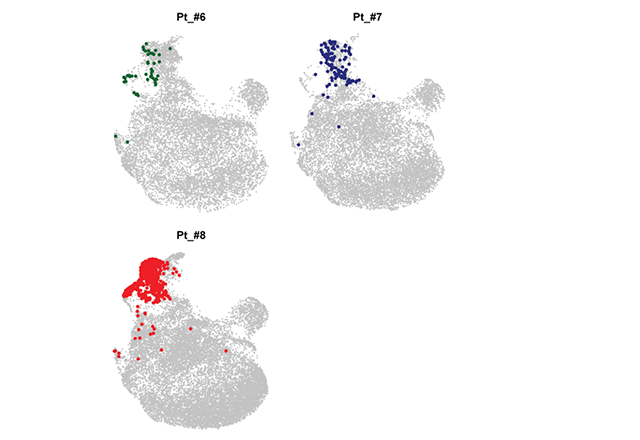
Investigators are studying drugs to stop or slow the growth of neurofibromas. One strategy has been to influence the molecular signalling caused by the defect in the NF-1 gene. Recently, researchers studying both types of neurofibromatosis have suggested updating the criteria doctors used to diagnose these two diseases, but these updated methods have not yet gained widespread use.
Experimental treatments for severe tumors are being studied.