"Post-Katrina Recovery": A Message From Dr. Paul Whelton
Below is an email from Paul K. Whelton, M.D., M.Sc., Dean, Tulane University School of Medicine. Dr. Whelton, formerly of Hopkins GIM and former Director of the Welch Center for Prevention, Epidemiology, and Clinical Research, provides a brief summary of the post-Katrina recovery and renewal at the Tulane University Health Sciences Center. Although he notes that there are still residual challenges, he reports that they have been able to preserve the integrity and quality of their educational, research and practice endeavors. He also offers thanks and gratitude to his many colleagues elsewhere who have been very supportive and helpful over the course of the last eleven months.
Dear Colleagues,
As we continue to advance in post-Katrina recovery and renewal, I thought it might be useful to provide some brief Health Sciences Center (HSC) updates regarding the accomplishment of mission goals, progress in strategic planning, and selected policy initiatives.
Education
School of Medicine (SOM): All of our educational activities are now back in New Orleans. Ninety-eight percent of our M.D. candidates remained at Tulane post-Katrina. More than 7,000 applied for admission to the M.D. program and the academic profile for those accepted was similar to that in prior years. A higher than usual percent of eligible candidates accepted our invitation to start as first-year M.D. students this fall.
As part of the expanded SOM space in the 1555 Poydras Street building, a state-of-the-art student center has been completed on the 10th floor. We are in the process of constructing a new clinical skills facility that will house our standardized patients and simulation equipment (22nd floor) as well as small group classrooms (11th floor). Harvey a high-fidelity cardiovascular training simulator is already in place and is being integrated into the curriculum.
We had an outstanding medical residency match this year, with many of our programs getting their first and second choices. This has been coupled with a continuation/expansion of our education presence at the Tulane University Hospital and Clinic (TUHC) and Tulane-Lakeside Hospital, Ochsner Medical Center, Touro Infirmary, Huey P. Long Medical Center, Alexandria and Biloxi Veterans Affairs Medical Centers; and new teaching initiatives at West Jefferson Medical Center, East Jefferson General Hospital, and Slidell Memorial Hospital. Leadership and administration of graduate training in biomedical sciences has transitioned smoothly from the Graduate School to the SOM.
School of Public Health and Tropical Medicine (SPHTM): More than 80 percent of our students continued their studies at Tulane post-Katrina and the number of confirmed masters and doctoral degree admissions for Summer/Fall 2006 are at or exceed the corresponding enrollment for last year. The public health undergraduate degree program is also attracting increasing interest and our well established roster of executive degree programs in the U.S. and overseas continues to be well subscribed. All of the schools facilities are back on-line and there has been a smooth transitioning of responsibility to the SPHTM for the public health graduate training programs that were previously under the jurisdiction of the Graduate School.
Research
Our post-Katrina experience has been much more favorable than almost anyone predicted. We anticipate that research awards at the HSC will be between 90 to 95 percent of the corresponding experience for last year (a record year). Each of the three HSC units has contributed to this success. Our faculty have initiated research studies related to the environmental, social, and humanitarian consequences of Katrina.
In addition to faculty and staff retention initiatives, the university has made a strong financial commitment to revitalizing competitive research at Tulane as part of its overall recovery and renewal plan. Additional details of this commitment will be communicated soon by Dr. Laura Levy, Associate Senior Vice President for Research. The National Institutes of Health (NIH), Centers for Disease Control and Prevention (CDC), National Sciences Foundation (NSF), and other federal agencies that support research have also been very helpful. On Friday, July 14th, the NIH announced their intention to support one-year extensions for selected grants provided the Principal Investigator (PI) commits to remaining in New Orleans. Our experience to date and the university and federal support for competitive research give me confidence that we will be able to continue as a leading biomedical research enterprise.
Clinical Practice
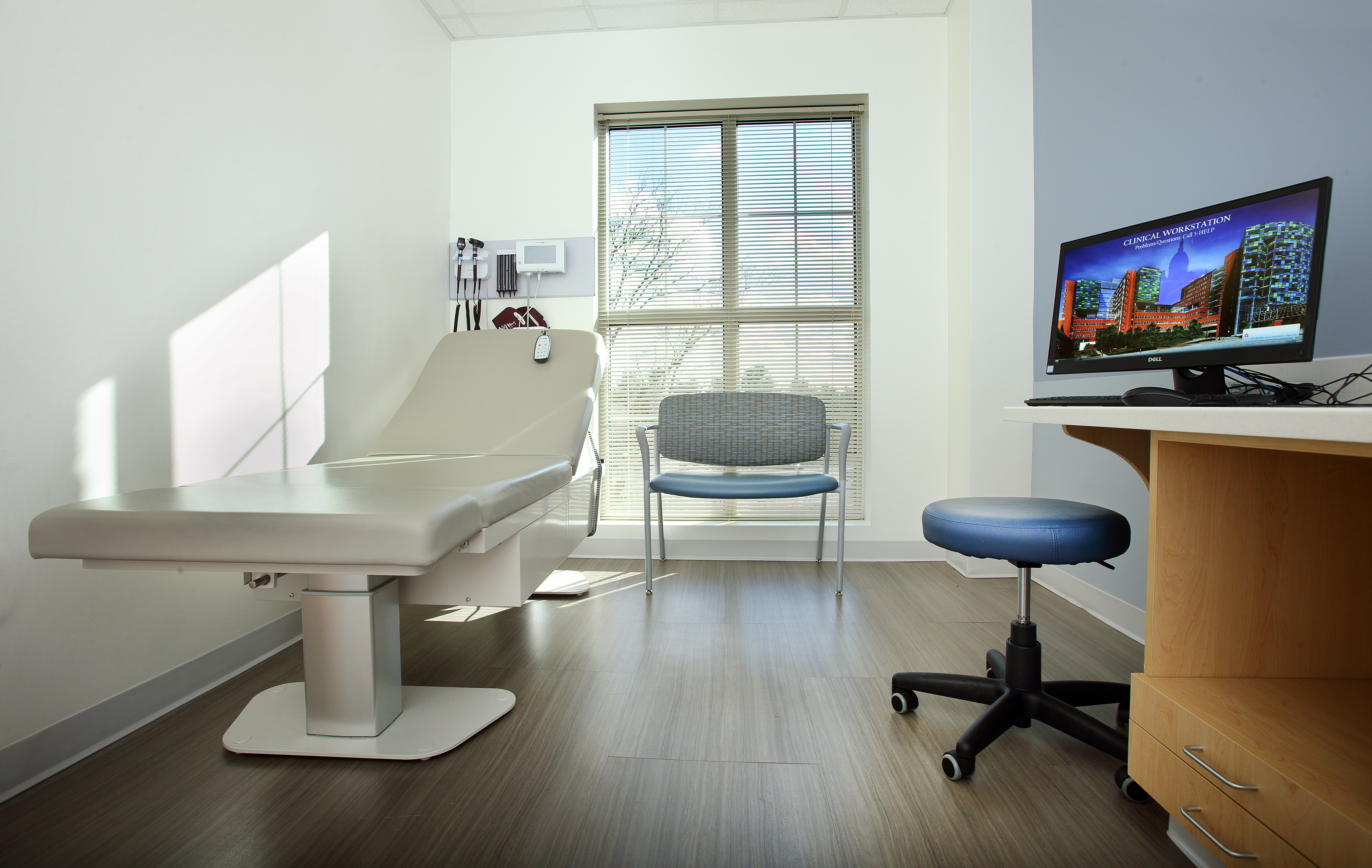
We are increasingly busy in the clinical arena and have exceeded all of the benchmarks that we set as guides to our recovery. At this time, we have active Tulane primary care and specialty clinics functioning at Tulane-Lakeside in Metairie, at University Square (Uptown), at TUHC (Downtown; limited presence), on the North Shore, and in Pineville/Alexandria. Additional clinics will be added progressively over the course of the summer.
Already, we are achieving record growth in selected areas. For example, more patients were referred to the Tulane Solid Organ Transplant Program (181) during the month of June than at any time in the history of the program. We are also supporting free clinics in the French Quarter and on the West Bank and operating a mobile pediatric unit (in conjunction with the Childrens Health Fund). Our inpatient census is rising with close to 200 inpatients at the TUHC. This number will grow as the availability of beds increases over the course of the summer. Recognizing this, we are already setting records in specific areas. For example, the number of deliveries last month at our Tulane-Lakeside Hospital (approximately 180) exceeded the corresponding pre-Katrina experience.
Strategic Planning
There was no need to change the preexisting strategic plans for the SPHTM and Tulane National Primate Research Center (TNPRC). In contrast, we have developed a new strategic plan for the SOM which specifies approaches to strengthening our educational, research and practice and the investment that will be needed to achieve the stated goals. A draft version of the plan will be posted on the SOM web page by the middle of the week (http://www.som.tulane.edu/). Some of you have already contributed to the development of the plan or provided comments but it is not too late to offer additional input.
Policy Initiatives
We remain active in planning for the future of health care in Louisiana. Personally, I have participated in the Bring Back New Orleans Public Health and Social Services Committee, the Louisiana Recovery Authority Public Health and Healthcare Task Force, and am a member of the Governors Louisiana Health Care Redesign Collaborative. I have also testified before many groups over the last few months, including the Louisiana Recovery Authority, the Joint Budget Committee of the Louisiana House and Senate, and, most recently, the U.S. Senate Committee on Health, Education, Labor and Pensions.
Overall, progress to date has far exceeded my expectations. I do not mean to diminish the enormity of the challenges we have faced over the last ten months or to suggest that we are back to normal. However, we have made monumental progress and laid the foundation for an even stronger HSC in the future. I am very grateful to all who have participated in the recovery effort and who remain committed to a resurgence of the Health Sciences Center.
Paul