
Ambulatory
Cardiac
Adult Critical Care
Neuroanesthesia
Obstetric & Regional Anesthesia
Pain Medicine
Pediatric & Pediatric Critical Care
Perioperative
Postdoctoral Research Training Program
Vascular-Thoracic
Cardiac Fellowship Overview
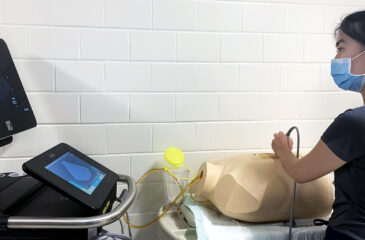
The Division of Cardiac Anesthesia offers an ACGME Accredited Cardiothoracic Fellowship following the Clinical Associate 3 year. The division provides anesthesia for approximately 1200-1400 cases per year. Case types include coronary artery bypass procedures, valve replacement and repair (including Ross Procedures), pediatric and congenital disease related procedures, heart and lung transplantation, and major aortic surgery. Our practice employs transesophageal echocardiography extensively, and fellows typically train not only in the OR, but with the Department of Cardiology as well.A number of our faculty are board certified in Critical Care Medicine and divide their clinical time between cardiac anesthesiology and ICU medicine in our Cardiac Surgical Intensive Care Unit. In addition, both the Cardiac Anesthesia Division and the Department of Anesthesiology support a number of faculty with well-established basic science programs which offer exciting training opportunities in areas directly applicable to cardiovascular medicine.
Interested applicants should send a letter of intent, a C.V., and 3 letters of recommendation.
General Program Information
Numbers of Positions Available
CA-4: 3-4
Type(s) of Fellowship Training Available:
Clinical only
Clinical/Basic Research
Clinical/Clinical Research
Comments: Combined Cardiac/ICU and Cardiac/Vascular-Thoracic Fellowships Available
Clinical Responsibility: Clinical 80%, Non-clinical 20%
Annual Salary: 51,310 (PGY-5)
Minimum Length of Training: 12 months
Number of CA-4/CA-5 Fellows Completing 12-24 Months Cardiothoracic/Cardiovascular
Training in Previous 5 Years: 12
Faculty
Daniel P. Nyhan
Expertise: Cardiopulmonary bypass, Pulmonary vasoregulation
Mary Beth Brady
Expertise: Transesophageal Echocardiography
Jackie Martin
Expertise: Anesthetic-induced Hepatotoxicity
Dan Berkowitz
Expertise: Mechanisms of microgravity induced cardiovascular deconditioning
Nauder Faraday
Expertise: Mechanisms of platelet pathophysiology; ICU
Wei Dong Gao
Expertise: Heart Failure; Ischemia-reperfusion Injury
Kelly Grogan
Expertise: Heart Failure; Ventricular Assist Devices
Charles Hogue, Jr.
Expertise: Neurological outcomes after Cardiac Surgery
Jeff Dodd-o
Expertise: Mechanisms of acute lung injury; ICU
Elizabeth Martinez
Expertise: Cardiac Surgical Outcomes and Safety; ICU
Joshua D. Stearns
Expertise: TEE; Medical Economics
Percent of Cardiac Anesthesia Faculty with
NBE Perioperative TEE Certification: 40%
Academic Program
Fellow Conferences Frequency: 3
Type: Echo, Clinical, Research, Fellow Presentations, Journal Club
Extra-Institutional Educational Conference Support: 1 meeting per year
In the Previous 5 Years, Fellows were 1st or 2nd Author On:
Abstracts: 8
Peer-Reviewed Journal Articles: 3
Book Chapters: 4
Funding: Dept/Institutional Funds; Pharmaceutical/equipment industry
grants; peer-review grants
Dedicated Research Time: 50% in research fellowship
Echocardiography Instruction: Intraop and ongoing echo lab participation
and instruction throughout the year
Critical Care Rotation: One month
Formal Course Work Available in: Optional
Maximum Time in Non-OR Activities: 2 months out of 12
Clinical Program
Number of Cardiac Procedures with CPB Per Year: 900
Distribution of cases: 25% CABG, 40% Valves, 15% Congenital, 15% Aortic,
5% VAD
Average Number of CPB Procedures Per Trainee Per Year: 250
Number of Cardiac Procedures off-CPB Per Year: 100
Distribution of cases: 30% Off-pum CABG, 40% Thoracic Aneurysm, 30%
AICD/Pacemaker
Average Number of off-CPB Procedures Per Trainee Per Year: 20
Number of Non-Cardiac Thoracic Cases Per Year: 500
Number of Heart, Lung and Heart/Lung Transplants Per Year: 75
Number of Major Vascular Cases Per Year: 300
Operating Room Equipment Available: TEE (Philips and GE), ECG ST segment
analysis, transcranial Doppler, mixed venous oximetry, continuous cardiac
output, evoked potentials, cerebral blood flow, inhaled nitric oxide
For more information, please contact:
Gloria Ward-McCoy
Program Coordinator, Adult Cardiac Anesthesia
Department of Anesthesiology and Critical Care Medicine Department
The Johns Hopkins Medical Institutions
Carnegie 280
Baltimore, MD 21287
gwardmc1@jhmi.edu