JOHNS HOPKINS MEDICINE


Search

Black spacer

ABOUT JOHNS HOPKINS MEDICINE

HEALTH INFORMATION

PATIENT CARE

RESEARCH

EDUCATION

Hopkins Medicine Home Page


Photograph of Physician and child

Photograph of blood cell

Photograph of xray

What's New at Rehab

Print This Page

Welcome
PATIENT CARE SERVICES
Program Brochures
FACULTY
EDUCATION & TRAINING
PHYSIATRIST
PSYCHOLOGIST

Therapist
RESEARCH
CAREER OPPORTUNITIES
Physician Education
Physical Therapist Education
PSYCHOLOGIST

Occupational Therapist Education
CHARITABLE GIVING
OUR LOCATIONS
CONTACT US
INTERNET RESOURCES


More JHM Information

JHM Organizations
dotted line
JHM Academic Depts & Institutes
Administrative Departments


Vertical Rule

Stroke Rehabilitation

The physical, emotional and functional impact of a stroke can be devastating. Johns Hopkins rehabilitation professionals work closely with stroke patients and their families to restore mobility and function, improve communication and prevent the development of post-stroke complications. We provide a seamless continuum of care, starting immediately after the stroke occurs and continuing through inpatient rehabilitation, discharge to home and outpatient management.

 Acute inpatient services

 Johns Hopkins physiatrists (rehabilitation physicians) are currently involved in the management of stroke inpatients at Good Samaritan Hospital, The Johns Hopkins Hospital and the Bayview Medical Center.

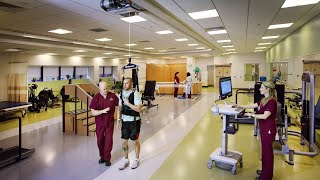
Once the stroke patient's medical condition has been stabilized, the rehabilitation process begins. Patients are evaluated and treated by members of an interdisciplinary team specially trained in the management of stroke. Physical therapists address problems with mobility, ambulation, positioning and strength. Occupational therapists focus on upper extremity weakness and work to restore activities of daily living including eating, bathing, grooming and dressing. Speech-language pathologists look into problems with communication, cognition and swallowing. A psychologist and neuropsychologist are available to identify and help manage affective and cognitive problems beginning at the onset of treatment. They also provide all-important emotional support to patients and their families. Social workers and case managers assist with discharge planning and community reintegration. The physiatrist coordinates the rehabilitation team and maintains medical stability throughout the rehabilitation process. The rehabilitation process may continue in a subacute or outpatient setting and in the home after the acute inpatient program has been completed.

 Subacute rehabilitation

 For patients who are physically unable to engage in the acute rehabilitation process, or who need more rehab time in a less intensive therapy regimen, we provide a subacute level of care at the Johns Hopkins Geriatrics Center and in the Transitional Care Unit at Good Samaritan Hospital.

 Outpatient and home services

 Full-service outpatient care for stroke patients is available at our comprehensive outpatient facility at Green Spring Station. Outpatient care is also available at our other locations. Patients who require home therapies can have these services arranged through our physicians.

For more information about our inpatient program, please call 410-532-4701.

For more information about our outpatient care programs and facilities, please call 410-532-4700.


AddThis Social Bookmark Button .
 .

FAQs | Maps & Directions | Privacy | Intranet | Contact JHM | Media Inquiries | Fund For JHM | Science Calendar

JOHNS HOPKINS HOSPITAL AND HEALTH SYSTEM
JOHNS HOPKINS UNIVERSITY
JOHNS HOPKINS MEDICINE

.

U.S.News & World Report - Best Hospital

U.S.News and World Report - Best Grad Schools

ANCC Magnet Recognition

 
 © The Johns Hopkins University, The Johns Hopkins Hospital and Johns Hopkins Health System, All rights reserved