Explore other Johns Hopkins Sites


Comprehensive Inpatient Rehabilitation

Comprehensive Inpatient Rehabilitation

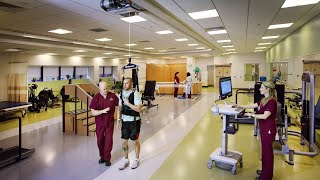
The Johns Hopkins Department of Physical Medicine and Rehabilitation offers comprehensive acute inpatient rehabilitation at two convenient Baltimore locations: our 50-bed unit at Good Samaritan Hospital and our 14-bed unit at Johns Hopkins Hospital.

Comprehensive care. The primary goal of inpatient rehabilitation is to help patients achieve the necessary skills to return to maximum functional independence. Our Acute Comprehensive Inpatient Rehabilitation (ACIR) units provide care of the highest quality for patients who require intensive rehabilitation services. All patients admitted to our units receive comprehensive care from an interdisciplinary team of trained professionals under the direction of a physiatrist (rehabilitation physician).

Hopkins physicians. Our physiatrists are all Johns Hopkins faculty members. Our inpatient programs at Good Samaritan and Johns Hopkins Hospitals are certified by the Commission on Accreditation of Rehabilitation Facilities (CARF).

Full rehabilitation services. Evaluation and treatment provided to our inpatients may include:

  • Physical therapy
  • Occupational therapy
  • Speech and language pathology
    • Swallowing disorders evaluation and treatment
    • Augmentative communication
  • Cognitive assessment and treatment
  • Cancer and cardiopulmonary disorders
  • Psychology
  • Neuropsychologic testing
  • Electrodiagnostic testing
  • Rehabilitative nursing
  • Social services
  • Therapeutic nutritional and dietary services
  • Therapeutic recreation
  • Prosthetics and orthotics prescription and fitting
  • Respiratory therapy

Broad expertise. We operate subspecialty programs, housed at Good Samaritan, for patients with spinal cord injuries, postoperative orthopaedic patients and stroke patients. Each program has its own specially trained team of rehabilitation professionals headed by a physiatrist. These patients may also be treated at our Johns Hopkins unit.

 We also treat patients with a wide variety of other disorders, including:

  • Amputation
  • Arthritis and other musculoskeletal disorders
  • Developmental disabilities: cerebral palsy, muscular dystrophy, others
  • Generalized debility (frailty) and deconditioning
  • Neurologic disorders: multiple sclerosis, brain tumor, movement disorders, others
  • Postsurgical: spine surgery, general surgery, plastics, others
  • Respiratory insufficiency / ventilator dependency
  • Transverse myelitis
  • Stroke

Who will benefit from admission to an acute rehabilitation unit?

  • People with functional impairments resulting from trauma, illness, complex surgery or developmental disease
  • People who show evidence of being able to participate in three hours or more of rehabilitative therapy activities a day
  • People whose medical condition is stable enough to allow participation in rehabilitation activities
  • People who require the intervention of more than one therapy specialty
  • People who are likely to make functional gains as a result of an inpatient rehabilitation stay

Patients who are unable to tolerate the pace of acute rehabilitation and those whose therapy needs do not warrant an acute inpatient stay may be candidates for subacute rehabilitation. Hopkins physiatrists assist with subacute rehabilitative treatment at Good Samaritan Hospital and Johns Hopkins Bayview Medical Center.

For more information, to arrange a tour of one of our units or to arrange an admission, please contact our Admissions Office at 410-532-4701.


© The Johns Hopkins University, The Johns Hopkins Hospital, and Johns Hopkins Health System, All rights reserved.

About Johns Hopkins Medicine | Patient Care | Education | Research | Health Information Library
Get Directions | Contact Us | Request an Appointment | Refer a Patient | Find a Doctor | Media Inquiries