Explore other Johns Hopkins Sites


The Rehabilitation Team

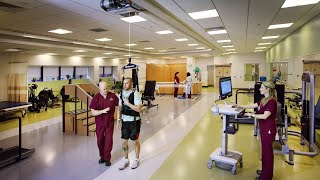
Patients are at the heart of an interdisciplinary group of rehabilitation experts who work together to provide excellent care tailored to fit each individual's strengths, needs, abilities and preferences. Members of the team are as follows.

Orthotists and prosthetists (CPOs) evaluate, cast, fabricate and fit custom orthoses and prostheses during the inpatient stay to maximize functional independence and facilitate discharge planning.

Physiatrists (pronounced "fizz-ee-at'-trists") are physicians who specialize in physical medicine and rehabilitation (PM&R) and are ultimately responsible for patients' overall care and rehabilitation. They oversee and guide the services of the rehabilitation team and supervise PM&R residents, who are licensed physicians undergoing specialized training in physical medicine and rehabilitation.

Rehabilitation nurses have advanced training in the care of rehabilitation patients. They are actively involved in all aspects of care and treatment. They help patients and families practice skills and techniques learned in therapies and promote patient knowledge, empowerment, participation and independence. Rehabilitation nurses provide prescribed medical or surgical care, prevent complications, help patients learn to manage their medications, develop strategies for bowel and bladder management and care for the skin.

Physical therapists (PTs) help patients learn new ways of achieving independent mobility. By enhancing the components of movement - strength, flexibility, balance, coordination and endurance - patients become better able to access the world and resume independent and productive lives.

Occupational therapists (OTs) address self-care activities, upper body and hand function, endurance, cognition and independent living skills. Occupational therapists assist patients in relearning such "activities of daily living" as how to eat, bathe, dress and handle household, work, or school activities. OTs may teach patients to use special adaptive devices to help them reach these goals.

Recreation therapists (RTs) focus on skill training that promotes the ability to access and enjoy recreation, leisure and community activities. Recreation therapy may help patients develop new leisure options or figure out adaptations for returning to previous activities. They provide resources for equipment and services that will be beneficial after discharge, and opportunities for patients and families to practice skills in the community that they learned in the clinical setting.

Speech-language pathologists work with patients with communication and swallowing problems. They may help patients to improve reading, writing, speaking, listening, memory and problem-solving skills. They evaluate train patients with swallowing problems to help them resume safe eating.

Clinical psychologists help patients learn about the many physical and emotional changes that accompany their disabilities or illnesses. They address problem-solving, emotional adjustment, sexual concerns, pain control and stress management. Neuropsychologists conduct tests for patients with brain injury or other neurological disorders to evaluate cognition, memory and behavior deficits and track their recovery.

Social workers work with patients and families to plan for life outside the hospital. This may include housing, caregiving and economic concerns, as well as relationships with family and friends. Social workers also help patients and families connect with programs available through community, social and financial agencies.

Registered dietitians ensure that patients have the nutrients they need to heal and participate fully in rehabilitation activities. Dietitians monitor patients' nutritional status and determine if additional supplementation is needed. They guide patients in modifying their diets if indicated by other health conditions or changes in activity.

Respiratory care practitioners, also called respiratory therapists, assist patients in maximizing breathing function and will help patients who use ventilators or have other respiratory problems.


© The Johns Hopkins University, The Johns Hopkins Hospital, and Johns Hopkins Health System, All rights reserved.

About Johns Hopkins Medicine | Patient Care | Education | Research | Health Information Library
Get Directions | Contact Us | Request an Appointment | Refer a Patient | Find a Doctor | Media Inquiries