
Professional Education
In this section
Books
Books about substance abuse treatment for professionals written by our faculty members.
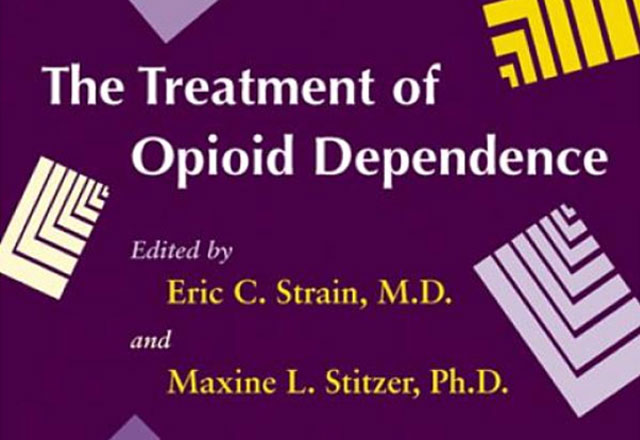
The Treatment of Opioid Dependence
Reinforcement-Based Treatment for Substance Use Disorders
The Substance Abuse Handbook
Academic Programs
Addiction Medicine Fellowship Program
The Addiction Medicine Fellowship Program will provide opportunities for exposure to inpatient and outpatient addiction treatment programs throughout the Johns Hopkins Medical Institutions and beyond. The Johns Hopkins Medical Institutions and its affiliated departments and teaching programs are dedicated to the training, development and mentorship of the fellow. The program is one year in length, and all fellowship training sites are part of the academic medicine system, where the fellow is an integral part of the patient care, learning and teaching experience. Learn more about the program and faculty.
JHBMC Internal Medicine Residency
Division faculty actively participate in the training of Johns Hopkins Bayview Medical Internal Medicine Residents:
- All residents complete a two-week rotation in the Chemical Dependence Unit and Comprehensive Care Practice
- Throughout their rotation, three residents share a panel of patients in Comprehensive Care Practice
- Faculty offer educational sessions for residents: HIV morning report; med-psych; evidence-based medicine; noon conferences; journal club
- Faculty create addiction modules for web-based Hopkins Internal Medicine curriculum
- Faculty coordinate and participate in PGY1 to PGY2 retreat
- Division faculty actively participate in the continuing training of Johns Hopkins Bayview Medical Center housestaff through:
- Precepting Medical Housestaff Practice
- Attending physician Zieve Medical Unit for one month per year (Aliki scholar)
Medical Students
Division faculty actively participate in the following components of Johns Hopkins medical students training:
- Fourth year elective
- Substance abuse intersession course
- Preceptors for longitudinal curriculum
- Colleges advisory program
- Continuity clinic (students during MPH)
- Ethics and public health
- Preceptor for second-year medical student transition to the wards clinical skills course
Urban Health Residency
Division faculty participate in the training of new residents, with the goal of improving and impacting the resident's knowledge, behavior and attitudes towards substance use among their patients, focusing on:
- Universal screening
- Evidence-based practices for early intervention
- Treatment strategies that can be incorporated into the primary care setting, including office-based buprenorphine treatment, and treatment for alcohol and tobacco use disorders
- Encouraging referrals to specialized treatment programs where appropriate
Others
- Serve as faculty for the Johns Hopkins yearly Buprenorphine Certification Training, open to internal and external faculty and staff
Courses
Neurobiology of Substance Use Disorders
ME: 440.725
Joint NIDA IRP - JH Course
Department of Neurosciences
Monday and Wednesday | 3-4 PM | Wood basic Science Building
Course Co-Directors:
Antonello Bonci, M.D. NIDA-IRP, Hopkins Neuroscience
Jean Lud Cadet, M.D. NIDA-IRP
Eric Strain, M.D., Hopkins Medicine
Description of the course. Recent progress in basic and clinical neurobiology has helped to identify specific cellular and molecular mechanisms that are involved in the development and maintenance of drug-taking behaviors. Similarly, clinical studies have identified behavior patterns and brain structures that are relevant to drug addiction, Thus, the purpose of this course is to provide an overview of the neural circuitries and of the molecular and cellular mechanisms involved in the addictive process. The lecturers will also provide an overview of the clinical presentations and course of substance use disorders. The course will consist of 14 lectures given over a period of 8 weeks, with 2 hourly lectures per week. Topics will include the amphetamines, cocaine, heroin, marijuana, and designer drugs.
Download complete list of topics and speakers
Postdoctoral Fellowships
Johns Hopkins/ NIDA Intramural Research Program
Joint Fellowship in Aging and Addiction
VISION | To develop a collaborative program that will lead the nation in conducting research and training that pertains to aging and addiction.
OVERVIEW | This will be a joint program that is co-directed by Johns Hopkins, the National Institute on Drug Abuse Intramural Research Program (NIDA IRP), the National Institute on Alcohol Abuse and Alcoholism (NIAAA), and the National Institute on Aging. A central feature to the program is a training program for doctoral level young investigators. In addition, there will be associated seminars and educational initiatives consistent with the overall theme of aging and addiction. The training program will last a total of five years for each enrollee, and will provide a clinical and research training experience for physicians and psychologists who wish to develop expertise in the area of aging and addictions. The five-year period will begin with a two-year fellowship, followed by a three-year JH faculty and/or IRP staff appointment. Full salary support for the two-year fellowship will be guaranteed contingent on productivity and participation, and salary support consistent with rank/appointment level will be guaranteed (contingent on productivity and participation) by the program for years 3-5. Effort during the fellowship years will be broadly split between clinical work in the area of addictions and aging, and research experience (either clinical or preclinical) as it relates to this area. Years 3-5 will be tailored based upon the interests, productivity, and opportunities identified in years 1-2.
TARGET ENROLLEES | This program will target physicians and psychologists with an interest in aging and addictions. Enrollees will not be limited to graduates of the Hopkins training programs, and the program will not be restricted to any particular medical specialty for physician enrollees.
ASSOCIATED FEATURES OF THE PROGRAM | In addition to the training program, there are two associated features to this joint aging/addictions program. The first is a monthly seminar luncheon seminar series that will focus on issues of aging and addictions. Fellows in the program will help to organize this series with the assistance of their mentors and the program co-directors; seminars will be open to the general scientific community. The second feature is an annual speaker, who will be a nationally recognized person that ideally has expertise in the areas of aging and addictions. This speaker will be invited to the JHBMC campus for the day to give a major presentation.
Drug Dependence Epidemiology Training (DDET) Program
The Drug Dependence Epidemiology Training (DDET) Program is a T32 research training program in the epidemiology of drug dependence. It is housed in the Department of Mental Health at the Johns Hopkins Bloomberg School of Public Health in Baltimore, Maryland. The DDET Program currently funds 14 trainees: 7 predoctoral students and 7 postdoctoral fellows. The DDET Program is supported primarily by T32 research training grant awards from the National Institute on Drug Abuse of the NIH Fogarty International Center.
The Drug Dependence Epidemiology Training Program is designed to develop expert scientists in the field of the epidemiology and consequences of drug dependence. A primary goal of research emphasized within the DDET Program is to explicate biological and environmental factors associated with changes in drug-taking behavior, variations in problem severity of drug use, and risk and protective factors associated with the consequences of drug-taking behavior, including infectious disease, cancer, or dementia, in addition to complications associated with prenatal drug exposure.
Predoctoral and postdoctoral trainees are encouraged and expected to develop research projects and submit manuscripts for publication in scientific journals. They are also expected to present their work at scientific conferences. Collaboration is highly encouraged, within and outside of the DDET group.
For more information: http://web.jhu.edu/dde
Renee M. Johnson, PhD, MPH
Assistant Professor, Johns Hopkins Bloomberg School of Public Health
Dept. of Mental Health, Deputy Director, Drug Dependence Epidemiology Training Program (DDET)
Location: 624 North Broadway, 8th Floor, Room 801
Baltimore, MD 21205-1999
Phone: (410) 955-7073
Fax: (410) 955-9088
Email: [email protected]
Sexually Transmitted Infection (STI) Training Grant
The Sexually Transmitted Infection (STI) Training Grant is an NIAID T32 pre-doctoral research training program for 5 pre-doctoral students . While the administrative home of the training grant is in the Department of Epidemiology, the training grant recruits pre-doctoral trainees from all Departments within the Johns Hopkins Bloomberg School of Public Health. It is co-directed by Drs. Jacky Jennings (SOM) and Susan Sherman (SPH). The STI TG’s primary goal is to create a rich and interactive research training environment. Mentoring is provided by the Co-Directors and academic advisors across the Johns Hopkins University Institution. Grantees are exposed to innovative, productive, and collaborative STI research conducted by observational, basic, and clinical research scientists.
The training grant aims to advance knowledge of the causes of STIs like sexually transmitted HIV, including inherent and modifiable factors in human populations. Further, it aims to advance knowledge about the diagnosis, care, and treatment of STIs including HIV in individuals and in human populations. Lastly, the training grant seeks to extend knowledge of how to prevent and reduce the burden of STIs by providing a better understanding of sexual risk behaviors and transmission dynamics; identifying social determinants of sexually transmitted diseases; and identifying and addressing barriers to care. Trainees attend a monthly journal club, monthly Center for Child and Community Health Research (CCHR) research rounds, and monthly meetings to discuss work-in-progress with fellow trainees and the Co-Directors. Trainees are expected to produce scholarly products through their training, including peer-reviewed manuscripts and abstracts to national or international scientific conferences.
For more information please contact [email protected] or [email protected]
Human Behavioral Pharmacology of Substance Abuse
Areas of research training include:
- Clinical pharmacology of drugs of abuse
- Medications development research
- The cognitive neuroscience and behavioral toxicity of drugs of abuse
- Abuse liability assessment
- Behavioral treatment of substance abuse
- Pharmacological treatment of substance abuse
- Integration of behavioral and pharmacological treatments
- Psychiatric comorbidity
- Behavioral and neuropsychiatric assessment
- Cognitive and psychomotor function
- HIV risk behavior assessment
- Clinical trials research methods and management
- Addiction and pregnancy
- Women's health issues
A broad range of abused substances is studied - opioids, cocaine, sedatives, alcohol, hallucinogens, club drugs, tobacco, caffeine. For more information about program resources, faculty, and publications see the Behavioral Pharmacology Research Unit website.
For further information or to apply, contact:
George E. Bigelow, Ph.D.
Professor of Psychiatry and Behavioral Sciences
Director, Behavioral Pharmacology Research Unit (BPRU)
The Johns Hopkins University, School of Medicine
Location: 5510 Nathan Shock Drive
Baltimore, MD 21224-6823
Phone: 410-550-0035
Fax: 410-550-0030
Email: [email protected]