Skip Navigation


Print This Page
Share this page: More
 

Current News Releases

Current News Releases

Released: 05/24/2013


This year, the Maryland Stem Cell Research Commission awarded 24 of its 31 grants to Johns Hopkins researchers. The grants will support projects to study the basic principles of how stem cells work, as well as to develop potential therapies for conditions ranging from sickle cell disease to diabetes to epilepsy. This year’s grants will total $10.4 million; the commission will announce the amounts of each grant later.

Released: 05/23/2013

The 279 school of medicine graduates come from throughout the United States and more than 20 countries


A distinguished group of 279 graduates will embark on their future careers as physicians and scientists at the convocation ceremony of the Johns Hopkins University School of Medicine on May 23, 2013, at the Joseph Meyerhoff Symphony Hall in Baltimore.

Released: 05/22/2013

Move designed to reflect “revolution” in surgical techniques and save money


Johns Hopkins researchers have developed new guidelines — the first in more than 35 years — to govern the amount of blood ordered for surgical patients. The recommendations, based on a lengthy study of blood use at The Johns Hopkins Hospital (JHH), can potentially save the medical center more than $200,000 a year and improve patient safety, researchers say.

Released: 05/22/2013

Finding could lead to earlier diagnosis and new, more aggressive treatment for worst cases


 In a series of lab experiments designed to unravel the workings of a key enzyme widely considered a possible trigger of rheumatoid arthritis, researchers at Johns Hopkins have found that in the most severe cases of the disease, the immune system makes a unique subset of antibodies that have a disease-promoting role.

Released: 05/22/2013

Private insurers rather than hospitals would reap the most savings by supporting programs to prevent these avoidable complications


Johns Hopkins researchers report that hospitals may be reaping enormous income for patients whose hospital stays are complicated by preventable bloodstream infections contracted in their intensive care units.

Released: 05/22/2013


Researchers at Johns Hopkins have unraveled the molecular foundations of cocaine’s effects on the brain, and identified a compound that blocks cravings for the drug in cocaine-addicted mice. The compound, already proven safe for humans, is undergoing further animal testing in preparation for possible clinical trials in cocaine addicts, the researchers say.

Released: 05/21/2013

Repeatedly changing primary care providers linked to more ER trips, study finds


Overweight and obese patients are significantly more likely than their normal-weight counterparts to repeatedly switch primary care doctors, a practice that disrupts continuity of care and leads to more emergency room visits, new Johns Hopkins research suggests.

Released: 05/21/2013

Alteration of two genes, detectable by simple blood test during pregnancy, foretold illness with 85 percent certainty in small study


Johns Hopkins researchers say they have discovered specific chemical alterations in two genes that, when present during pregnancy, reliably predict whether a woman will develop postpartum depression.

Released: 05/20/2013

New screening and diagnostic tool designed for early detection of breast cancer


The Johns Hopkins Department of Radiology is expanding its breast imaging services with the use of a new technology, tomosynthesis or 3-D mammography.

Released: 05/20/2013

If successful in humans, joint replacement surgery might be avoidable


Scientists at Johns Hopkins have turned their view of osteoarthritis (OA) inside out. Literally. Instead of seeing the painful degenerative disease as a problem primarily of the cartilage that cushions joints, they now have evidence that the bone underneath the cartilage is also a key player and exacerbates the damage. In a proof-of-concept experiment, they found that blocking the action of a critical bone regulation protein in mice halts progression of the disease.

Released: 05/17/2013


Hugh Calkins, M.D., has been elected president of the Heart Rhythm Society, an international organization of more than 5,800 specialists in heart rhythm disorders from 72 countries. Calkins was elected during the organization’s 34th Annual Scientific Sessions in Denver.

Released: 05/16/2013


Frederick L. Brancati, M.D., M.H.S., an internationally recognized expert on the epidemiology and prevention of type 2 diabetes, and longtime director of the Division of General Internal Medicine at the Johns Hopkins University School of Medicine, died Tuesday after a long struggle with amyotrophic lateral sclerosis (ALS). He was 53.

Released: 05/15/2013

Insurance coverage for annual screening likely one reason for persistence


Women in their 40s continue to undergo routine breast cancer screenings despite national guidelines recommending otherwise, according to new Johns Hopkins research.

Released: 05/14/2013

Network increases research opportunities throughout the region


Reading Hospital, an affiliate member of Reading Health System in Reading, Pa., is the latest regional independent medical center to become a member of Johns Hopkins Clinical Research Network (JHCRN).

Released: 05/13/2013


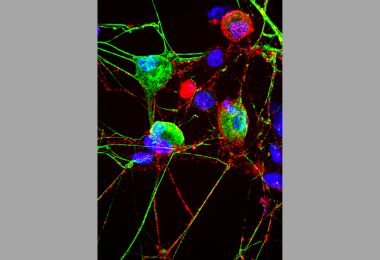
Experiments at Johns Hopkins have unearthed clues about which protein signaling molecules are allowed into hollow, hair-like “antennae,” called cilia, that alert cells to critical changes in their environments.

Released: 05/09/2013

Men especially affected


People with higher levels of cadmium in their urine — evidence of chronic exposure to the heavy metal found in industrial emissions and tobacco smoke — appear to be nearly 3.5 times more likely to die of liver disease than those with lower levels, according to a study by Johns Hopkins scientists.

Released: 05/09/2013

Cells aid in scar formation after injury to central nervous system


By monitoring the behavior of a class of cells in the brains of living mice, neuroscientists at Johns Hopkins discovered that these cells remain highly dynamic in the adult brain, where they transform into cells that insulate nerve fibers and help form scars that aid in tissue repair.

Released: 05/08/2013


The National Institutes of Health has announced that Janice E. Clements, Ph.D., is among 10 experts selected to advise the director of the National Institutes of Health (NIH) on policies and activities of the Division of Program Coordination, Planning, and Strategic Initiatives (DPCPSI). The panel makes recommendations on research in important areas of emerging scientific opportunities, rising public health challenges, or knowledge gaps that deserve special emphasis or would otherwise benefit from strategic planning and coordination.

Released: 05/08/2013


Award-winning journalist, best-selling author, well-known cancer advocate and talk-show host Katie Couric will be the keynote speaker at Johns Hopkins Medicine’s 19th annual A Woman’s Journey (AWJ) symposium Saturday, Nov. 16, in Baltimore. She also will receive the Johns Hopkins Medicine Distinguished Service Award for her commitment to building public awareness about colorectal cancer screening, raising funds for research to find better treatments for all cancers, and supporting patient care.

Released: 05/07/2013


An international team of researchers, led by physician-scientists at Johns Hopkins, reports that a once-daily tablet containing a high dose of a key ragweed pollen protein effectively blocks the runny noses, sneezes, nasal congestion and itchy eyes experienced by  ragweed allergy sufferers.


© The Johns Hopkins University, The Johns Hopkins Hospital, and Johns Hopkins Health System. All rights reserved.

Privacy Policy and Disclaimer