Current News Releases
Practice Will Accept Patients for Family Medicine
Johns Hopkins Community Physicians (JHCP) will open its newest practice on Monday, May 6, at 8160 Maple Lawn Blvd. in Fulton, Md. It will be located in the heart of the Maple Lawn Business District.
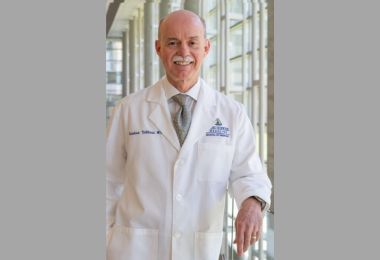
Steven J. Thompson, CEO of Johns Hopkins Medicine International (JHI), has won one of the World Trade Center Institute’s Annual International Business Leadership Awards for 2013. The award, which recognizes Thompson’s accomplishments as an entrepreneurial international business leader during a period of rapid growth and change institutionally and in the marketplace, was presented on May 2, 2013 at The Jim Rouse Visionary Center in Baltimore, Maryland.
Blocking a single gene renders tumors less aggressive, Johns Hopkins researchers find
Researchers at Johns Hopkins have identified a gene that, when repressed in tumor cells, puts a halt to cell growth and a range of processes needed for tumors to enlarge and spread to distant sites. The researchers hope that this so-called “master regulator” gene may be the key to developing a new treatment for tumors resistant to current drugs.
Johns Hopkins’ Mary Armanios, M.D.; L. Ebony Boulware, M.D., M.P.H.; Andrea Cox, M.D., Ph.D.; Kelly Gebo, M.D., M.P.H.; and Sherita Golden, M.D., M.H.S., have been inducted into the American Society for Clinical Investigation (ASCI). The five were among 80 new members inducted at the ASCI’s annual meeting on April 26 in Chicago. Founded in 1908, ASCI is an honor society for physician-researchers.
Benefits in healthy adults wear off at higher doses, research suggests
In recent years, healthy people have been bombarded by stories in the media and on health websites warning about the dangers of too-low vitamin D levels, and urging high doses of supplements to protect against everything from hypertension to hardening of the arteries to diabetes.
The Faculty of Medicine of the University of Amsterdam, with the Spinoza Foundation Amsterdam, has awarded the 2013 Spinoza Chair in medicine to Andrew Feinberg, M.D., M.P.H., Gilman Scholar and director of the Center for Epigenetics in the Institute for Basic Biomedical Sciences at the Johns Hopkins University School of Medicine.
Jef Boeke, Ph.D., a professor in the Johns Hopkins University School of Medicine’s Institute for Basic Biomedical Sciences, is one of the 84 new members elected this year to the National Academy of Sciences. Membership in the academy, which advises the government on scientific matters, is a top honor for U.S. scientists. Boeke will be inducted into the academy next April during its 151st annual meeting in Washington, D.C.
Still, study suggests, efforts needed to reduce errors that lead to claims
Efforts to lower health care costs in the United States have focused at times on demands to reform the medical malpractice system, with some researchers asserting that large, headline-grabbing and “frivolous” payouts are among the heaviest drains on health care resources. But a new review of malpractice claims by Johns Hopkins researchers suggests such assertions are wrong.
A small survey of U.S. obstetrics and gynecology residents finds that fewer than one in five receives formal training in menopause medicine, and that seven in 10 would like to receive it.
Johns Hopkins research in mice unravels mystery behind sex disparities in drug-induced hepatitis
A Johns Hopkins Children’s Center study in mice may help explain why women are more prone than men to a form of liver damage by implicating the female sex hormone estrogen in the development of autoimmune hepatitis.
Time magazine has named Johns Hopkins Children’s Center HIV expert Deborah Persaud, M.D., one of the world’s 100 most influential people for 2013. A virologist and an infectious disease specialist, Persaud is being recognized for her research and clinical work in pediatric HIV and AIDS.
Peter Pronovost, a world-renowned patient safety leader and researcher who’s devoted his career to making hospitals and health care safer for patients by reducing medical errors and preventable patient harm, ranked fifth on this year’s list of the “50 Most Influential Physician Executives in Healthcare.”
The American Academy of Arts and Sciences (AAAS) has elected Johns Hopkins researcher Geraldine Seydoux as part of its class of 2013. Founded in 1780, the AAAS has a long history of bringing together leading scholars from every discipline to study the complex policy problems facing our world. This year’s new members will be announced on April 24 and inducted at a ceremony on Oct. 12 at the Academy’s headquarters in Cambridge, Mass.
Paul S. Lietman, M.D., Ph.D., a specialist in bacterial and viral infections who was the longtime chief of the Division of Clinical Pharmacology at the Johns Hopkins School of Medicine and an influential teacher and mentor to generations of Hopkins medical students and scientists, died at his Baltimore home on April 20 of congestive heart failure. He was 79.
In reviewing 25 years of U.S. malpractice claim payouts, Johns Hopkins researchers found that diagnostic errors — not surgical mistakes or medication overdoses — accounted for the largest fraction of claims, the most severe patient harm, and the highest total of penalty payouts. Diagnosis-related payments amounted to $38.8 billion between 1986 and 2010, they found.
New members recognized for discoveries that advance medicine
The Association of American Physicians (AAP) has elected Johns Hopkins researchers Stephen Desiderio, Hal Dietz, Drew Pardoll, Jeremy Sugarman and David Valle as new members. Founded in 1885, the nonprofit, professional organization works to advance medical research and its application to practice. The names of this year’s new members will be announced April 26 at AAP’s annual joint meeting with the American Society for Clinical Investigation in Chicago.
Time with patients seems “squeezed out” of training, investigator says
Medical interns spend just 12 percent of their time examining and talking with patients, and more than 40 percent of their time behind a computer, according to a new Johns Hopkins study that closely followed first-year residents at Baltimore’s two large academic medical centers. Indeed, the study found, interns spent nearly as much time walking (7 percent) as they did caring for patients at the bedside.
Lack of empathy may lead to ineffective care, disregarded weight-loss counseling, and patient dissatisfaction
In a small study of 39 primary care doctors and 208 of their patients, Johns Hopkins researchers have found that physicians built much less of an emotional rapport with their overweight and obese patients than with their patients of normal weight.
The Warburton Family Foundation, based in Hudson, Ohio, has donated $1 million to the James Buchanan Brady Urological Institute at The Johns Hopkins University. The gift will be combined with a donation from urology professor emeritus Hugh Judge Jewett, M.D., to create the Warburton Family Foundation and Dr. Hugh Judge Jewett Fellowship in Urologic Oncology.
More convenient recycling credited for the drop
Officials at The Johns Hopkins Hospital (JHH) report a 200,000-pound decrease in the amount of trash produced each month — a 17 percent drop in just the first five months of a campaign begun in October 2012.
Pioneering research led by Johns Hopkins scientists on the use of partially matched bone marrow transplants to wipe out sickle cell disease has been selected as one of the Top 10 Clinical Research Achievements of 2012 by the Clinical Research Forum. The success of a preliminary clinical trial of the so-called haploidentical transplants has the potential to bring curative transplants to a majority of sickle cell patients who need them, eliminating painful and debilitating symptoms and the need for a lifetime of pain medications and blood transfusions.
Keeping patients happy should be a priority, but not a stand-in for measuring quality
Patient satisfaction is an important indicator of a hospital’s service quality, but new Johns Hopkins research suggests that it doesn’t necessarily reflect the quality of the surgical care patients receive.
Research has implications for understanding memory and imagination
Studying rats’ ability to navigate familiar territory, scientists found that the hippocampus uses remembered spatial information to imagine routes the rats then follow. Their discovery has implications for understanding why damage to the hippocampus disrupts specific types of memory and learning in people with Alzheimer’s disease and age-related cognitive decline. And because these mental trajectories guide the rats’ behavior, this research model may be useful in future studies on higher-level tasks, such as decision-making.
Research at Johns Hopkins suggests that if hospitals would show physicians the price of some diagnostic laboratory tests at the time the tests are ordered, doctors would order substantially fewer of them or search for lower-priced alternatives.
Presentations will highlight progress in understanding genetic disease
Johns Hopkins genetics researchers Aravinda Chakravarti, Ph.D., and David Valle, M.D., will each present at the joint conference of the Human Genome Meeting 2013 and the 21st International Congress of Genetics. The conference, which will take place in Singapore April 13-18, 2013, will focus on the genetics and genomics of world health and sustainability.
Findings highlight physician uncertainty about hospitalization
A Johns Hopkins Children’s Center survey of 102 clinicians who treat teenage girls with pelvic inflammatory disease (PID) has found that official guidelines designed to inform decisions about hospitalization versus outpatient care leave some clinicians scratching their heads.
Discovery in mice may help quest to restore function in damaged insulin cells
A team of researchers at the Johns Hopkins Children’s Center has found that a protein long believed to have a minor role in type 2 diabetes is, in fact, a central player in the development of the condition that affects nearly 26 million people in the United States alone and counts as one of the leading causes of heart disease, stroke and kidney, eye and nerve damage.
Johns Hopkins scientists have created a free, Web-based tool to help patients decide whether it's best to accept an immediately available, but less-than-ideal deceased donor kidney for transplant, or wait for a healthier one in the future.
Amanda Nickles Fader, M.D., a widely published and internationally recognized surgeon with a specialty in minimally invasive women’s cancer surgery and obesity and cancer, has joined Johns Hopkins Medicine as director of the Kelly Gynecologic Oncology Service and director of the Minimally Invasive Surgery Center in the Department of Gynecology and Obstetrics.
Honorees at AACR Annual Meeting 2013 include Johns Hopkins cancer scientists.
We’re all fatheads. That is, our brain cells are packed with fat molecules, more of them than almost any other cell type. Still, if the brain cells’ fat content gets too high, they’ll be in trouble. In a recent study in mice, researchers at Johns Hopkins pinpointed an enzyme that keeps neurons’ fat levels under control, and may be implicated in human neurological diseases.
Repair of Protein Pump Possible
Johns Hopkins scientists have found out how a gout-linked genetic mutation contributes to the disease: by causing a breakdown in a cellular pump that clears an acidic waste product from the bloodstream. By comparing this protein pump to a related protein involved in cystic fibrosis, the researchers also identified a compound that partially repairs the pump in laboratory tests.
Award recognizes contributions to understanding of muscle wasting
On April 3, South Korea’s Ho-Am Foundation announced that Johns Hopkins researcher Se-Jin Lee, M.D., Ph.D., has won this year’s Ho-Am Prize in Medicine. The prize, established in 1990 by the Samsung Corporation in honor of Samsung’s founder, recognizes outstanding accomplishments in medical research that pave the way to conquering disease. It is awarded each year to an ethnic Korean, and is sometimes referred to as “Korea’s Nobel.”
He is also honored for his research on swallowing disorders at scientific society meeting
Jeffrey B. Palmer, M.D., director of the Department of Physical Medicine and Rehabilitation at the Johns Hopkins University School of Medicine, was recently appointed editor-in-chief of a new scientific journal, Current Physical Medicine and Rehabilitation Reports.
Paul B. Rothman, M.D., the dean/CEO of Johns Hopkins Medicine, has appointed Roy Ziegelstein, M.D., an acclaimed cardiologist and award-winning teacher, as the new vice dean for education at the Johns Hopkins University School of Medicine.
Role of cells other than motor neurons much larger than anticipated
Johns Hopkins scientists say they have evidence from animal studies that a type of central nervous system cell other than motor neurons plays a fundamental role in the development of amyotrophic lateral sclerosis (ALS), a fatal degenerative disease.
Liquid smoke, black and green teas and coffee produced levels of cell DNA damage comparable to chemo drugs
In a laboratory study pairing food chemistry and cancer biology, scientists at the Johns Hopkins Kimmel Cancer Center tested the potentially harmful effect of foods and flavorings on the DNA of cells. They found that liquid smoke flavoring, black and green teas and coffee activated the highest levels of a well-known cancer-linked gene called p53.
First-place winner will receive a $25,000 cash prize at the event on April 3, and a total of nearly $50,000 will be awarded.
Five Johns Hopkins students and trainees have been selected as finalists in a competition to find creative new approaches to treating metastatic cancer.
A 24-year-old hearing-impaired baseball fan from Annapolis, Md., hopes to raise $1 million to help others facing hearing loss, so they too can experience in what he calls his "miracle," the cochlear implant performed at The Johns Hopkins Hospital in 1999 that restored much of his hearing when he was 10 years old.
Researchers suggest a different method of assessing risk after examining data on 1.3 million Americans
In what promises to be an eye-opener for many doctors and patients who routinely depend on cholesterol testing, a study led by researchers at the Johns Hopkins University School of Medicine found that the standard formula used for decades to calculate low-density lipoprotein (LDL) cholesterol levels is often inaccurate.
A scientific review of 63 published studies affirms that putting small amounts of purified grasses, ragweed, dust mites, pollen and mold, in liquid drops under the tongue is a safe and effective alternative to weekly injections of those allergens or the use of other medications, in treating symptoms of allergies and allergic asthma in some people.
Johns Hopkins researchers say more evidence is needed to understand additional impact of reductions on patient safety and quality of training
Limiting the number of continuous hours worked by medical trainees failed to increase the amount of sleep each intern got per week, but dramatically increased the number of potentially dangerous handoffs of patients from one trainee to another, new research from Johns Hopkins suggests.
Population at high risk for obesity-related mortality able to make healthy lifestyle changes
Through a program that teaches simple nutrition messages and involves both counseling and regular exercise classes, people with serious mental illness can make healthy behavioral changes and achieve significant weight loss, according to new Johns Hopkins research.
The Wilmer Eye Institute is the first place in Maryland to implant the Implantable Miniature Telescope (IMT) since its approval by the FDA.
Novel modification of structural protein implicated
Studying a protein that gives structure to the nucleus of cells, Johns Hopkins researchers stumbled upon mutations associated with familial partial lipodystrophy (FPLD), a rare disease that disrupts normal patterns of fat distribution throughout the body.
Johns Hopkins-led research could offer a biomarker for tracking treatment response
In a small, preliminary study of regular migraine sufferers, scientists have found that measuring a fat-derived protein called adiponectin (ADP) before and after migraine treatment can accurately reveal which headache victims felt pain relief.
Location, location, location. A new Johns Hopkins Children’s Center study shows the real-estate mantra also holds true when it comes to choosing correct catheter placement in children.
Tool lets any clinician contribute information about patients for analysis
A new online database combining symptoms, family history and genetic sequencing information is speeding the search for diseases caused by a single rogue gene. As described in an article in the May issue of Human Mutation, the database, known as PhenoDB, enables any clinician to document cases of unusual genetic diseases for analysis by researchers at the Johns Hopkins University School of Medicine or the Baylor College of Medicine in Houston. If a review committee agrees that the patient may indeed have a previously unknown genetic disease, the patient and some of his or her family members may be offered free comprehensive genetic testing in an effort to identify the disease culprit.
Pseudotumor cerebri condition marked by excessive pressure in skull, most common in obese, premenopausal women between the ages of 18 and 40
A team of interventional neuroradiologists and neurosurgeons at Johns Hopkins reports wide success with a new procedure to treat pseudotumor cerebri, a rare but potentially blinding condition marked by excessive pressure inside the skull, caused by a dangerous narrowing of a vein located at the base of the brain.
A small study of 20 people with Parkinson’s disease suggests that "virtual house calls" using Web-based video conferencing provide clinical benefits comparable to in-person physician office visits, while saving patients and their caregivers time and travel.
On March 18, YouTube sensation and Disney recording artist Savannah Outen will sing her newly-recorded song “Brave and True” to 16 year-old Bo Oliver, a cancer patient at the Johns Hopkins Kimmel Cancer Center.
Graduating medical students at Johns Hopkins and throughout the nation will find out where they will go for their residency to launch their careers
After years of studying, deciding what type of doctor they want to be and applying to numerous residency programs, 113 graduating Johns Hopkins medical students — and thousands of others across the nation — will find out precisely at noon on March 15 where they will launch their careers as doctors.
Johns Hopkins researchers use a type of stem cells from human adipose tissue to chase migrating cancer cells
In laboratory studies, Johns Hopkins researchers say they have found that stem cells from a patient’s own fat may have the potential to deliver new treatments directly into the brain after the surgical removal of a glioblastoma.
The Johns Hopkins University School of Medicine remains among the top medical schools in the United States, according to the 2014 edition of U.S. News & World Report’s Best Graduate Schools. In addition, Johns Hopkins is listed in the top tier of specialty rankings.
An extra 1,000 transplants could be done every year, Johns Hopkins study suggests
An additional 1,000 patients could undergo kidney transplants in the United States annually if hospitals performed more transplants using paired kidney exchanges, new Johns Hopkins research suggests.
Johns Hopkins study provides key insight into how cells fuse
Researchers at Johns Hopkins have established a high-efficiency cell-cell fusion system, providing a new model to study how fusion works. The scientists showed that fusion between two cells is not equal and mutual as some assumed, but, rather, is initiated and driven by one of the fusion partners. The discovery, they say, could lead to improved treatments for muscular dystrophy, since muscle regeneration relies on cell fusion to make muscle fibers that contain hundreds or even thousands of nuclei.
Johns Hopkins Wilmer Eye Institute’s new office in Bethesda, Md., at the Air Rights Center (West Tower) is now welcoming patients.
Small Johns Hopkins-led study finds portable device diagnoses stroke with 100 percent accuracy
A bedside electronic device that measures eye movements can successfully determine whether the cause of severe, continuous, disabling dizziness is a stroke or something benign, according to results of a small study led by Johns Hopkins Medicine researchers.
Johns Hopkins research on obese mice finds that the impact of dieting and losing weight benefits the heart health of the young, but not the older ones
In a study of the impact of weight loss on reversing heart damage from obesity, Johns Hopkins researchers found that poor heart function in young obese mice can be reversed when the animals lose weight from a low-calorie diet.
The training of next-generation clinical investigators in China is at the core of a new collaboration between Sun Yat-sen University (SYSU) and its affiliated hospitals in Guangzhou, China, and The Johns Hopkins University and Johns Hopkins Medicine International in Baltimore, USA.
A small study from Johns Hopkins adds to the growing body of evidence that red blood cells stored longer than three weeks begin to lose the capacity to deliver oxygen-rich cells where they may be most needed.
Strains of potentially deadly, antibiotic-resistant Staphylococcus aureus bacteria show seasonal infection preferences, putting children at greater risk in summer and seniors at greater risk in winter, according to results of a new nationwide study led by a Johns Hopkins researcher.
One in three diabetes patients at the Penal Health Center, located in the Penal region of Trinidad and Tobago, fail to take the medications their physicians prescribe for high blood sugar, blood pressure or cholesterol.
Researchers identify 25 human proteins that may be crucial for HIV-1 infection and survival
Studying HIV-1, the most common and infectious HIV subtype, Johns Hopkins scientists have identified 25 human proteins “stolen” by the virus that may be critical to its ability to infect new cells. HIV-1 viruses capture many human proteins from the cells they infect but the researchers believe these 25 proteins may be particularly important because they are found in HIV-1 viruses coming from two very different types of infected cells. A report on the discovery, published online in the Journal of Proteome Research on Feb. 22, could help in building diagnostic tools and novel treatment strategies to fight HIV infection.
People who take the newest class of diabetes drugs to control blood sugar are twice as likely as those on other forms of sugar-control medication to be hospitalized with pancreatitis, Johns Hopkins researchers report.
BioMaryland LIFE and Abell Foundation awards confer funds for research translation
Johns Hopkins' John Wong, Ph.D., has won a BioMaryland LIFE Award, and Ronald Berger, M.D., Ph.D., and Hien Nguyen, M.D., were awarded funds from the Abell Foundation, the researchers learned last week. Each of the winners will receive $50,000 to help develop their discoveries for clinical use.
Condition long linked to war veterans found in one in three ventilated patients
One in three people who survived stays in an intensive care unit (ICU) and required use of a mechanical ventilator showed substantial post-traumatic stress disorder (PTSD) symptoms that lasted for up to two years, according to a new Johns Hopkins study of patients with acute lung injury.
Researchers at The Johns Hopkins University and Yale University have discovered that a specialized receptor, normally found in the nose, is also in blood vessels throughout the body, sensing small molecules created by microbes that line mammalian intestines, and responding to these molecules by increasing blood pressure. The finding suggests that gut bacteria are an integral part of the body’s complex system for maintaining a stable blood pressure.
Only hospital in Maryland to receive federal funding set aside for premature birth research
The federal government has awarded the Department of Gynecology and Obstetrics at the Johns Hopkins University School of Medicine a $2 million grant to advance methods of preventing premature births.
Protein uses multiple means to help cells cope when oxygen runs low
A protein known for turning on genes to help cells survive low-oxygen conditions also slows down the copying of new DNA strands, thus shutting down the growth of new cells, Johns Hopkins researchers report. Their discovery has wide-ranging implications, they say, given the importance of this copying — known as DNA replication — and new cell growth to many of the body’s functions and in such diseases as cancer.
Omalizumab therapy could soon replace other, more toxic treatments
An international team of researchers has found that a once-a-month, high-dose injection of a commonly used asthma drug is highly effective in treating teens and adults chronically afflicted with hives and severe, itchy rash.
Delirium can lead to short- and long-term confusion and memory problems
A hospital is not the best place to get a good night’s sleep, especially in a noisy intensive care unit.
Bert Vogelstein, M.D., co-director of the Ludwig Center at Johns Hopkins and a Howard Hughes Medical Institute investigator has been awarded the Breakthrough Prize in Life Sciences. He was selected for his landmark work in cancer genomics and tumor suppressor genes.
An expansion of collaborative projects involving Fundación Santa Fe de Bogotá (FSFB), one of Colombia’s premier health care institutions, and Johns Hopkins Medicine International (JHI) will continue for another 10 years under an agreement signed Feb. 18, 2013, in Baltimore, USA.
Johns Hopkins is one of the first hospitals in the United States to offer the customized graft.
An abdominal aortic aneurysm - a bulge in the large artery that carries blood away from the heart - can be immediately life-threatening if it grows large enough to rupture.
Findings may prompt development of new approach to improve function in diseased lungs.
In a study of mice, researchers at Johns Hopkins have identified a new molecular pathway involved in the growth of tiny air sacs called alveoli that are crucial for breathing.
-- Patient-specific cancer cell lines designed to predict chemotherapy sensitivity
In laboratory studies, scientists at the Johns Hopkins Kimmel Cancer Center have developed a way to personalize chemotherapy drug selection for cancer patients by using cell lines created from their own tumors.
Results spell need for more effective therapies, earlier intervention
Nine out of 10 young children with moderate to severe attention-deficit hyperactivity disorder (ADHD) continue to experience serious, often severe symptoms and impairment long after their original diagnoses.
World-class standards for clinical outcomes and patient safety are at the core of a landmark affiliation agreement signed today between Johns Hopkins Medicine International (JHI) and Pacífico S.A. Entidad Prestadora de Salud (Pacífico Salud).
Discovery shows how therapies activate stem cells in the brain
Through a series of investigations in mice and humans, Johns Hopkins researchers have identified a protein that appears to be the target of both antidepressant drugs and electroconvulsive therapy. Results of their experiments explain how these therapies likely work to relieve depression by stimulating stem cells in the brain to grow and mature. In addition, the researchers say, these experiments raise the possibility of predicting individual people’s response to depression therapy, and fine-tuning treatment accordingly. Reports on separate aspects of the research were published in December on the Molecular Psychiatry website, and will also appear in the Feb. 7 issue of Cell Stem Cell.
In an update to previous research, Johns Hopkins neurologists say minimally invasive delivery of the drug tPA directly into potentially lethal blood clots in the brain helped more patients function independently a year after suffering an intracerebral hemorrhage (ICH), a deadly and debilitating form of stroke.
Study described in The New England Journal of Medicine is the first to show cause-and-effect relationship between a gene variant and calcium deposits on the aortic valve
Researchers have found a genetic variant that doubles the likelihood that people will have calcium deposits on their aortic valve.
Researchers devise way to safely see whether replacement cells are still alive
Researchers at Johns Hopkins have devised a way to detect whether cells previously transplanted into a living animal are alive or dead, an innovation they say is likely to speed the development of cell replacement therapies for conditions such as liver failure and type 1 diabetes. As reported in the March issue of Nature Materials, the study used nanoscale pH sensors and magnetic resonance imaging (MRI) machines to tell if liver cells injected into mice survived over time.
Study findings suggest physical and pharmacological solutions for human stroke victims
Johns Hopkins researchers have found that mice can recover from physically debilitating strokes that damage the primary motor cortex, the region of the brain that controls most movement in the body, if the rodents are quickly subjected to physical conditioning that rapidly "rewires" a different part of the brain to take over lost function.
Lab model of an inherited, life-threatening disease known as ARVD/C allows researchers to study the condition and find ways to treat it
Researchers at the Johns Hopkins University School of Medicine and Sanford-Burnham Medical Research Institute in California have created a laboratory-grown cell model of an inherited heart condition known as arrhythmogenic right ventricular dysplasia/cardiomyopathy (ARVD/C).
Lack of such adaptations could explain why humans are more vulnerable to neck injury
Medical illustrators and neurological imaging experts at Johns Hopkins have figured out how night-hunting owls can almost fully rotate their heads without damaging the delicate blood vessels in their necks and heads, and without cutting off blood supply to their brains.
Last month, a surgical team led by Johns Hopkins physicians performed The Johns Hopkins Hospital’s first bilateral arm transplant, together with an innovative treatment to prevent rejection of the new limbs.
Daily baths with an ordinary antibacterial cleanser can safely reduce the risk of dangerous bloodstream infections in critically ill children.
Hospitalists nationwide suggest daily workload may be adversely impacting the safety and quality of patient care.
Nationwide, more than one-quarter of hospital-based general practitioners who take over for patients’ primary care doctors to manage inpatient care say their average patient load exceeds safe levels multiple times per month, according to a new Johns Hopkins study.
Discovery may help distinguish indolent from lethal cancers
In a genome-wide analysis of 13 metastatic prostate cancers, scientists at the Johns Hopkins Kimmel Cancer Center found consistent epigenetic “signatures” across all metastatic tumors in each patient. The discovery of the stable, epigenetic “marks” that sit on the nuclear DNA of cancer cells and alter gene expression, defies a prevailing belief that the marks vary so much within each individual’s widespread cancers that they have little or no value as targets for therapy or as biomarkers for treatment response and predicting disease severity.
Test ordering decisions the same with or without knowledge of price
In a study designed to see if doctors who are told the exact price of expensive medical tests like MRIs in advance would order fewer of them, Johns Hopkins researchers got their answer: No.
Older adults with hearing loss are more likely to develop problems thinking and remembering than older adults whose hearing is normal, according to a new study by hearing experts at Johns Hopkins.
Research has implications for understanding memory formation and Alzheimer’s disease
In experiments on rats outfitted with tiny goggles, scientists say they have learned that the brain’s initial vision processing center not only relays visual stimuli, but also can “learn” time intervals and create specifically timed expectations of future rewards. The research, by a team at the Johns Hopkins University School of Medicine and the Massachusetts Institute of Technology, sheds new light on learning and memory-making, the investigators say, and could help explain why people with Alzheimer’s disease have trouble remembering recent events.
Johns Hopkins study links one family’s rare gene mutation to brain cell abnormality and mental illness
Johns Hopkins researchers have identified a rare gene mutation in a single family with a high rate of schizophrenia.
Studies suggest new approach to treating HIV
A team of researchers based at Johns Hopkins has decoded a system that makes certain types of immune cells impervious to HIV infection. The system's two vital components are high levels of a molecule that becomes embedded in viral DNA like a code written in invisible ink, and an enzyme that, when it reads the code, switches from repairing the DNA to chopping it up into unusable pieces. The researchers, who report the find in the Jan. 21 early edition of the Proceedings of the National Academy of Sciences, say the discovery points toward a new approach to eradicating HIV from the body.
Johns Hopkins scientists identify epigenetic changes that referee genetic risk
In one of the first genome-wide studies to hunt for both genes and their regulatory “tags” in patients suffering from a common disease, researchers have found a clear role for the tags in mediating genetic risk for rheumatoid arthritis (RA), an immune disorder that afflicts an estimated 1.5 million American adults. By teasing apart the tagging events that result from RA from those that help cause it, the scientists say they were able to spot tagged DNA sequences that may be important for the development of RA. And they suspect their experimental method can be applied to predict similar risk factors for other common, noninfectious diseases, like type II diabetes and heart ailments.
Findings could have implications in human depression and psychosis
Working with mice, Johns Hopkins researchers have established a link between elevated levels of a stress hormone in adolescence - a critical time for brain development - and genetic changes that, in young adulthood, cause severe mental illness in those predisposed to it.
Johns Hopkins research suggests routine preventive measures won’t stop all clots
Despite receiving blood thinners and other clot prevention treatment, some patients still develop potentially lethal blood clots in the first month after their operations.
Keith Hill, a 25-year veteran of the U.S. Secret Service, has been named vice president of corporate security for the Johns Hopkins Institutions.
Proof-of-concept clinical trial in 18 patients shows improved tissue growth
In a small study, researchers reported increased healthy tissue growth after surgical repair of damaged cartilage if they put a “hydrogel” scaffolding into the wound to support and nourish the healing process. The squishy hydrogel material was implanted in 15 patients during standard microfracture surgery, in which tiny holes are punched in a bone near the injured cartilage. The holes stimulate patients’ own specialized stem cells to emerge from bone marrow and grow new cartilage atop the bone.
Solomon H. Snyder, M.D., has won the National Academy of Sciences (NAS) Award in Neurosciences, and King-Wai Yau, Ph.D., has won the Alexander Hollaender Award in Biophysics, the NAS has announced. Both of these prestigious awards are offered only once every three years. Snyder and Yau will receive the awards on Sunday, April 28, during the Academy's 150th annual meeting.
Study refutes financial concerns that offering early rehabilitation to critically ill patients raises costs
In a study evaluating the financial impact of providing early physical therapy for intensive care patients, researchers at Johns Hopkins found that the up-front costs are outweighed by the financial savings generated by earlier discharges from the intensive care unit and shorter hospital stays overall.
Using cervical fluid obtained during routine Pap tests, scientists at the Johns Hopkins Kimmel Cancer Center have developed a test to detect ovarian and endometrial cancers. In a pilot study, the “PapGene” test, which relies on genomic sequencing of cancer-specific mutations, accurately detected all 24 (100 percent) endometrial cancers and nine of 22 (41 percent) ovarian cancers. Results of the experiments are published in the Jan. 9 issue of the journal Science Translational Medicine.
These outpatient practices achieved Level 3 recognition, which means they meet the highest level of patient-focused, coordinated care
Five additional offices of Johns Hopkins Community Physicians (JHCP) are now recognized as Patient-Centered Medical Homes by the National Committee for Quality Assurance (NCQA).
Insect research yields insights for muscle control and nerve disorders in mammals, including humans
Working with fruit flies, Johns Hopkins scientists have decoded the activity of protein signals that let certain nerve cells know when and where to branch so that they reach and connect to their correct muscle targets. The proteins’ mammalian counterparts are known to have signaling roles in immunity, nervous system and heart development, and tumor progression, suggesting broad implications for human disease research. A report of the research was published online Nov. 21 in the journal Neuron.
Men can easily calculate their risk by using the revised “Partin Tables” website tool
Prostate cancer experts at Johns Hopkins have developed an updated version of the Partin Tables, a tool to help men diagnosed with prostate cancer and their doctors to better assess their chance of a surgical cure.
Much of the DNA that makes up our genomes can be traced back to strange rogue sequences known as transposable elements, or jumping genes, which are largely idle in mammals. But Johns Hopkins researchers report they have identified a new DNA sequence moving around in bats — the first member of its class found to be active in mammals. The discovery, described in a report published in December on the website of the Proceedings of the National Academy of Sciences, offers a new means of studying evolution, and may help in developing tools for gene therapy, the research team says.
A study by Johns Hopkins researchers has shown that a widely accepted model of long-term memory formation — that it hinges on a single enzyme in the brain — is flawed. The new study, published in the Jan. 2 issue of Nature, found that mice lacking the enzyme that purportedly builds memory were in fact still able to form long-term memories as well as normal mice could.
Johns Hopkins scientists uncover itch-specific nerve cells in skin
Johns Hopkins researchers have uncovered strong evidence that mice have a specific set of nerve cells that signal itch but not pain, a finding that may settle a decades-long debate about these sensations, and, if confirmed in humans, help in developing treatments for chronic itch, including itch caused by life-saving medications.