Dr. Jean Ford
Interests
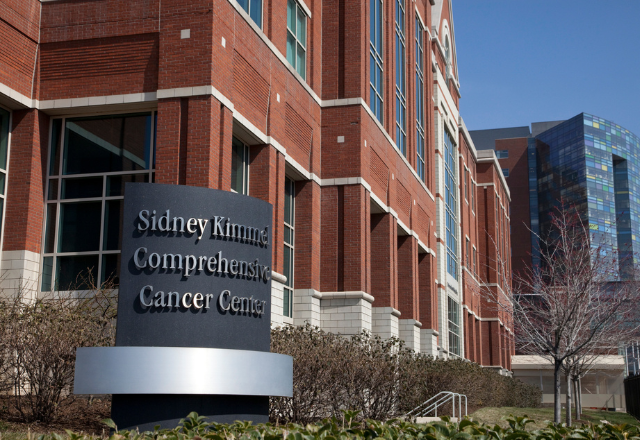
prevention and diagnosis of lung cancer. He directs community programs and community-based research at the Sidney Kimmel Comprehensive Cancer Center. Cancer Prevention in minority populations.
Categories
Cancer prevention
Titles
Associate Professor of Epidemiology, Johns Hopkins Bloomberg School of Public Health
Joint Appointments in Medicine and Oncology
Director, Baltimore City Cancer Plan
Associate Director of Community Programs and Research, Sidney Kimmel Comprehensive Cancer Center
Schools\Degrees
M.D., Columbia College of Physicians and Surgeons
Training
Internship and Residency, Categorical Internal Medicine, Harlem Hospital, NY
Fellowship, Pulmonary Medicine, Columbia-Presbyterian Medical Center, NY
Research Summary
Dr. Ford's research interests focus on etiologic factors and intervention strategies to reduce cancer health disparities. His current research addresses disparities in smoking and lung cancer, and evidence-based intervention strategies for cancer control in underserved populations. He recently led a systematic review of barriers and facilitators of participation of underserved populations in cancer clinical trials.
With support through the Maryland Cigarette Restitution Fund Public Health Grant, and oversight of the Baltimore City Community Health Coalition, Dr. Ford and his colleagues have established a prostate cancer education, screening diagnosis and treatment program. Key to this partnership is a consortium of community-based organizations, community health centers and local hospitals, with the Kimmel Cancer Center as the coordinating organization. The consortium’s partner organizations identify individuals at high risk for prostate cancer and connect them to education and screening services. Our program also features no-cost diagnostic and treatment services for those whose income levels are within 250 percent of the federal poverty guidelines. This program has provided screening services to more than 1,600 low-income men who reside in Baltimore City. Participants are predominantly low-income African-Americans or Hispanic/ Latinos (>90 percent), and more than 62 percent are uninsured.
With the support of the Avon Produces Foundation ($1.5 million over three years), we have implemented a breast cancer screening program targeting underserved women in the context of our existing partnerships. At the suggestion of our community partners, we have begun a research project titled "Cancer Risk Assessment in Baltimore (CRAB).” This project involves a questionnaire on cancer-related behavioral risk factors, including smoking, diet, and exercise, screening behaviors, as well as alcohol use and substance abuse. It also involves the collection of blood samples for studies of biomarkers of cancer risk. Thus far, more than 250 individuals have participated in this study. Barriers to Recruitment to Cancer Clinical TrialsWe recently completed a NCI-commissioned systematic literature review of barriers to participation of underrepresented populations in cancer clinical trials, under the auspices of the AHRQ-funded Johns Hopkins Evidence-based Practice Center. We have submitted recommendations for future research to improve participation of underrepresented groups in cancer clinical trials.
Journal Citations
Alberg, A. J., J. G. Ford, and J. M. Samet. 2007. Epidemiology of lung cancer: ACCP evidence-based clinical practice guidelines (2nd edition). Chest 132:29S-55S.
Anderson, J. C., Ford, J. G. & Whiting, M. (2005). Chirality transfer in the aza-[2,3]-Wittig sigmatropic rearrangement. Org Biomol Chem 3, 3734-48.
Ford, J. G., M. W. Howerton, G. Y. Lai, T. L. Gary, S. Bolen, M. C. Gibbons, J. Tilburt, C. Baffi, T. P. Tanpitukpongse, R. F. Wilson, N. R. Powe, and E. B. Bass. 2008. Barriers to recruiting underrepresented populations to cancer clinical trials: A systematic review. Cancer 112:228-42.
Ford, J.G., Howerton, M.W., Lai, G.Y., Gary, T.L., Bolen, S., Gibbons, M.C., Tilburt, J., Baffi, C., Tanpitukpongse, T.P., Wilson, R.F., Powe, N.R., and Bass, E.B. (2008). Barriers to recruiting underrepresented populations to cancer clinical trials: a systematic review. Cancer 112, 228-242.
Garza, M. A., Luan, J., Blinka, M., Farabee-Lewis, R. I., Neuhaus, C. E., Zabora, J. R. & Ford, J. G. (2005). A culturally targeted intervention to promote breast cancer screening among low-income women in East Baltimore, Maryland. Cancer Control 12 Suppl 2, 34-41.
Howerton, M. W., M. C. Gibbons, C. R. Baffi, T. L. Gary, G. Y. Lai, S. Bolen, J. Tilburt, T. P. Tanpitukpongse, R. F. Wilson, N. R. Powe, E. B. Bass, and J. G. Ford. 2007. Provider roles in the recruitment of underrepresented populations to cancer clinical trials. Cancer 109:465-76.
Lai, G. Y., Gary, T. L., Tilburt, J., Bolen, S., Baffi, C., Wilson, R. F., Howerton, M. W., Gibbons, M. C., Tanpitukpongse, T. P., Powe, N. R., Bass, E. B. & Ford, J. G. (2006). Effectiveness of strategies to recruit underrepresented populations into cancer clinical trials. Clin Trials 3, 133-41.
Lazarus, S. C., V. M. Chinchilli, N. J. Rollings, H. A. Boushey, R. Cherniack, T. J. Craig, A. Deykin, E. DiMango, J. E. Fish, J. G. Ford, E. Israel, J. Kiley, M. Kraft, R. F. Lemanske, Jr., F. T. Leone, R. J. Martin, G. R. Pesola, S. P. Peters, C. A. Sorkness, S. J. Szefler, M. E. Wechsler, and J. V. Fahy. 2007. Smoking affects response to inhaled corticosteroids or leukotriene receptor antagonists in asthma. Am J Respir Crit Care Med 175:783-90.
Levin, B., Barthel, J. S., Burt, R. W., David, D. S., Ford, J. M., Giardiello, F. M., Gruber, S. B., Halverson, A. L., Hamilton, S., Kohlmann, W., Ludwig, K. A., Lynch, P. M., Marino, C., Martin, E. W., Jr., Mayer, R. J., Pasche, B., Pirruccello, S. J., Rajput, A., Rao, M. S., Shike, M., Steinbach, G., Terdiman, J. P., Weinberg, D. & Winawer, S. J. (2006). Colorectal Cancer Screening Clinical Practice Guidelines. J Natl Compr Canc Netw 4, 384-420.
Alberg, A. J., Diette, G. B., & Ford, J. G. 2003. Attendance and absence as markers of health status: the example of active and passive cigarette smoking. Am. J. Epidemiol. 157:870-873.
Ford, J. G., & Howerton, M. W. 2004. The science of recruiting minority populations to screening trials. Clin. Trials. J. 1:341-342.
Ford, J. G., Howerton, M. W., Bolen, S., Gary, T. L., Lai, G. Y., Tilburt, J., et al. 2005. Knowledge and access to information on recruitment of underrepresented populations to cancer clinical trials. [Review]. Evid. Rep. Technol. Assess. (Summ). 122:1-11.
Ford, J. G., Li, Y., O'Sullivan, M. M., Demopoulos, R., Garte, S., Taioli, E., et al. 2000. Glutathione S-transferase M1 (GSTM1) polymorphism and lung cancer risk in African-Americans. Carcinogenesis. 21:1971-1975.
Li, Y., Brandt-Rauf, P. W., Carney, W. P., Tenney, D. Y., & Ford, J. G. 1999. Circulating anti-p53 antibodies in lung cancer and relationship to histology and smoking. Biomarkers. 4:381-390.
Taioli, E., Ford, J. G., Trachman, J., Demopoulos, R., Li, Y., & Garte, S. 1998. CYP1A1 polymorphisms and lung cancer risk in African-Americans. Carcinogenesis. 19:813-817.