Clinical Trials
Johns Hopkins Clinical Trials: Choose from Adult or Pediatric lists
If you or someone you know has been diagnosed with a sarcoma, we urge you to consult an expert who sees many sarcoma patients each month. Such doctors are found at specialist hospitals particularly NCI-designated Comprehensive Cancer Centers.
Research
The following information describes a sampling of sarcoma research underway at Johns Hopkins.
Primary Investigator: Nita Ahuja (Surgical Oncology)
Title: Epigenetic therapies for treatment of retroperitoneal sarcoma
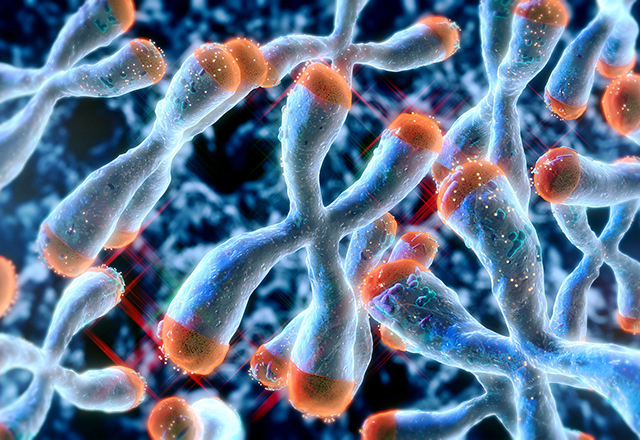
Although many changes that occur in cancer cells are irreversible, there are a few changes that can be reversed using FDA-approved medications known as epigenetic therapies. Our laboratory has demonstrated that treatment with epigenetic therapy can improve tumor sensitivity to chemotherapy in colon, lung, and breast cancers. Since soft tissue sarcomas are very resistant to chemotherapy, if we could improve tumor sensitivity, this would represent a significant improvement in the care of patients with soft tissue sarcomas. We have been able to demonstrate that epigenetic therapy caused leiomyosarcomas to grow significantly slower. Our work over the next year will involve testing combination chemotherapy and epigenetic therapy in soft tissue sarcomas to develop effective treatments for these cancers.
Primary Investigators: Laura M. Fayad (MRI) and Rathan Subramanium (PET)
Co-investigators: Kristy L. Weber (Orthopaedic Surgery) and Elizabeth Montgomery (Pathology)
Title: Multiparametric quantitative imaging of neoadjuvant therapy response in malignant soft tissue sarcomas
Soft tissue sarcomas are often treated with a combination of radiation and chemotherapy before surgery is performed to remove the tumor, with the goal of shrinking the tumor, killing the tumor cells and making the surgical removal easier. Ideally, we would like to know how a soft tissue sarcoma responds to radiation or chemotherapy before surgery: If we are able to determine that the chemotherapy is not working adequately to kill the tumor cells, we can change the treatment regimen before the patient goes on to have the tumor removed. Unfortunately, at the present time, we do not have good methods of determining treatment response before surgery; we most accurately determine whether a tumor responded to treatment by the amount of dead tissue that is identified after the tumor is taken out completely, thereby missing an opportunity to change the chemotherapy before surgery.
Through this research project, we will use advanced metabolic imaging techniques with MRI and PET scanning to determine the degree of response to therapy before surgery is performed to remove the sarcoma. We have found, through our preliminary research findings, that a specific metabolic marker picked up by MRI and PET (namely, Choline) can show important metabolic changes in a sarcoma after its cells are successfully treated by chemotherapy. We believe that metabolic imaging with MRI and PET will prove accurate for the prediction of response to therapy and provide valuable information for planning treatment and determining prognosis. These cutting edge imaging techniques have been developed and optimized at Johns Hopkins by members of the Department of Radiology and the Hopkins Sarcoma Program.
David M. Loeb, M.D., Ph.D. (Pediatric Oncology)
Dr. Loeb is an active member of the Pediatric Bone Marrow Transplantation team. The team provides comprehensive care for children who need high dose chemotherapy and bone marrow transplantation for a wide variety of conditions, both malignant and nonmalignant. As a member of this team, Dr. Loeb has opened two clinical trials. The first of these investigates the efficacy of high dose cyclophosphamide for severe autoimmune enteropathy. While this is a very rare diagnosis, Johns Hopkins has been a leader in applying the immunoablative effect of high dose cyclophosphamide to the treatment of severe autoimmune diseases. This protocol extends the number and type of diagnoses to which this treatment could be applied. In addition, Dr. Loeb is the principal investigator on a protocol using high dose 153Sm for the treatment of high risk osteogenic sarcoma. This is an example of the use of targeted therapy for the treatment of cancer. Samarium-153-EDTMP targets a radioisotope to areas of rapid bone turnover, such as bony metastases from osteogenic sarcoma. Because the sole significant toxicity of this therapy is myelosuppression, autologous peripheral blood stem cell support is utilized to allow treatment with higher doses of radiation. This protocol expands upon another Johns Hopkins clinical trial using the same compound in an attempt to incorporate targeted radiotherapy into the upfront treatment of high risk osteosarcoma.
The Liddy Shriver Initiative- Fighting Sarcoma
Johns Hopkins and the Liddy Shriver Sarcoma Initiative work together to fight Sarcoma.
Sarcoma, A glimpse at a rare cancer
Johns Hopkins Kimmel Cancer Center expert David Loeb discusses rare and difficult cancer.
David Ettinger, M.D. (Adult Medical Oncology)
Dr. Ettinger is part of the Hopkins multidisciplinary team that is developing new treatment strategies to treat sarcomas in adults. He is a co-chairman of the national RTOG phase II study of pre-operative radiation therapy and Thalidomide (IND 48832; NSC 66847) for low grade primary soft tissue sarcoma or pre-operative MAID/Thalidomide/radiation therapy for high/intermediate grade primary soft tissue sarcoma of the extremity or body wall.
Deborah A. Frassica, M.D. (Adult Radiation Oncology)
Dr. Frassica oversees the Radiation Oncology Center at Green Spring Station, which provides external beam radiation treatment for adult patients. Her primary interests are in musculoskeletal, breast, and colorectal cancers. The center participates in clinical trials under the auspices of the Radiation Therapy Oncology Group, the Eastern Cooperative Oncology Group, the American College of Surgeons Oncology Group, and The Johns Hopkins University.
Moody Wharam, Jr., M.D. (Pediatric Radiation Oncology)
Dr. Wharam's research is focused on improving the treatment of children with cancer of several specific types including, rhabdomyosarcoma, other soft tissue sarcomas, various rare tumors, and intracranial germinoma. Specific aims are to study how to most effectively utilize radiation therapy in the management of pediatric tumors with regard to the specific issues of indications, timing, sequence with chemotherapy, treatment volume, and dose intensity; and to assess the late effects of cranial radiotherapy in brain tumor patients as well as the impact of second look surgery in rhabdomyosarcoma patients.