
Johns Hopkins Interventional Neuroradiology team aims to offer the best minimally invasive treatment and diagnostic imaging for adults and children with a wide range of conditions involving the brain, the head and neck region, and the spine and spinal cord. Our endovascular and interventional specialists use state-of-the-art minimally invasive image-guided techniques to deliver therapeutic agents through the skin (without the need for open surgery), allowing for shorter hospital stays, faster recovery, and decreased procedure risks. We also specialize in diagnostic cerebral and head and neck angiography and spinal angiography.
Learn More About:
Schedule an Appointment
Schedule online through MyChart

Schedule by phone

Conditions and Procedures
Interventional Neuroradiology encompasses the diagnosis and treatment of many neurovascular and spine conditions. We provide adult and pediatric care, including:
-
Our experts have extensive experience in angiography of the head and neck, including the brain, and the spine. Angiography (also known of arteriography) is an imaging technique that uses X-ray with contrast to produce images of the blood vessels. We use this procedure to diagnose and treat a variety of conditions. Our team has developed an iPad application to help prepare patients for this procedure.
For more information:
-
Our recognized team of dedicated experts has extensive experience in endovascular treatment and embolization for:
- Intracranial and head & neck aneurysms
- Vascular malformations involving the brain, the head & neck region, and the spine & spinal cord:
- Arteriovenous malformations (AVM)
- Arteriovenous fistulas (AVF), including dural arteriovenous fistulas (DAVF)
- Vein of Galen arteriovenous malformations (VGAM)
- Lymphatic malformations
- Tumors
-
Our stroke interventions include treatment of acute ischemic stroke with clot retrieval devices. We also perform procedures for:
- Arterial dissections
- Moyamoya syndrome
- Subarachnoid hemorrhage (SAH)
- Carotid artery stenosis
-
A spinal implant is an outpatient procedure performed by a spine neuro-interventional radiologist. Dr. Majid Khan and his team perform this procedure at the Johns Hopkins Hospital. A spinal implant procedure, also known as a vertebral implant or spine jack, can restore a patient’s vertebral height and significantly reduce the pain associated with compressed or fractured vertebrae. The height restoration achieved with this procedure can also reduce fractures occurring next to the original fracture.
Why Choose Johns Hopkins:
- We know that spinal fractures cause severe pain and can impact your daily life. Following a spinal implant procedure, patients report a significant decrease in pain and are often able to return to previous activity levels.
- Our neuro-interventional radiologists use high-precision diagnostic techniques to identify the location and degree of spinal fractures, and they are some of the first in the nation to perform the spinal implant procedure.
- From the office assistants to our neuro-interventional radiologists, our staff is friendly and caring, ready to answer your questions and make sure you leave with a complete understanding of your diagnosis and treatment options.
-
- Vertebroplasty and vertebral augmentation with an implant, including V-Strut vertebral implants for anterior and posterior column support of fractured spinal vertebrae
- Treatment of Tarlov cysts
- Pain interventions
- Spine biopsy
- Radiofrequency tumor ablation
- Basivertebral nerve radiofrequency neurotomy/blation for chronic back pain related to the vertebrae
- Diagnostic and therapeutic interventions for patients with spontaneous spinal CSF leak (SIH), using specialized myelographic imaging techniques
-
- Intra-arterial chemotherapy for the treatment of tumors such as intraocular retinoblastoma and progressive diffuse intrinsic pontine gliomas
- Intracranial and extracranial angioplasty, stenting and stent-assisted coiling
- Treatment of other vascular anomalies or syndromes, including:
- Sturge-Weber syndrome
- Arterial dolichoectasia
- Sinus pericranii
- Cavernomas
- Developmental venous abnormalities (DVA)
- Intracranial venous disorders, including dural sinus stenosis and pseudo-tumor cerebri
Our Team


Jessica Scudder
Physician Assistant

Collaborations
We work in close collaboration with various departments of the Johns Hopkins University and Johns Hopkins Medicine to deliver the best in multi-specialty patient care.
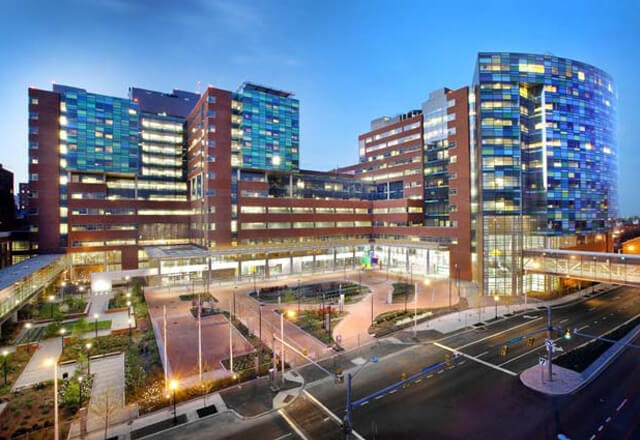


Interventional Neuroradiology Fellowship
The fellowship is not currently accepting fellows. View program alumni:
-
- Dr. Ahmed Elakkad — 2019
- Dr. Gerard Deib – 2018
- Dr. Mesha Martinez – 2018
- Dr. Emanuele Orru – 2016
- Dr. Gillian Griffith – 2016
- Dr. Danielle Eckart – 2015
- Dr. Ian Kaminsky – 2014
- Dr. Michal Obrzut – 2014
- Dr. Zinovy Katz – 2013
- Dr. Juan Gomez – 2012
- Dr. Monica Pearl – 2011
- Dr. Charles Bowkley – 2010
-
- Dr. Ben McGuinness – 2009
- Dr. Martin Radvany – 2008
- Dr. Diego San Millan – 2008
- Dr. Gerald Wyse – 2007
- Dr. Robert Cooney – 2006
- Dr. A. Daniel Sasson – 2006
- Dr. Peter Kvamme – 2005
- Dr. Mayumi Oka – 2005
- Dr. Baljit Deol – 2004
- Dr. Jeff Carpenter – 2003
- Dr. Donald Heck – 2002
- Dr. Philippe Gailloud – 2001