













Johns Hopkins multidisciplinary approach brings together experts in many different fields who work together to diagnose and treat swallowing disorders. Specialists, including gastroenterologists, radiologists and ear, nose and throat doctors examine swallowing X-rays, discuss cases and create personalized treatment plans.
Once your doctor diagnoses the exact type of swallowing disorder you have, an individualized treatment plan can begin immediately.
Enteral Feeding
Sometimes, the swallowing disorder may be so severe that you cannot eat enough to maintain your weight. This happens when you are unable to take in adequate nutrition by mouth. We have many ways to get patients the calories they need.
Feeding tubes can provide a way for nutrition to get by the troubled area and decrease the risk of coughing or choking. Feeding tubes are a type of enteral feeding that provides the nutrition your body needs.
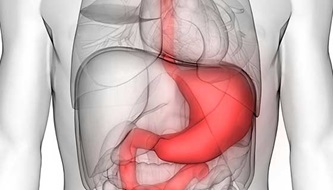
Your doctor performs an endoscopy and inserts a gastrostomy tube through the endoscope. The tube provides nutrition directly to your stomach.
You may be a candidate for enteral feeding if:
The gastrostomy tube does not have to be permanent. As your ability to swallow and absorb nutrients improves, the tube can be removed.
Treatments for Specific Swallowing Disorders
Certain swallowing disorders have their own specific course of treatment. A myotomy, a surgical procedure during which the esophageal sphincter muscle is cut, is performed to treat many of these conditions.
Allergic Esophagus
In rare cases, you may have what is called an allergic esophagus. Steroid therapy and dietary changes can help manage an allergic esophagus.
Structural Lesions
Structural lesions are a physical abnormality that may occur on the esophageal sphincter, the muscle that opens and closes the esophagus. Your doctor may perform a myotomy to repair the lesions and may also perform an anti-reflux operation at the same time to prevent reflux. This procedure can be performed laparoscopically, which is a less invasive surgery with a shorter recovery period.
Esophageal Stenosis
Esophageal stenosis is the presence of a stricture, or narrowing, in the esophagus. If the stricture becomes inflamed, this can cause dysphagia, or painful swallowing. You can minimize the frequency of the symptoms of esophageal stenosis by:
A myotomy or dilation procedure may be effective as well.
Esophageal Diverticulum
A diverticulum is a small pouch filled with fluid. An esophageal diverticulum protrudes from a weak part in the esophageal lining. This can cause dysphagia, regurgitation and aspiration pneumonia. Your treatment will depend on the size and location of the diverticula. Often, your doctor performs a myotomy to relieve the obstruction.
Zenker's Diverticulum
Zenker's diverticulum is a specific type of esophageal outpouching or diverticulum. Zenker's diverticula are pouches that develop right above the upper esophageal sphincter. When food becomes trapped in the pouch, patients sense something is stuck and this can lead to difficult or painful swallowing.
Small Zenker's diverticula do not require treatment other than periodic X-rays. If treatment is necessary, surgical and endoscopic alternatives are available. The goal of surgery is to relieve the source of resistance by cutting the upper esophageal sphincter and removing the diverticulum. A myotomy is the most commonly used procedure to treat Zenker's diverticulum.
Neurogenic Dysphagia
Neurogenic dysphagia is a neurological swallowing difficulty. Neurogenic dysphagia is often a symptom of systemic (body-wide) disease, so your doctor will want to treat the underlying disease to as much as possible. Specifically, in order to move ahead with treatment the following will be evaluated:
-
The extent of structural, mechanical difficulties in the swallowing channel
-
The risk of aspiration pneumonia; if it is high, your doctor may decide to perform a gastrostomy. This is a tube that delivers food directly to your stomach.
Treatments for neurogenic dysphagia include:
-
Diet modification
-
Swallowing therapy
-
Surgery
-
Swallowing retraining
Isolated Upper Esophageal Sphincter (UES) Dysfunction
Isolated upper esophageal sphincter dysfunction refers to a disorder in the upper esophagus in which the sphincter does not open and close properly. The symptoms often respond to treatment directed at weakening the upper esophageal sphincter.
Distal Esophageal Spasm
Distal esophageal spasm, previously known as diffuse esophageal spasm, is a condition in which abnormal contractions of the esophagus occur. This causes difficulty in moving the food to the stomach. If your symptoms suggest esophageal spasm, your doctor will want to determine if the cause is reflux or narrowing lesions within the food tube.
If the cause is narrowing or stenosis, the treatment is usually esophageal dilation. If reflux is the cause, you can treat it by making dietary changes. Often, your doctor will combine one of these treatment methods with a drug regimen to decrease your acid secretion and improve gastric emptying.
Achalasia
Achalasia is a condition where the sphincter that controls the exit of materials from the esophagus fails to relax. When the food cannot exit the esophagus, it becomes lodged in that area. This can happen for two reasons:
This causes symptoms of coughing, choking, regurgitation, dysphagia and food retention in the esophagus. The goal of treatment for achalasia is to decrease the resistance of the esophagus, allowing food to flow through the lower esophageal sphincter.
Treatments for achalasia include:
-
Pneumatic dilation. Your doctor slowly inflates a balloon in your lower esophageal sphincter to stretch the muscles until they relax. This stretches the sphincter enough to allow food and liquid to pass through easily. This is performed endoscopically.
-
Myotomy. During this procedure, your surgeon cuts the sphincter muscle to force it to relax. A myotomy can be performed endoscopically or through a laparoscopic surgery procedure.