
At the Johns Hopkins Fertility Center, we are here to help you realize your dream of parenthood. We offer a complete range of services for people trying to build their families, and those who wish to preserve their future fertility, in one place, under one care team. From patients who haven't started trying to become pregnant to patients with complex conditions, our expert team of infertility specialists, reproductive endocrinologists, clinical nurses and embryologists, working together with a trove of experts throughout Johns Hopkins, are ready to provide a comprehensive care experience tailored to you and your family.
-
Causes of Infertility We Treat
Learn about the potential underlying causes of your infertility.
-
Your Care Team
Meet the expert doctors, nurses and embryologists of the Johns Hopkins Fertility Center.
-
Fertility Treatments
Explore our advanced treatments and services, including genetic carrier screening.
Request an Appointment
By Phone

By Online Form

Frequently Asked Questions
-
The Johns Hopkins Department of Gynecology and Obstetrics offers comprehensive fertility care with a unified team of specialists, including infertility experts, reproductive endocrinologists, nurses, and embryologists, who support individuals and couples at every stage, from those planning for future fertility to those facing complex reproductive challenges.
You can get care in person at our locations in Baltimore or Howard County. Follow-up appointments for certain treatments may be available online via telemedicine.
-
Our experts offer the most advanced treatments, delivered with compassion and guided by trusted medical research.
Here are some of the fertility and reproductive health concerns we address:
- Diminished ovarian reserve
- Endometriosis
- Family building
- Uterine fibroids
- Male infertility
- Congenital uterine anomalies (Müllerian)
- Polycystic ovary syndrome (PCOS)
- Primary ovarian insufficiency (POI)
- Fallopian tube blockage or scar tissue (tubal disease)
- Unexplained infertility
- Recurrent pregnancy loss (RPL) or repeated miscarriages
-
- Recurrent pregnancy loss evaluation and treatment
- Ovulation induction
- Intrauterine insemination (IUI)
- In vitro fertilization (IVF)
- Preimplantation genetic testing (PGT)
- Fertility preservation
- Donor egg treatment
- Gestational carrier (Surrogacy)
- Become an egg donor
- Donor sperm treatment
- Genetic carrier screening
- Counseling services
- Advanced techniques:
- Assisted hatching
- Donor sperm/intracytoplasmic sperm injection (ICSI)
-
We have a large team of experienced medical professionals — including reproductive endocrinologists, gynecologists, nurse practitioners and physician assistants — ready to address all gynecologic or obstetric needs. You can explore our full team in our:
- Specializing in gynecology
- Alternatively, browse our clinicians by specialty area, which list respective team members.
-
Yes, we offer clinical trials, as research is one of our core pillars at Johns Hopkins Medicine. Some trials are based at Johns Hopkins and are only available here. In other cases, we collaborate with national research networks
-
You can access Johns Hopkins gynecology and obstetrics services at several locations in the Baltimore metro areas including:
- Johns Hopkins Health Care & Surgery Center at Green Spring Station in Lutherville
- Johns Hopkins Howard County Medical Center, Medical Pavilion at Howard County
-
We accept most commercial health plans. Learn more about the insurance plans we accept and be sure to check with your insurer to confirm your plan’s benefits.
Webinars On Demand
Recurrent Pregnancy Loss: Navigating the Path to a Healthy Pregnancy

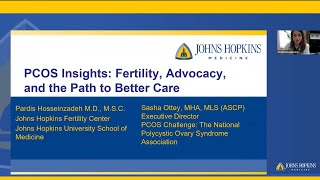
PMOS Insights: Fertility, Advocacy and the Path to Better Care
Fertility Care Now Available in Howard County
Now offering infertility and fertility preservation consultations for:
Diminished Ovarian Reserve • Family Building • Male Infertility • Polycystic Ovary Syndrome (PCOS) • Primary Ovarian Insufficiency (POI) • Unexplained Infertility
Call 410-847-3835 to schedule an appointment at our new location:
Johns Hopkins Medicine Medical Pavilion at Howard County
10710 Charter Drive, Suite 200, Columbia, MD 21044

Fertility Care For Every Journey:
-
Getting Started
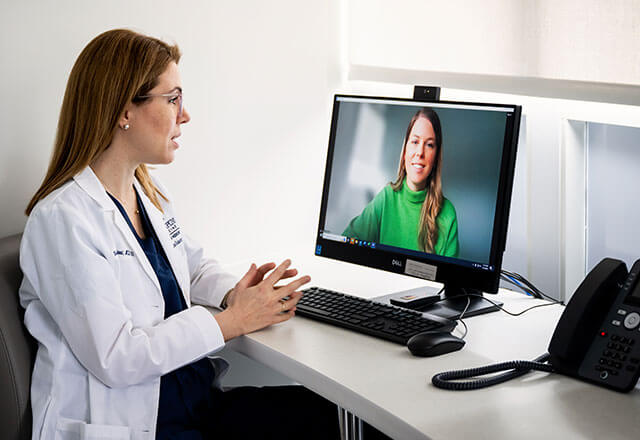
Not sure where to start? View our Patient Information
-
Egg Freezing
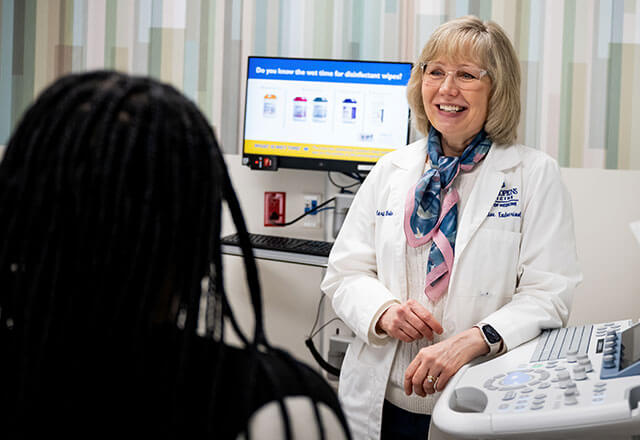
Learn about our services for egg freezing and other fertility preservation options
-
Family Building: LGBTQ+ Families
Fertility options for LGBTQ+ couples

-
Family Building: Single Parent Families
For single individuals looking to start a family
Keep Your Fertility Options Open for Later

Patient Stories
Johns Hopkins Fertility Center: Heather's Story
In this video, hear Heather’s story and learn more from Dr. Vasiliki Moragianni, director of the center.

Johns Hopkins Fertility Center | Ivori's Story
Learn more about our newly expanded center from patient and infertility coach, Ivori Lipscomb-Warren and Dr. Valerie Baker, director of the Division of Reproductive Endocrinology and Infertility.

Why Choose Johns Hopkins for Fertility Services
Personalized Patient Care

Depth and Breadth of Services

Multidisciplinary Team

Evidence-based Treatments

Our Facilities at Green Spring Station
Fertility Clinic
Procedure Rooms

ART Laboratories
Fertility Q&A
-
From those just starting their fertility journey to those with complex health concerns, clinicians within the Johns Hopkins Fertility Center provide care for patients with all kinds of needs.
Fertility consultations and treatments can be relevant for anyone, from those who haven't started trying to get pregnant yet to patients facing complex issues or those who haven't found success with other treatments. We offer everything from simple, yet effective, treatments, to treatments for the most challenging situations. It's all based on a plan of care personalized to your individual needs.
We also offer treatment for male infertility issues, preimplantation genetic testing, egg freezing, egg/sperm/embryo donation, gestational carrier services, and options for novel treatments via clinical trials.
-
There are many different reasons why a person may be struggling to get pregnant. If you’re having trouble conceiving, an infertility specialist may be able to help. The first step is to schedule a consultation.
If you or your partner have a known medical condition that affects the uterus, fallopian tubes, sperm or ovulation, talk to your doctor to see if you should be evaluated sooner. For example, if you know that both of your fallopian tubes are blocked, you’ll need to see an infertility specialist even before trying to get pregnant.
-
Even if you haven't started trying yet, an evaluation with a fertility specialist can help you plan out your pregnancy. There are some steps you can take to try to increase your chances of a successful pregnancy on your own, such as calculating your monthly fertility window and addressing wellness preparation for pregnancy, but the majority of people will become pregnant within the first 12 months of trying to conceive with regular unprotected intercourse.
-
Yes! During treatment, patients are partnered with a primary physician and nursing team from the Fertility Center who work with you throughout your treatment. We will continue to care for you eight to 10 weeks into pregnancy, and after that point we transition your care to the obstetrician or midwife.
-
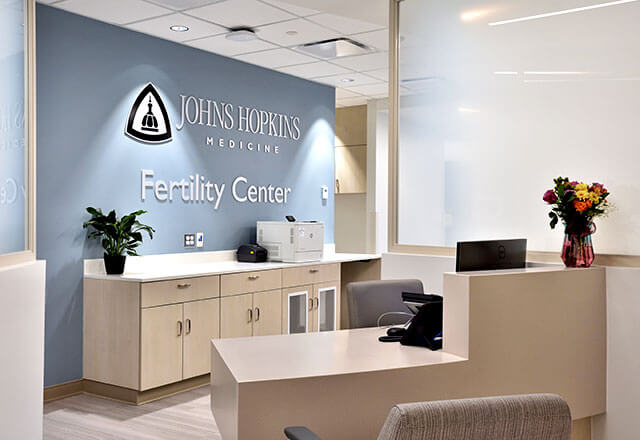
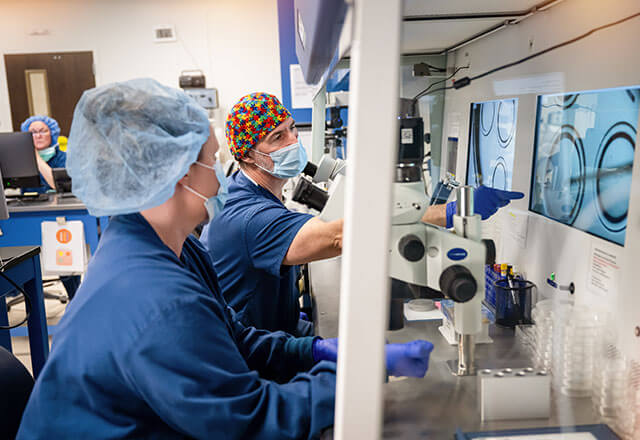
We offer a wide variety of treatments for conditions that affect fertility. Services include in-person and telemedicine consultations; fertility testing and genetic carrier screening; fertility treatment, including intrauterine insemination, in vitro fertilization and preimplantation genetic testing; fertility preservation; egg and sperm donation; and gestational carrier options. The Fertility Center includes a clinic, andrology and endocrinology labs, an in vitro fertilization lab and a surgery center, where clinicians perform egg retrievals, embryo transfers, and gynecologic surgeries including laparoscopy and myomectomy as well as other gynecologic procedures such as hysteroscopy. Patients also have access to novel treatments via clinical trials.
With access to a trove of experts throughout Johns Hopkins, the center provides multidisciplinary care for a range of conditions that can impact fertility and the health of a pregnancy. For example, the Fertility Center works closely with the healthy weight management group at Johns Hopkins. This group includes metabolism experts who can treat hormonal conditions that can cause obesity, which can in turn affect fertility. Our fertility specialists work closely with Johns Hopkins experts in fibroids and endometriosis, as well as high-risk obstetrics when needed.
We’ve built the center with the patient experience in mind, in a way that facilitates communication between all members of the care team. Learn more about the treatments we offer.
-
Yes! You do not have to have any known underlying conditions to receive treatment at our center, but we do provide care for patients with pre-existing conditions or complications. We collaborate with the Johns Hopkins network of specialists to treat a wide variety of conditions affecting fertility, including:
- fibroids
- endometriosis
- polycystic ovarian syndrome (PCOS)
- primary ovarian insufficiency (POI)
- unexplained infertility
- cancer treatment
- and more
-
Yes. We offer a complete range of services for people who are trying to build their families and those who wish to preserve their future fertility, including the option to freeze eggs.
-
Yes. The center’s staff members work with oncologists and provide oncofertility counseling for patients who wish to pursue fertility preservation prior to initiating cancer treatment. The team also collaborates with sickle cell disease experts to offer patients fertility preservation options if they are undergoing treatments that could damage the ovaries.
The center also offers treatment options for transgender people who wish to preserve fertility, and to same-sex couples, single individuals and transgender individuals who wish to build their families. We also offer egg retrievals for patients with high-risk medical conditions in a hospital setting.
-
Yes! We provide care services for all kinds of families, big and small, including same-sex couples, transgender couples, single individuals and transgender individuals who wish to build their families.