Program for the Advancement of On-site Rehabilitation for Occupational Injuries
Background
Occupational musculoskeletal injuries and disorders (OMSIDs) are a major problem for workers, employers, the health care system and society at large. These injuries have a major impact on the health and quality of life of the workforce, the productivity of corporations and the practice of health care.
- OMSIDs account for 33% to 40% of the worker’s compensation claims in the U.S.1
- Indirect costs due to administrative expenses, replacement workers and lost productivity have been estimated at two to eight times the costs of lost wages and medical care.2
- Due to the individual, employer and societal costs considerable efforts have been devoted to prevention of these injuries.
- While there is evidence the incidence is decreasing, it appears the severity of and costs related to these injuries continues to increase.3
The health care community has responded to this problem by:
- emphasizing prevention
- developing treatment protocols
- implementing systems for managing injuries in the workplace
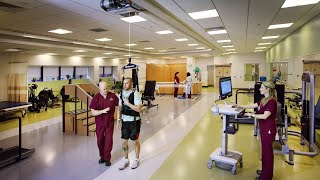
Another approach for improving recovery from OMSID and minimizing loss of productivity has been the use of on-site physical rehabilitation programs for injured workers. These programs are based on the premise that early assessment, easy access to treatment and maintaining the employee's contact with the work environment will lead to improved outcomes.
Our research and consultation program is devoted to the development and evaluation of on-site rehabilitation services for injured workers.
Projects
Development, Implementation and Review of UAW-Ford On-Site Physical Rehabilitation Program
UAW-Ford undertook to determine whether the provision of quality on-site rehabilitation services at selected Ford manufacturing facilities resulted in reduced injury-related costs. UAW-Ford established on-site rehabilitation centers at three centers. Subsequent program evaluation by Johns Hopkins found that workers were highly satisfied with the rehabilitation services, the quality of treatment being provided equaled or exceeded that available in the community and savings resulted in days away from work, restricted days and workers’ compensation costs. Currently there are 22 on-site rehabilitation centers in operation.
The major goals of this ongoing effort are:
- to operate and support the electronic patient record used in the rehabilitation centers;
- to provide ongoing quality assurance review of the on-site rehabilitation services; and
- to evaluate the efficacy and cost-benefit of the on-site rehabilitation program in a longitudinal multi-site study.
Activities
The Johns Hopkins team has expertise in the development, operation and evaluation of on-site rehabilitation programs. The following consultation activities are available through this program.
- consultation regarding on-site rehabilitation programs
- electronic patient record system development and support
- quality assurance evaluations
- evaluation of program impact
- diagnostic and treatment guidelines
- continuing education activities
- consultation on worker injury prevention and management programs
Project and Research Team
- Stephen T. Wegener, Ph.D., Principal Investigator, Associate Professor, Physical Medicine and Rehabilitation
- Keith V. Kuhlemeier, Ph.D., M.P.H., Associate Professor, Physical Medicine and Rehabilitation Medicine
- Clifford S. Mitchell, M.S., M.D., M.P.H., Assistant Professor of Environmental Health Sciences in the Johns Hopkins Bloomberg School of Public Health
- Patricia Roberts, B.A., Project Coordinator, Physical Medicine and Rehabilitation
- Sue Rovnak, P.T., Johns Hopkins Hospital
- Linda Ware, O.T.R., C.H.T., Johns Hopkins Senior Occupational Therapist
For more information, please contact:
Patricia Roberts
Phone: 410-532-4700
Toll-free: 1-888-JHU-REHAB
1 Tanaka et al, 1995
2 Burton, 1993
3 US Bureau of Labor Statistics, 1998; National Safety Council, 2000