Explore other Johns Hopkins Sites


Training Program Outline

Training Program Outline

 Inpatient Physical Medicine and Rehabilitation 

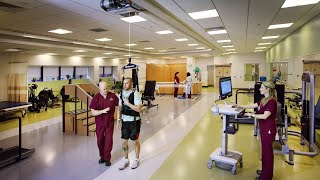
  • Residents receive a broad inpatient rehabilitation experience:
    • spinal cord injury and spinal disorders
    • stroke
    • joint replacement
    • amputation
    • cancer
    • solid organ transplants
    • brain trauma
    • many others
  • Residents become familiar with the specific needs, goals and concerns associated with each type of disability.
  • Residents become experienced in inpatient team leadership, conduct of team and family conferences and management of post-discharge care issues.
  • Residents also rotate through the inpatient consultation service at Johns Hopkins Hospital and other locations throughout the Hopkins health care system, allowing them to observe and treat disabled individuals beginning at the very onset of disability, then follow them through acute care and into inpatient rehabilitation.

Outpatient Physical Medicine and Rehabilitation

  • The residency program places a great emphasis on outpatient physical medicine and rehabilitation training and provides opportunities to practice:
    • outpatient sports medicine
    • spine rehabilitation
    • electrodiagnosis
    • pain rehabilitation
  • The residency training program also provides opportunities to participate in outpatient clinics serving amputation, stroke, spinal cord injury, pediatric and cardiac rehabilitation patients.
  • One month of elective per year tailored to the individual resident’s interest.  Resident may choose from local, national and international opportunities

Conferences

  • At least four hours of conference time each week specifically target the goals of the house staff curriculum. Resident didactics are structured into a comprehensive 18-month cycle including two hours of faculty lectures alternating physical examination skill, case presentation, chapter review and journal club, and a resident teaching session.
  • Each individual institution has targeted lectures throughout the week on topics including sports medicine, pediatrics and general rehabilitation.
  • All residents complete supported courses in musculoskeletal examination, electromyography, prosthetics and orthotics and research techniques.
  • Residents participate in monthly grand rounds and journal clubs.
  • Department supported conference time including the AAPMR Annual Meeting (PGY4), 10 day Board Review Course (PGY4) and 5 day Prosthetic and Orthotic Course (PGY 3) in addition to local conferences at Johns Hopkins 

Research Opportunities

  • Faculty members in the Department of Physical Medicine and Rehabilitation have a wide variety of research interests including:
    • burn rehabilitation
    • exercise
    • functional movement analysis
    • functional outcomes of rehabilitation
    • geriatric rehabilitation
    • nontraumatic spinal cord injury
    • pain and disability
    • post-amputation rehabilitation
    • spasticity
    • sports medicine
    • swallowing impairment and disability
    • women and aging
  • Extensive research opportunities are also available outside the department.
  • Residents are encouraged to participate in research projects of all kinds.


© The Johns Hopkins University, The Johns Hopkins Hospital, and Johns Hopkins Health System, All rights reserved.

About Johns Hopkins Medicine | Patient Care | Education | Research | Health Information Library
Get Directions | Contact Us | Request an Appointment | Refer a Patient | Find a Doctor | Media Inquiries