Small Font Regular Font Large Font
Print This Page
 

Aaron Juni, Ph.D.

Assistant Professor, Department of Physical Medicine and Rehabilitation,    
Division of Rehabilitation Psychology and Neuropsychology

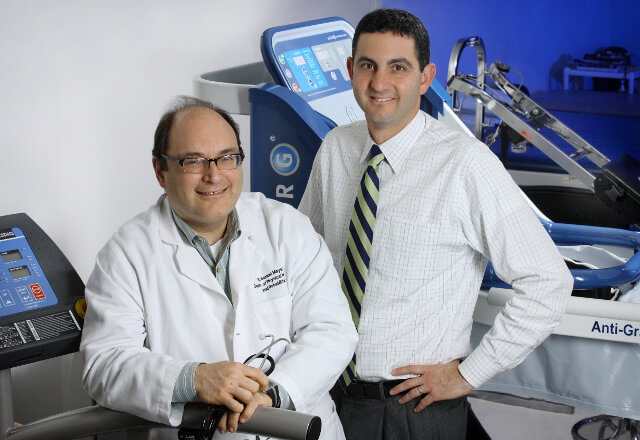
Photograph, JuliDr. Juni joined the Physical Medicine and Rehabilitation faculty at Johns Hopkins University in 2009.  He received his Ph.D. in clinical psychology with a concentration in clinical neuropsychology from the Graduate Center of the City of New York, followed by a post-doctoral fellowship in the Advanced Rehabilitation Research Training program at Virginia Commonwealth University in Richmond, Virginia. 

Dr. Juni has a broad educational and research background ranging from experimental neuroscience to clinical psychology.  In his current role as a rehabilitation neuropsychologist at the Johns Hopkins Outpatient Neurorehabilitation Program and outpatient clinics at Johns Hopkins Medical Center and Good Samaritan Hospital, Dr. Juni conducts neuropsychological assessments and interventions with adults with neurological disorders and acquired brain injuries.  Current interests include understanding the role of emotional and psychological factors in cognitive functioning, evaluating the ecological validity of neuropsychological measures, and identifying preclinical indicators and effective intervention strategies for incipient dementias.

Representative Publications:

Klein G., Rossi GC., Waxman AR., Arout C., Juni A., Inturrisi CE., Kest B. (2009). The contribution of MOR-1 exons 1-4 to morphine and heroin analgesia and dependence. Neuroscience Letters; 457(3):115-119.

Juni A., Klein G., Kowalczyk B., Ragnauth A., Kest B., (2008). Sex differences in hyperalgesia during morphine infusion: Effect of gonadectomy and estrogen treatment. Neuropharmacology; 54(8):1264-70.

Juni, A., Klein, G., Pintar, J. E., & Kest, B. (2007). Nociception increases during opioid infusion in opioid receptor triple knock-out mice. Neuroscience; 147:439-444.

Juni, A., Klein, G., Kest, B., (2006). Morphine hyperalgesia in mice is unrelated to opioid activity, analgesia, or tolerance: Evidence for multiple hyperalgesic systems. Brain Research; 1070(1):35-44.

Kest B., Palmese C.A., Juni A., Chesler E.J., Mogil J.S., (2004). Mapping of a quantitative trait locus for morphine withdrawal severity. Mammalian Genome; 15(8):610-7.

Current Address:

Division of Rehabilitation Psychology and Neuropsychology
Department of Physical Medicine & Rehabilitation
The Johns Hopkins School of Medicine
600 North Wolfe Street, Phipps 174
Baltimore, MD 21287

Phone (clinic): (410) 502-5357
Phone (office): (410) 502-2429

Fax: (410) 502-2419
Email: ajuni1@jhmi.edu


© The Johns Hopkins University, The Johns Hopkins Hospital, and Johns Hopkins Health System, All rights reserved.

About Johns Hopkins Medicine | Patient Care | Education | Research | Health Information Library
Get Directions | Contact Us | Request an Appointment | Refer a Patient | Find a Doctor | Media Inquiries